Underlying Divergent Cultural Concepts of Dairy Purity at the Crossroads of Bilateral Trade Stalemate. It’s between India and the United States concerning dairy imports; it has reached a stalemate over the very old cultural and ethical divergence in classification between certain American milk products as “non-vegetarian.”
This is not an accepted scientific nomenclature, but it captures India’s disapproval of dairy products made from cows fed feed that contained animal byproducts such as meat and bone digest. Though both countries in this statement have promised to increase bilateral commerce to $ 500 billion by 2030, such culturally sensitive classification has been a significant obstacle to developing dairy trade links.
Origins of the Dispute: When Feed Composition Becomes a Cultural Faultline
Milk in India has traditionally been identified within a sanctum of vegetarianism, more so within Hindu and Jain traditions, where milk is not merely food but at times ritual substance-like. Commercial cattle ranching in both the United States and other Western economies uses animal-derived feed ingredients like rendered meat, fish meal, and chicken waste-in general- to improve nutritional efficiency. Due to this difference in feeding methods, these imports are classified as non-vegetarian by the Indian authorities, which is thereby against ethical standards in India.
Feed Composition and Its Ethical Implications
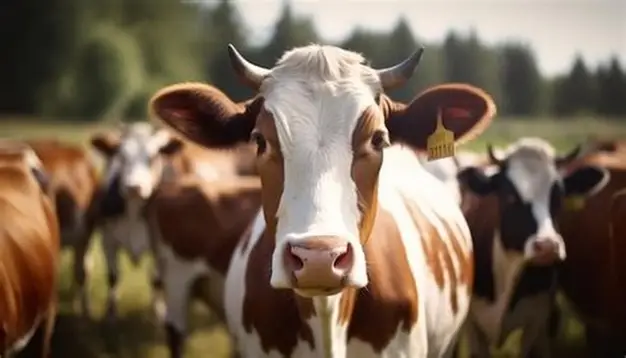
Bovine feeds with animal-based materials such as fish waste, bone fragments, and chicken byproducts are the sources of the controversy. These known supplements are said to be against the cow’s natural herbivorous diet, although they boost protein content and lower costs within high-output dairy systems.
In consequence, any milk collected by such techniques is held to be unethical thus cannot be termed as vegetarian.
India’s Food Safety and Standards Authority (FSSAI) proposed in 2021-2022 that dairy products made from cows accorded animal feeds should be labeled prominently as “non-vegetarian.”
This suggestion stemmed from increasing cultural concerns and consumer complaints on the problem, but trade associations from America resisted this ruling, arguing that, whether vegetarian or non-vegetarian, milk, being a biological excretion and diacritical, will never lose its vegetarian identity through the cow’s feed.
Contrasting Agrarian Practices: India and the West
In Indian traditional dairying systems, cows are usually sun-dried on plant-based feeds oil cakes, wheat, straw, and green fodder. Most organic dairy firms and Gaushalas also practice: “No animal feeding at all;” they often certify their products with tags like “100% vegetarian feed” or “Gaushala based milk.”
Historically, however, consumer demand cost-cutting and industrial-scale efficiency have dictated that most of Western countries, including the US, Brazil, China, and areas in Europe, repeatedly utilize animal-based feed ingredients in industries.
Consumer Awareness and Market Segmentation in India
Indian customers have been much more aware and carefully followed sourcing processes, particularly those from religiously observant communities. Nowadays, in retail milk, there are generally strong guarantees concerning plant-based feeding. Companies singing “Organic” or “A2 Gaushala Milk” are increasingly enjoying the gains by virtue of consumers’ belief in dietary holiness and traditional agrarian values.
Scientific Complexities: Can Milk Reflect Its Feed?
Biochemical assays could theoretically aura out markers such as specific fatty acid profiles or carnitine concentrations that can hint in some ways toward the possibility of non-vegetarian feed use, but as routine as they are, test costs are prohibitive.
Therefore, there is no conclusive, scalable laboratory method available to identify vegetarian-fed milk from the non-vegetarian type; thus, ethical labeling will depend on transparency through the supply chain and not empirical verification.
Global Prevalence of Non-Vegetarian Feed Practices
Beyond the United States, numerous countries use animal by-products in cattle feed. In Brazil, poultry waste and fish-meal are routine. Such feeds are also used and practiced in China and Southeast Asian industrialized farms, mainly for affordability and nutritionally evaluative purposes.
Much of Europe continues to provide under regulated conditions via BSE (Mad Cow Disease) reforms. All these dissimilar sets of rules denote the huge geopolitical divide skirting between agro-economic pragmatism and culturally determined consumption ethics.
The dairy dispute thus arises from more than just an argument over feed-it shows the larger tension within which lies the conflict between global trade liberalization and localized ethical systems.
Innovative certification systems, separate product labeling, and accommodation between both can be expected as India reclaims cultural sovereignty in food imports, most especially ones involving religious identity.