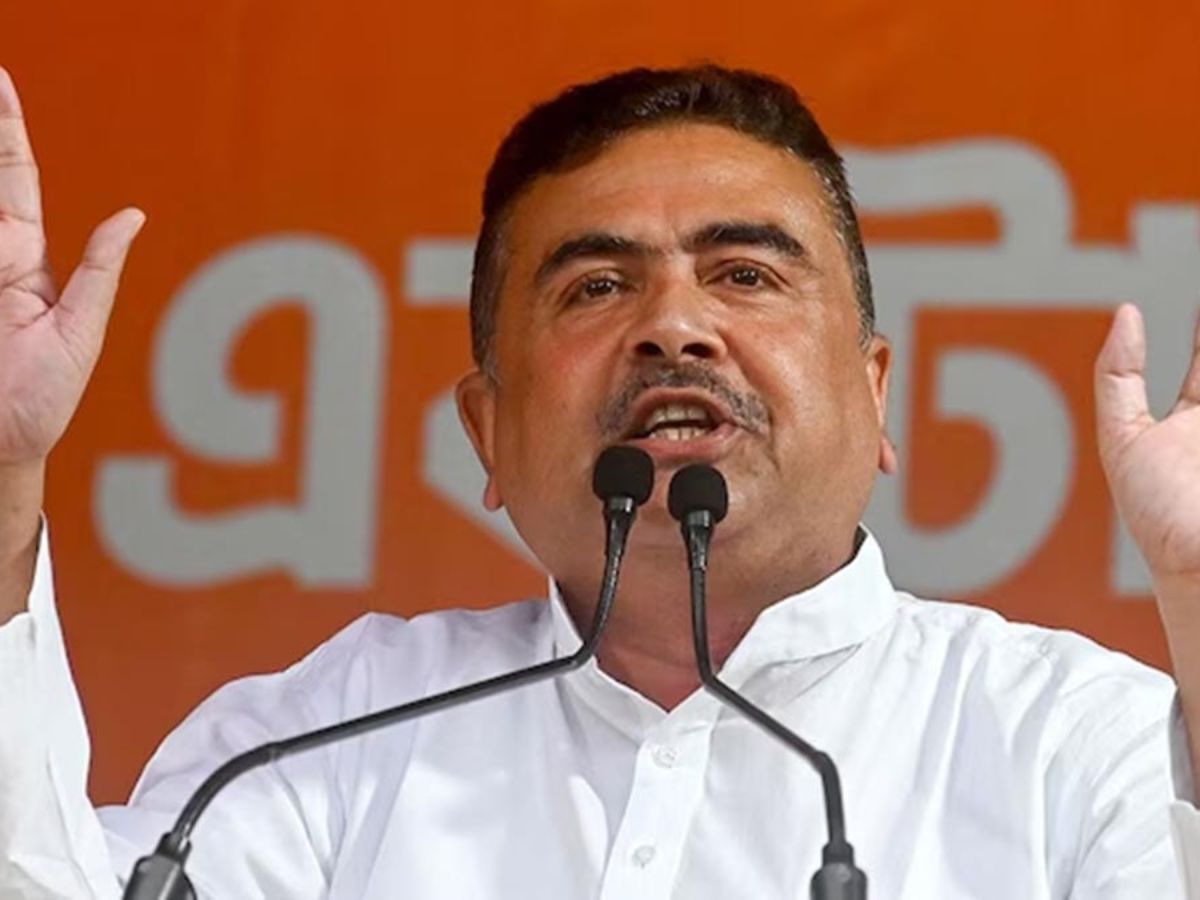
Internal consultations within the Bharatiya Janata Party following its breakthrough victory in West Bengal have thrown up a clear preference among legislators, party functionaries and grassroots workers for Suvendu Adhikari as the next Chief Minister, even as the central leadership is expected to take a calibrated call.
Multiple newly elected MLAs and organisational leaders indicated a near-unanimous sentiment in favour of Adhikari, arguing that his political shift from the Trinamool Congress to the BJP in December 2020 altered the psychological balance in the state and signalled to cadres that Mamata Banerjee could be challenged electorally. According to them, Adhikari’s role went beyond individual influence and functioned as a structural pivot that expanded the BJP’s acceptability across regions where it previously lacked depth.
It is pertinent to mention that Adhikari on Monday defeated sitting CM and TMC chief Mamata Banerjee on Bhabanipur seat.
Party insiders described the preference in quantifiable terms, claiming that an overwhelming majority within the organisational base would back Adhikari if an internal choice were formalised. Several leaders said that among workers, support for him would be near total, while even among voters who backed the BJP, a clear majority would favour his elevation as Chief Minister.
The argument being advanced internally is rooted in political signalling rather than seniority alone. Leaders pointed out that Adhikari’s defection, followed by his sustained organisational presence, created a perception of viability that translated into electoral consolidation. In their assessment, this makes him not just a claimant but a symbol of the party’s expansion in Bengal.
They further argued that Adhikari brings a structural advantage rooted in his long tenure within the Trinamool Congress, giving him granular insight into both the organisation and the functioning style of Banerjee. According to party leaders, this familiarity extends beyond formal hierarchy to an understanding of individual leaders, their roles and their operational leverage within the party.
This assessment is being framed against the backdrop of the Trinamool Congress retaining a significant legislative presence despite losing power, with 80 MLAs. Leaders within the BJP stressed that the opposition cannot be treated as a diminished force and that managing, fragmenting and potentially eroding this bloc will require a Chief Minister who understands its internal fault lines.
In that context, Adhikari is being projected internally as a tactically suited choice. Leaders pointed out that his knowledge of the party’s organisational weak points, combined with his prior political networks, positions him to both counter the opposition effectively and potentially influence shifts within its ranks. His electoral victory over Banerjee has also contributed to a perception of political credibility that, in their view, could have a downstream effect on Trinamool cadres and mid-level leaders recalibrating their alignments over time.
At the same time, alternative names continue to circulate in public discourse. These include Agnimitra Paul, Dilip Ghosh and Samik Bhattacharya, along with Minister of State, Education Sukanta Majumdar , who has political roots in the state. However, party leaders involved in internal discussions maintained that none of these names currently matches Adhikari’s perceived statewide traction.
Despite this, there remains a strategic restraint among his supporters. Senior functionaries acknowledged an established pattern within the BJP’s decision-making structure, where overt projection of a candidate can sometimes work against that individual once deliberations reach the central leadership. This has led to a deliberate under-articulation of support in public, even as internal endorsements remain strong.
Leaders cited the recent elevation of Samrat Choudhary in Bihar as a rare instance where a widely discussed name was eventually chosen, suggesting that while precedent exists, it is not the norm.
The final decision is expected to rest with the party’s parliamentary board and in the hands of Prime Minister Narendra Modi, National President Nitin Nabin and Home minister Amit Shah, where electoral arithmetic, caste and regional balance, administrative considerations and central leadership preferences will intersect.
Within that framework, Adhikari’s candidature currently carries the strongest internal momentum, but the BJP’s centralised selection process leaves room for a calibrated deviation if broader strategic factors s