
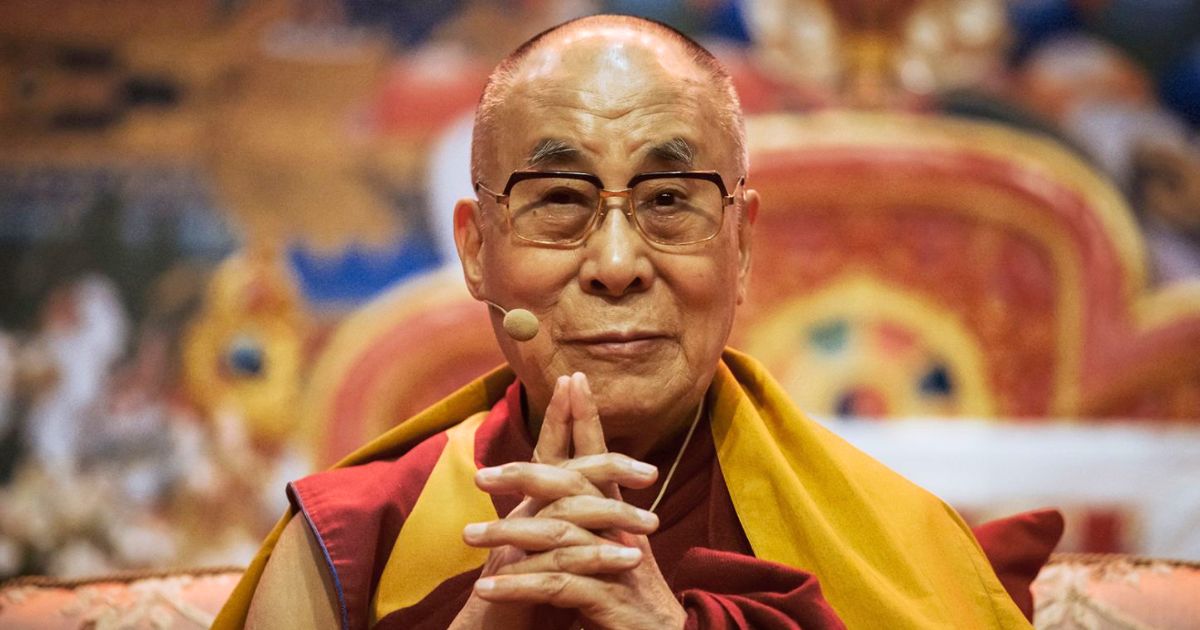
China has termed the succession of Tibet’s spiritual leader, Dalai Lama, a “thorn” in the relationship with India as New Delhi gears up for a crucial meeting between Foreign Minister S. Jaishankar and his Chinese counterpart on July 15. The warning was issued after the Dalai Lama dismissed Beijing’s claim to select his reincarnation. His statement followed global jubilation of his 90th birthday, graced by top Indian ministers — an action China considers interference in its internal affairs.
With around 70,000 Tibetans in India and an exiled Tibetan government based there since 1959, the matter injects new tension into bilateral relations already strained amid a 2020 border confrontation. Even so, India insists it never comments on matters of religion.
Beijing Leaps at Dalai Lama’s Comments
While marking his 90th birthday, the Dalai Lama said that China has nothing to say about who his successor will be. Tibetan Buddhists follow the principle of reincarnation, typically controlled by elder monks and Buddhist officials. However, since occupying Tibet, China claims it has to ratify any reincarnation. The Dalai Lama’s position contradicted this assertion, which elicited a quick response from China.
A representative of the Chinese embassy, Yu Jing, used X (formerly Twitter) to denounce comments by unidentified Indian ministers and analysts. She cautioned that it was India’s problem to play the “Xizang card” — Beijing’s appellation for Tibet — stating further that mishandling it would be “shooting oneself in the foot.”
India Renews Spiritual Neutrality
India’s Parliamentary and Minority Affairs Minister, Kiren Rijiju, came to the defense of the Dalai Lama’s statements. He stressed that only the spiritual guru and his office have authority when it comes to his reincarnation. Rijiju spoke after celebrating the Dalai Lama’s birthday with him, claiming that these decisions are made based on personal faith, not political coercion.
At the same time, India’s Ministry of External Affairs restated its official line on July 4, confirming that New Delhi holds no stance either on religious practices or beliefs. It was an attempt to ease tensions by making the problem one of a personal and spiritual nature instead of political.
Tensions Persist Despite Diplomatic Engagement
The Dalai Lama row is revealed as Foreign Minister Jaishankar is set for a major diplomacy milestone: the highest-level India–China interaction since their 2020 border conflict killed 24. Jaishankar will attend the Shanghai Cooperation Organisation meet in Tianjin and have bilateral talks with China.
This diplomatic initiative comes in the wake of last month’s meeting between India’s Defence Minister and his Chinese counterpart. The meeting on the sidelines of a defence ministers’ workshop last week suggested tentative moves to stabilise ties.
Tibet Issue Stokes Cross-Border Strains
Observers note that the Dalai Lama’s presence in India continues to be a diplomatic lever against China. India hosts the Tibetan government-in-exile, established after Tibet’s failed 1959 uprising. This fact gives New Delhi ideological leverage in its complex relationship with Beijing.
However, China keeps a close eye on all public expressions of Tibetan sovereignty. It considers the Dalai Lama’s remarks and India’s festivities surrounding his birthday as a direct threat to its rule over Tibet. The embassy statement highlights that even religious and cultural displays can fuel diplomatic tensions.
Diplomacy vs. Sovereignty Claims
Foreign Minister Jaishankar’s visit will put to the test India’s balancing act, diplomatic engagement with China, while maintaining religious neutrality and sovereign choices. At stake is whether India’s strategy will placate Chinese fears or court further tensions by holding firm on its pluralist and democratic ethos.
As the Dalai Lama succession question surfaces again, New Delhi faces a choice, placate Beijing’s territorial sovereignty claims or continue its long-standing support for Tibetan cultural and spiritual autonomy. The outcome could shape India–China relations well into the post–midterm period.