
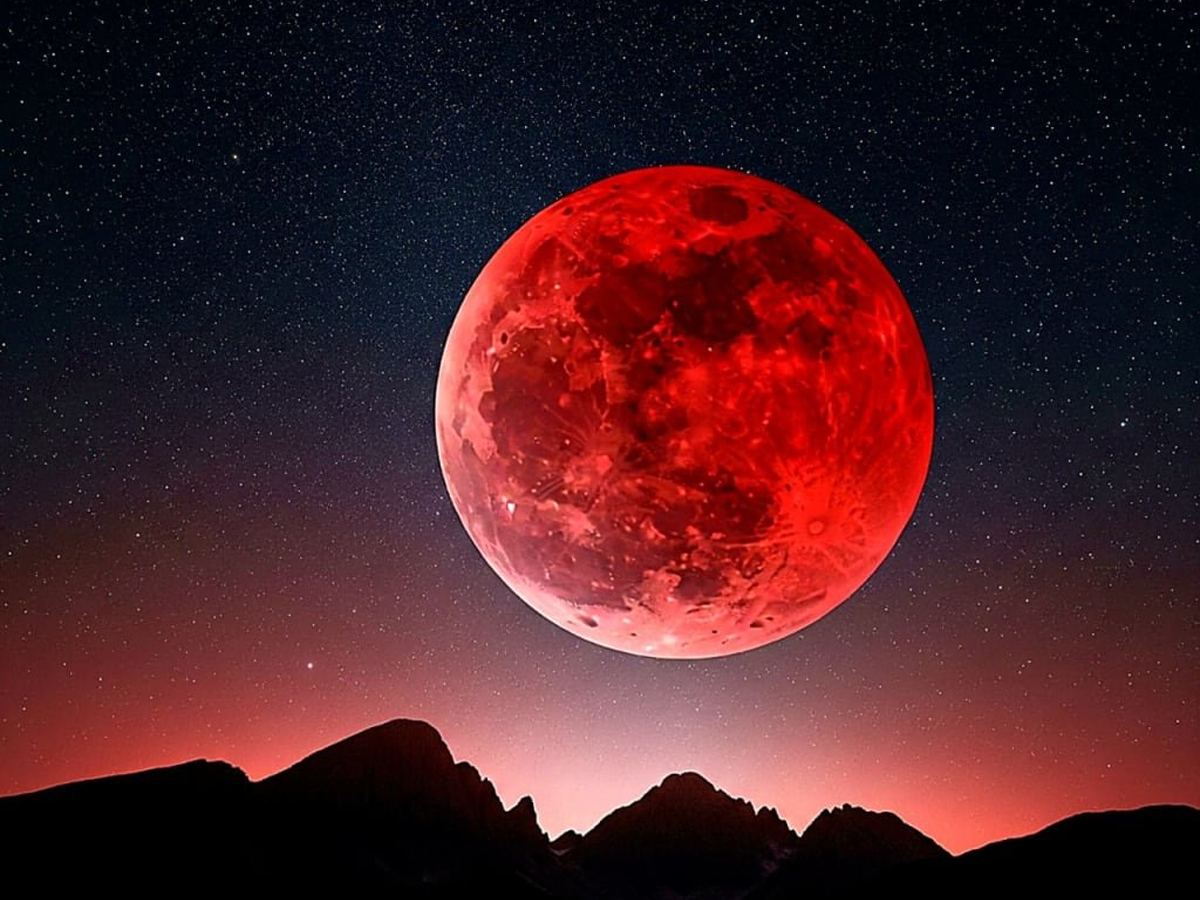
The night of September 7-8, 2025, will deliver a breathtaking celestial event for sky watchers throughout India, and that is a total lunar eclipse (Chandra Grahan). During this phenomenon event the Earth will pass squarely between the Sun and the Moon during the uncommon occurrence, which will cast a shadow. This shadow will give the Moon a vivid crimson color, which is also known as the Blood Moon.
The eclipse’s total phase lasts from 11:00 PM to 12:22 AM, with the eclipse starting at 8:58 PM on September 7 and ending at 2:25 AM on September 8.
Chandra Grahan in India
Penumbral Eclipse Begins: 8:58 PM (Sept 7)
Partial Eclipse Begins: 9:58 PM (Sept 7)
Total Eclipse Begins: 11:00 PM (Sept 7)
Maximum Eclipse: 11:41 PM (Sept 7)
Total Eclipse Ends: 12:22 AM (Sept 8)
Partial Eclipse Ends: 1:26 AM (Sept 8)
Penumbral Eclipse Ends: 2:25 AM (Sept 8)
Lunar Eclipse/Chandra Grahan 2025 Timings Across All Indian States
Lunar Eclipse in Andaman & Nicobar Islands
The lunar eclipse will be visible across the islands from 8:58 PM on Sept 7 to 2:25 AM on Sept 8, with totality between 11:00 PM and 12:22 AM.
Lunar Eclipse in Andhra Pradesh
Residents of Visakhapatnam, Vijayawada, and other regions will see the eclipse during the same timings, with the total lunar eclipse from 11:00 PM to 12:22 AM.
Lunar Eclipse in Arunachal Pradesh
In Itanagar and across Arunachal, the Chandra Grahan spans 8:58 PM – 2:25 AM, with the red Moon visible between 11:00 PM and 12:22 AM.
Lunar Eclipse in Assam
From Guwahati to Silchar, the eclipse occurs on Sept 7–8, with the total eclipse phase between 11:00 PM and 12:22 AM.
Lunar Eclipse in Bihar
In Patna and across Bihar, the lunar eclipse begins at 8:58 PM and ends at 2:25 AM, with total eclipse from 11:00 PM – 12:22 AM.
Lunar Eclipse in Chandigarh (UT)
The UT will witness the full event, with totality between 11:00 PM and 12:22 AM and overall visibility from 8:58 PM to 2:25 AM.
Lunar Eclipse in Chhattisgarh
In Raipur and other regions, the eclipse timings remain the same, with maximum eclipse around 11:41 PM.
Lunar Eclipse in Delhi (NCT)
The national capital will experience the eclipse on Sept 7–8, 2025, with a total eclipse from 11:00 PM to 12:22 AM.
Lunar Eclipse in Goa
In Panaji and across Goa, the Moon will enter totality at 11:00 PM (Sept 7) and exit at 12:22 AM (Sept 8).
Lunar Eclipse in Gujarat
Ahmedabad, Surat, and other cities will see the eclipse from 8:58 PM – 2:25 AM, with totality in the 11:00 PM – 12:22 AM window.
Lunar Eclipse in Haryana
Residents of Gurugram, Faridabad, and the rest of Haryana will see the eclipse at the same time, with totality around midnight.
Lunar Eclipse in Himachal Pradesh
Shimla and Dharamshala will witness the eclipse beginning at 8:58 PM and ending at 2:25 AM, with totality from 11:00 PM to 12:22 AM.
Lunar Eclipse in Jammu & Kashmir
In Srinagar and across J&K, the eclipse timings are the same, with maximum eclipse around 11:41 PM.
Lunar Eclipse in Jharkhand
Ranchi and Jamshedpur will see the eclipse from 8:58 PM – 2:25 AM, with totality in the 11:00 PM – 12:22 AM slot.
Lunar Eclipse in Karnataka
In Bengaluru and Mysuru, the Chandra Grahan will be visible on Sept 7–8, with the total eclipse lasting 82 minutes.
Lunar Eclipse in Kerala
Thiruvananthapuram and Kochi will experience the full eclipse, with total phase from 11:00 PM – 12:22 AM.
Lunar Eclipse in Lakshadweep (UT)
The islands will see the eclipse starting at 8:58 PM and ending at 2:25 AM, with totality from 11:00 PM – 12:22 AM.
Lunar Eclipse in Madhya Pradesh
In Bhopal, Indore, and Gwalior, the total lunar eclipse occurs between 11:00 PM and 12:22 AM, visible across the state.
Lunar Eclipse in Maharashtra
Mumbai, Pune, and Nagpur will witness the eclipse at the same time, with the peak at 11:41 PM.
Lunar Eclipse in Manipur
In Imphal, the Moon will turn red between 11:00 PM and 12:22 AM, with the full eclipse visible until 2:25 AM.
Lunar Eclipse in Meghalaya
Shillong and other parts of Meghalaya will see the Chandra Grahan from 8:58 PM to 2:25 AM, with totality around midnight.
Lunar Eclipse in Mizoram
In Aizawl, the lunar eclipse will occur at the same time as the rest of India, with the total eclipse lasting 82 minutes.
Lunar Eclipse in Nagaland
Kohima and Dimapur will experience the total lunar eclipse from 11:00 PM to 12:22 AM, with visibility of the full event.
Lunar Eclipse in Odisha
Bhubaneswar, Puri, and Cuttack will witness the eclipse beginning at 8:58 PM and ending at 2:25 AM, with maximum at 11:41 PM.
Lunar Eclipse in Puducherry (UT)
In Puducherry, the Moon will enter total eclipse at 11:00 PM and exit by 12:22 AM, with the event ending at 2:25 AM.
Lunar Eclipse in Punjab
Chandigarh, Amritsar, and Ludhiana will see the eclipse during the same schedule, with totality from 11:00 PM – 12:22 AM.
Lunar Eclipse in Rajasthan
Jaipur, Jodhpur, and Udaipur will experience the eclipse on Sept 7–8, with totality visible near midnight.
Lunar Eclipse in Sikkim
Gangtok and other regions will witness the eclipse from 8:58 PM – 2:25 AM, with total eclipse between 11:00 PM and 12:22 AM.
Lunar Eclipse in Tamil Nadu
In Chennai, Madurai, and Coimbatore, the lunar eclipse will be visible on Sept 7–8, with the peak red Moon at 11:41 PM.
Lunar Eclipse in Telangana
Hyderabad and the rest of Telangana will see the full lunar eclipse, with totality at 11:00 PM – 12:22 AM.
Lunar Eclipse in Tripura
In Agartala, the eclipse timings remain the same, with totality lasting over an hour.
Lunar Eclipse in Uttarakhand
Dehradun, Haridwar, and Nainital will experience the eclipse on Sept 7–8, with the Moon turning red between 11:00 PM and 12:22 AM.
Lunar Eclipse in Uttar Pradesh
In Lucknow, Varanasi, and Kanpur, the Chandra Grahan will be visible from 8:58 PM to 2:25 AM, with totality near midnight.
Lunar Eclipse in West Bengal
Kolkata, Siliguri, and Howrah will see the lunar eclipse starting at 8:58 PM and ending at 2:25 AM, with the total phase in the 11:00 PM – 12:22 AM window.
This rare celestial event offers a chance for people across all states and union territories to witness the Moon in its dramatic blood-red form, with the total eclipse lasting 82 minutes.
So mark your calendars, step outside, and don’t miss this cosmic spectacle lighting up India’s night sky.