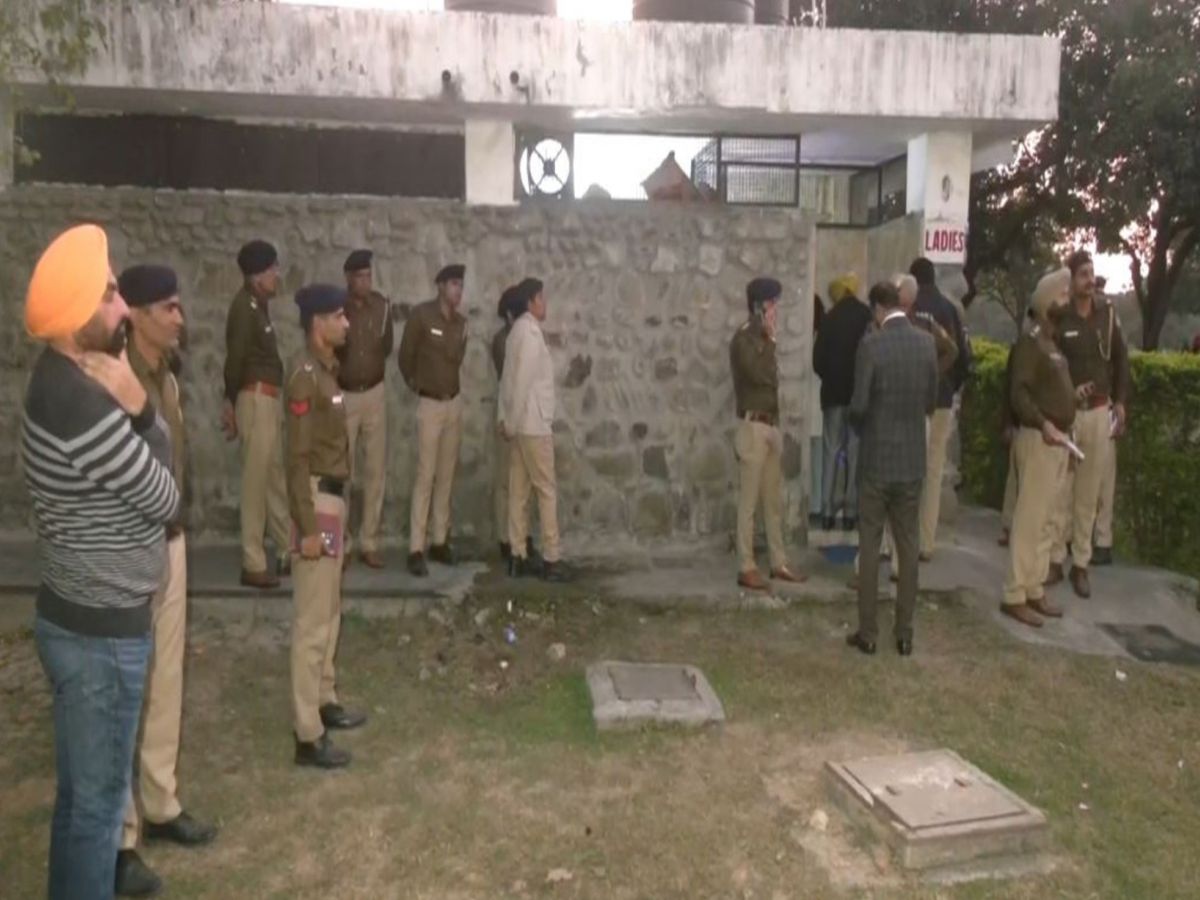
A terrifying incident shocked visitors at Chandigarh’s Rose Garden in Sector 16 on Saturday afternoon when a 30-year-old woman was discovered inside the public toilet with her throat slit. Though she was still breathing when found, she died within moments. Police later recovered a knife believed to be the weapon, along with her mobile phone and several anti-depressant tablets.
How Chandigarh Rose Garden Death Incident Was Discovered
Around 3:15 pm, regular visitors heard a sudden scream coming from the women’s toilet. They immediately alerted the traffic police posted at the gate. A woman nearby was asked to look inside, where she saw the victim lying in a pool of blood, with a deep cut across her neck.
Police rushed the woman to GMSH-16, but doctors declared her brought dead. Her body was later placed in the hospital mortuary for post-mortem. CCTV feeds from around the area are now under detailed examination.
SSP Kanwardeep Kaur said a case of murder has been registered against an unknown person, though investigators are keeping open the possibility of suicide. Police informed the woman’s family in Uttar Pradesh, who arrived in Chandigarh later that evening.
Documents Help to Identify Woman in Chandigarh Rose Garden Death Case
Documents recovered from her belongings, including a Bihar Staff Selection Commission form, helped police identify the woman as Diksha Thakur. She was originally from Saharanpur, Uttar Pradesh, and had been living separately from her husband for nearly a year. She was the mother of a three-year-old boy.
For the past four to five months, Diksha had been staying in a PG in Phase 11, Mohali. She worked as a customer care executive at Chaupal TV, a private media company located in Chandigarh’s Industrial Area, Phase 2.
Investigations show she had been on medical leave for over a week due to anxiety-related issues. On Monday, she had visited Alchemist Hospital in Panchkula with her brother-in-law, where she was prescribed anti-anxiety medicines.
On Saturday, Diksha resumed work but left early, around 2 pm, saying she wasn’t feeling well. Instead of going home, she went to Rose Garden. Police are questioning her brother-in-law, who normally picked her up from office.
Who Was the Victim Diksha Thakur in Chandigarh Rose Garden Death Case?
Diksha, a 30-year-old woman from Saharanpur in Uttar Pradesh, had been living separately from her husband and was staying in a PG accommodation in Phase 11, Mohali. Her husband currently resides in Sarangpur, Chandigarh. Police identified her through a Bihar Staff Selection Commission examination slip found in her bag.
Murder or Suicide? Police Still Uncertain
A four-inch knife similar to a kitchen blade was recovered from the spot. However, officers say it is too early to confirm whether the woman was murdered or died by suicide. There was only one external injury on her body, and no signs of struggle were found.
Her bag also contained anti-depressant medicines, making the case even more complex. A senior officer said the post-mortem would provide crucial clarity. SSP Kanwardeep Kaur stated, “At this stage, we have not found evidence of foul play. However, we are examining every possible angle, including personal, circumstantial and psychological factors. The post-mortem report and forensic analysis will be crucial in determining the exact cause of death.”
Police also noted that the female sanitation worker posted at the toilet was absent at the time, leaving no eyewitness from inside the facility.
CCTV Footage and Phone Records Being Analysed
Multiple police teams are scanning CCTV footage from inside and around the Rose Garden to track when Diksha arrived, whether she was alone, and her movements before the incident. Her call details from both mobile phones are being examined.
Senior officers, including DSP (Central) Dalbir Singh Bhinder and Sector 3 SHO Narinder Singh Patial, visited the spot. Forensic teams lifted blood samples, fingerprints, the suspected weapon, her mobile phones and her bag.
The toilet has now been sealed, and security at Rose Garden has been tightened. The disturbing case has unsettled the public and triggered demands for better surveillance and stronger safety measures in parks, especially those frequented by women, children and senior citizens.
Also Read: Delhi Wakes Up to Cleaner Air as AQI Falls to 270 After Weeks of Smog