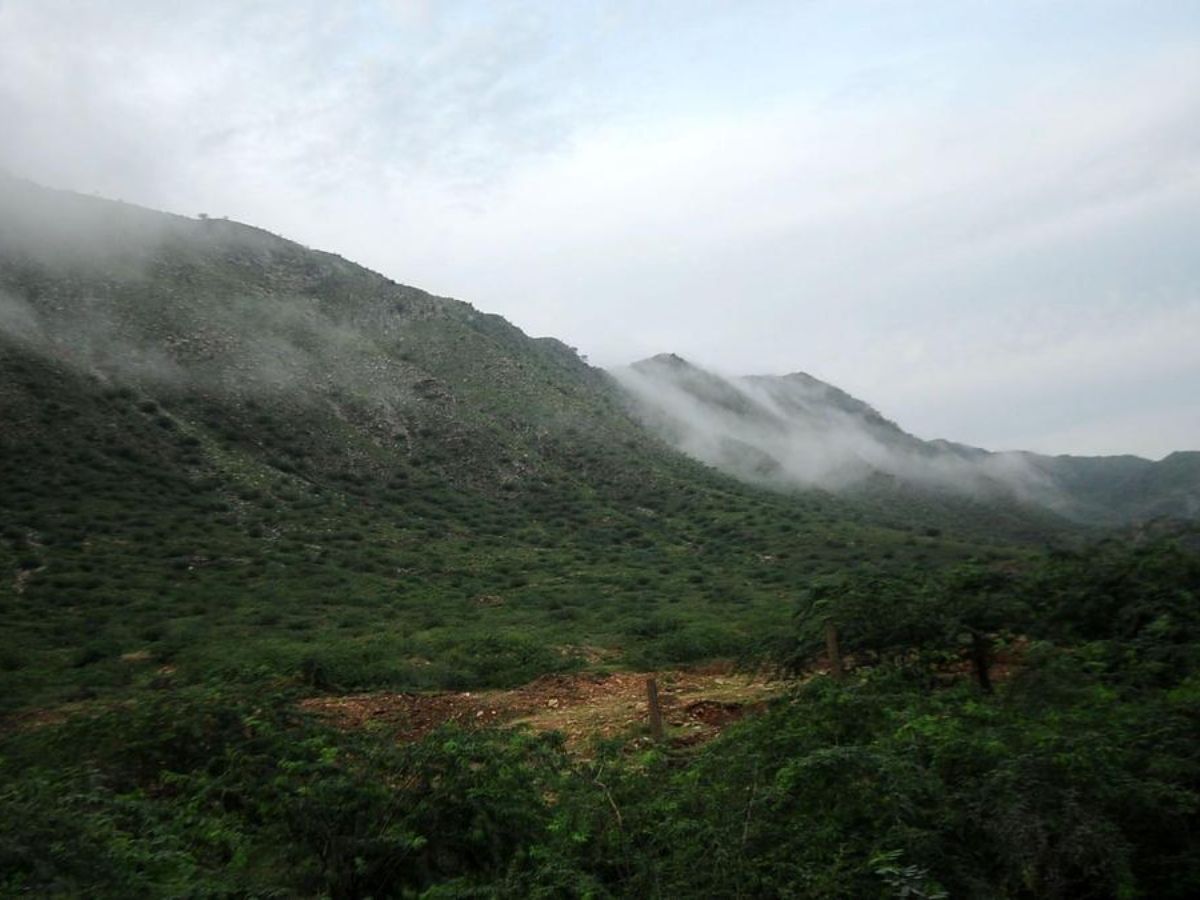
The Centre on Sunday rejected claims that it had weakened protections for the Aravalli hills, saying nearly 90% of the region will remain protected despite recent confusion and protests.
Union Environment Minister Bhupendra Yadav said misinformation was circulating on social media and that the government remained committed to conserving the ancient mountain range and controlling mining.
Aravalli Hills: Centre Clarifies Protection Status
Union Environment Minister Bhupendra Yadav responded to criticism by clarifying the government’s position on the Aravalli protections. He said there were “no relaxations on the Aravalli” and dismissed claims that new rules would open up large parts of the hills to mining or development.
Bhupendra Yadav explained that a Supreme Court-approved framework now defines what qualifies as the Aravalli range. Under this system, a landform must be at least 100 metres above its local ground level or part of a 500-metre cluster to be classified as Aravalli. Even with this definition, about 90% of the area remains protected.
What the 100-Metre Rule Means?
Critics said the new definition could strip protections from many hills that are less than 100 metres tall. But Yadav insisted that this was a misunderstanding. He said the rule considers the entire structure of the hill from base to top, not merely a top-only measurement. He also said the land between hill formations would still count as part of the protected range.
He explained this is why 90% of the Aravalli range still falls within the protected zone, and only a small portion is eligible for mining.
Mining Rules Remain Strict
Yadav emphasised that mining will be tightly regulated in the Aravalli region. He noted that out of around 1.44 lakh square kilometres, only about 0.19% is eligible for mining under the new framework. Even in these areas, any mining will need a Management Plan for Sustainable Mining and clearance from the Indian Council of Forestry Research and Education (ICFRE) before any activity begins.
He also highlighted that mining in the Delhi section of the Aravalli hills remains completely banned and that existing protected forests and reserves will stay untouched.
Protests and Opposition Voices
Despite the government’s explanations, environmental activists and some political leaders continue to oppose the Supreme Court’s acceptance of the new definition. Protests erupted in towns such as Gurugram and Udaipur, where demonstrators warned that the recent changes could harm the ecology of one of India’s oldest mountain systems.
Activists argued that the Aravallis act as a natural shield for the Delhi-NCR region, helping prevent desertification, reduce pollution, and preserve biodiversity. Many fear that excluding hills under 100 metres from legal protection could expose them to mining and construction threats.
Political Reactions and Broader Concerns
Opposition leaders have also criticised the move. Samajwadi Party chief Akhilesh Yadav described preserving the Aravallis as “inseparable from Delhi’s survival”, warning that further degradation would worsen air pollution and climate challenges in the capital region.
In Rajasthan, former Chief Minister Ashok Gehlot called the Supreme Court ruling an “invitation to eco-destruction”, reflecting wider anxieties about long-term environmental impacts.
Local Community Engagement
Beyond political debate, tribal communities in the southern Aravalli regions have taken a stand to protect the range. They argue that the hills are vital to their culture, livelihood, and identity, and have pledged to safeguard them against ecological harm. These grassroots campaigns highlight the social as well as environmental importance of the Aravallis.
What Happens Next?
The government has insisted that protections remain robust and that any mining activity will be carefully controlled. At the same time, activists plan continued protests and calls for clearer conservation laws. The controversy shows the tension between development, legal definitions, and ecological preservation in shaping India’s environmental policies.