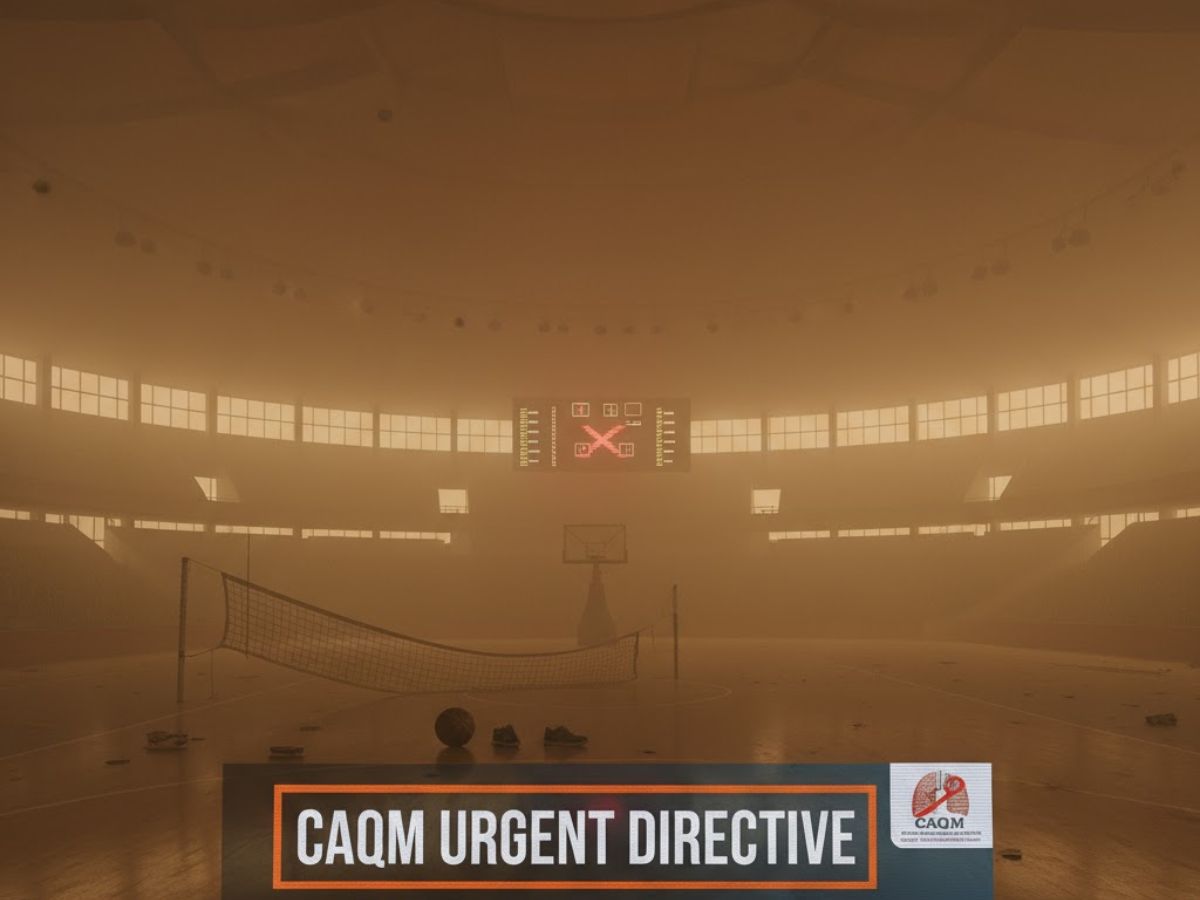
In a significant move to protect public health, the Commission for Air Quality Management (CAQM) has issued a strong advisory to Delhi and its adjoining states. The directive calls for the postponement of all physical sports competitions scheduled for November and December, as the region grapples with persistently dangerous air pollution levels.
Why This Sudden Focus on Sports Events?
This decision did not emerge in isolation. The CAQM acted in compliance with observations from the Supreme Court of India, which is actively hearing matters related to the capital’s air pollution crisis. The commission convened a high-level consultative meeting with key stakeholders. These included education ministries, pollution control boards from the National Capital Region (NCR) states, and the Sports Authority of India. The sole agenda was to examine the worsening air quality and devise concrete measures to safeguard children’s health during the peak pollution months of November and December.
Also Read: Assam Draws a Legal Line on Marriage, Announces Tough Anti-Polygamy Law
What Exactly is the Government Asking For?
Following the meeting, the CAQM has written urgent letters to the governments of Delhi, Haryana, Rajasthan, and Uttar Pradesh. The letters request “immediate and appropriate action” to ensure that all physical sports events are postponed in areas where the air quality is poor. The directive is a proactive measure, based on prevailing air quality trends, to prevent children and young athletes from engaging in strenuous outdoor activities when the air is toxic. The commission emphasized that the health of students must be the paramount concern.
What About the Students’ Academic and Sports Records?
An important element of this order deals with the possible impact on students. The CAQM has made it clear that students shouldn’t face any academic or competitive setback because of the delays. It has advised state governments to look for workable options, like rescheduling events once the air improves or arranging alternative activities for students. The goal is to balance health safeguards with the students’ overall academic and co-curricular progress.
How Bad is the Air Quality Right Now?
The urgency of this directive becomes clear when looking at the data. Delhi’s Air Quality Index (AQI) recently hit 392, which falls in the ‘very poor’ category. For more than a month, the city’s air has stayed between ‘very poor’ and ‘severe,’ making long outdoor exposure unsafe. This ongoing pollution pushed the government to activate GRAP Stage-III on November 11, bringing tougher limits on construction, vehicles, and industries.
Also Read: Pakistan on Maximum Alert as FM Raises Specter of ‘All-Out War’ with India
What is the Larger Context of This Action?
The Supreme Court’s role has been a key factor. The bench, led by the Chief Justice of India, is not only handling this issue but has also issued other directions, including ensuring subsistence allowances for construction workers hit by pollution controls. The Court has required state governments to regularly apply and review preventive steps, and it has ordered air pollution cases to be heard every month. This shows a steady judicial push for accountability and stronger action on the environmental crisis.