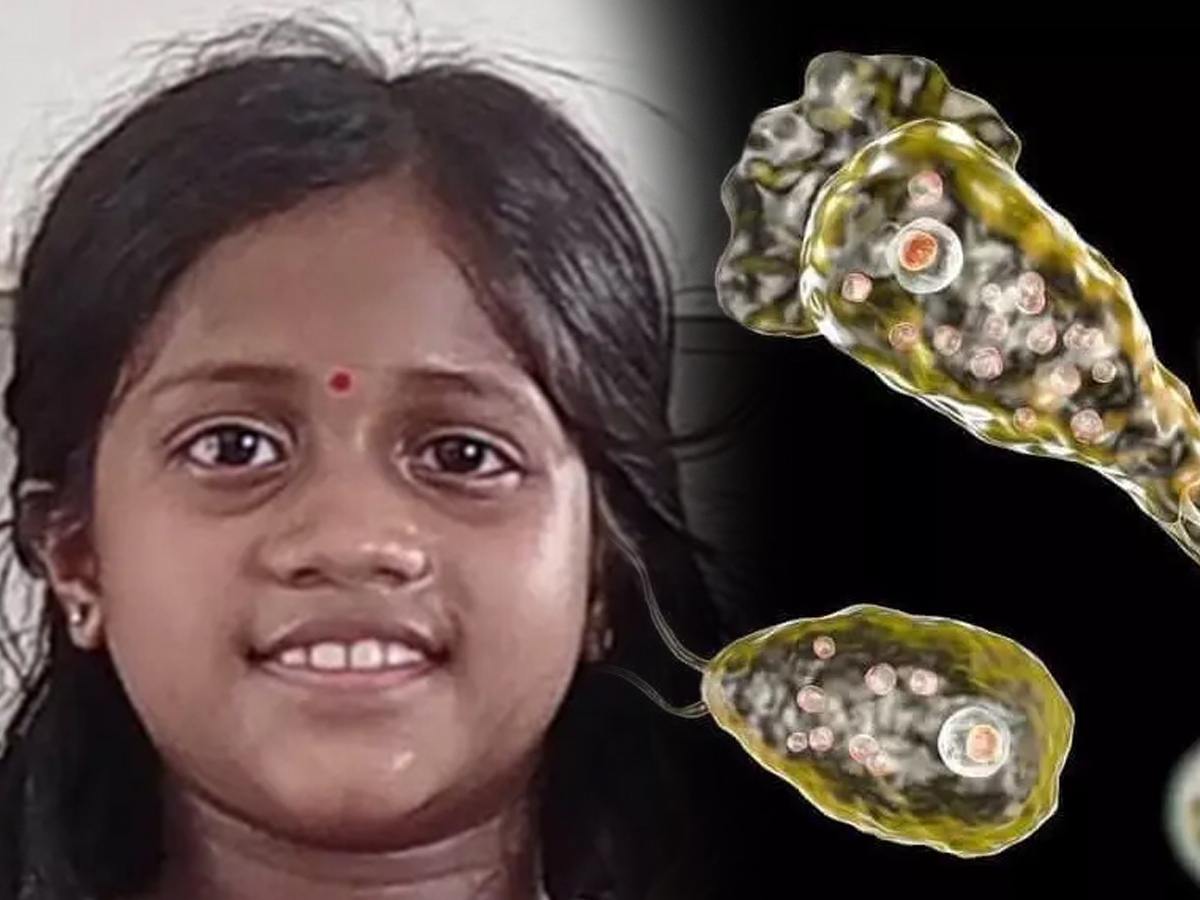
A nine-year-old girl in Kerala’s Kozhikode district has died of amoebic encephalitis, a rare and deadly brain infection caused by a free-living amoeba found in contaminated water. Health officials said the child developed a sudden high fever last week and was admitted to a local hospital. As her condition worsened quickly, doctors shifted her to Kozhikode Medical College.
She died the same day despite treatment. Officials confirmed that this is the fourth case of amoebic encephalitis reported in Kozhikode this year.
Authorities are now trying to identify the water body where the child may have come in contact with the infection. Experts suspect that she might have contracted it from a pond, lake, or other freshwater sources in the area.
What is Amoebic Encephalitis?
Amoebic encephalitis is a rare but often fatal brain infection caused by free-living amoebae. It appears in two forms, which are Primary Amoebic Meningoencephalitis (PAM) and Granulomatous Amoebic Encephalitis (GAE).
ALSO READ: SCERT Kerala Corrects Netaji Bose ‘Fled Fearing British’ Textbook Error, Orders Probe
PAM is usually caused by Naegleria fowleri and spreads fast and leading to severe brain inflammation. GAE develops slowly and usually affects people with weak immune systems.
Naegleria fowleri, also called the brain-eating amoeba, thrives in warm freshwater sources like lakes, rivers, hot springs, and even soil.
How the Infection Spreads
Doctors say infection usually occurs when contaminated water enters the nose. From there, the amoeba travels to the brain. Swimming, diving, or water sports in infected lakes or rivers are common causes.
In very rare cases, the infection may spread from improperly chlorinated swimming pools or heated tap water.
Symptoms of Brain-Eating Amoeba
The symptoms appear suddenly and worsen quickly. These include High fever, Severe headache, Nausea and vomiting, Trembling and stiff neck, Extreme light sensitivity, Mental Confusion, and Coma.
READ MORE: INDIA Bloc to Discuss Joint VP Candidate Amid Parliament Deadlock
Doctors warn that the fatality rate is more than 97%, even with treatment.
Treatment Options
Doctors use a combination of drugs, including amphotericin B, rifampin, fluconazole, and miltefosine. Miltefosine, originally used for treating leishmaniasis, has shown promise in some cases.
Cooling the body to reduce brain swelling may also help. However, early diagnosis remains the most critical factor for survival.
Prevention Measures
Since the treatment success is very rare, doctors strongly advise prevention. Some of the key steps include avoiding swimming or water sports in warm freshwater lakes or rivers and not using tap water in neti pots or for nasal cleansing unless it is sterilized or distilled.
Using proper water filters can help to remove the germs. Chlorine bleach should be used before nasal or sinus cleaning with disinfectant water.
Report fever, headache, or other symptoms after freshwater exposure to doctors immediately.
MUST READ: Army Jawan Brutally Assaulted by Toll Staff in Meerut, Pinned to Pole | Watch