
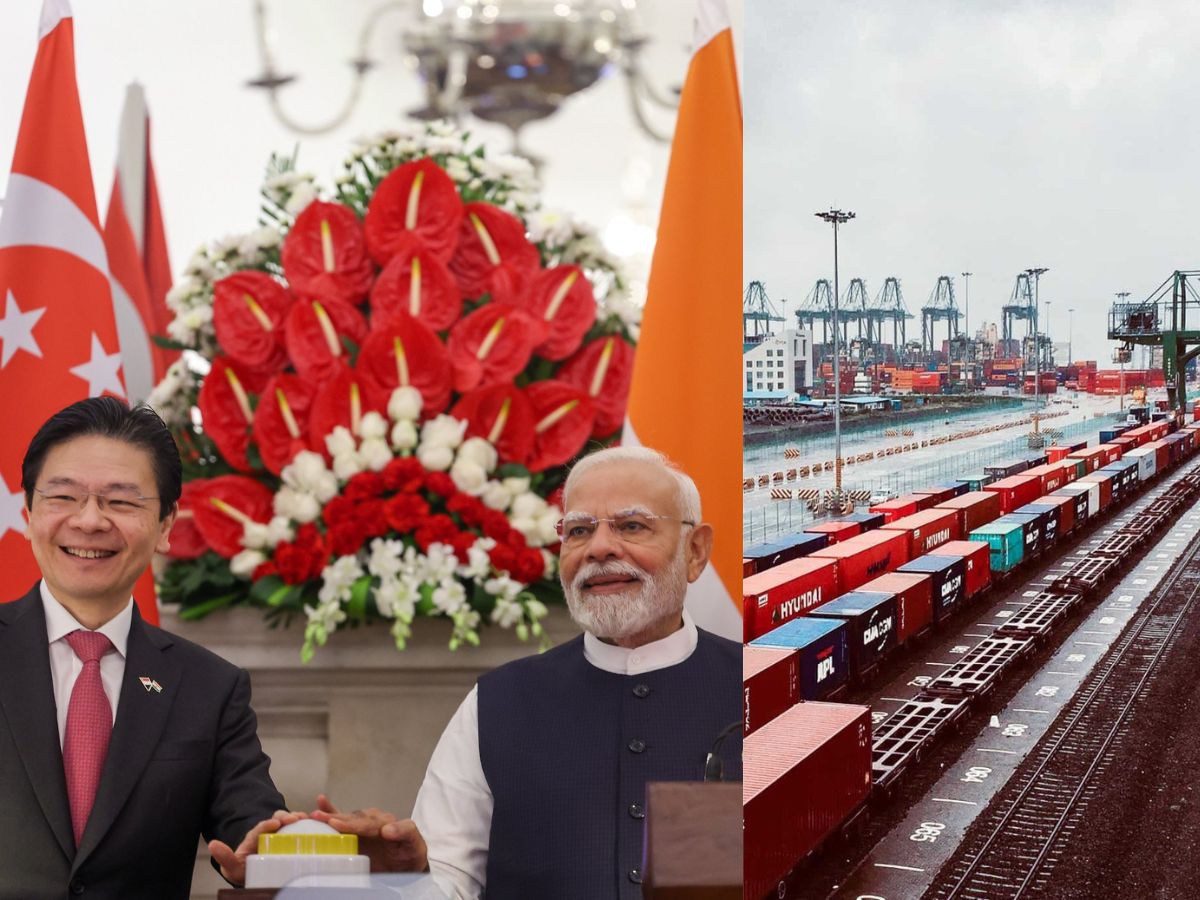
PM Narendra Modi and Singapore Prime Minister Lawrence Wong recently commissioned the Phase II of PSA Mumbai Terminal at Jawaharlal Nehru Port, a turning point for Indian maritime and aviation infrastructure. The historic event, conducted virtually with senior government officials and dignitaries in attendance at Navi Mumbai, highlights increasing cooperation between Singapore and India and augurs well for expanded connectivity and economic growth in the region.
ALSO READ | The Stability Taunt by PM Modi from Japan is for You, Mr Trump!
The Event and India-Singapore Partnership
The opening ceremony was held on Thursday i.e. September 4, 2025, and was attended by the top government leaders, including Maharashtra Chief Minister and Union Ports Minister. The partnership is based on decades of warm diplomatic relations, with both countries eager to enhance transit infrastructure and economic integration. Singapore’s big investment, USD 1.3 billion in the Mumbai terminal is the biggest foreign direct investment from the country to India, which has become a precedent for international cooperation in the aviation and shipping industries.
Significance of the Mumbai Terminal
Phase II of the Bharat Mumbai Container Terminal (BMCT) transforms Mumbai’s standing in global logistics, boosting the port’s capacity to 4.8 million TEUs annually, making it the largest standalone container terminal in India. The terminal features 2,000 metres of continuous quay, state-of-the-art cranes, direct rail links to the dedicated freight corridor, and advanced multimodal connectivity. These features elevate Mumbai’s capability for handling mega container vessels and seamless integration across air, sea, and land networks.
ALSO READ | Gold Prices Aim towards ₹1.10L per 10 gms | What’s does it Consolidate?
Effect on Trade and Connectivity
The enhanced rail connectivity and advanced handling capacity of the new terminal are anticipated to generate 1,500 new employment opportunities and increase India’s export competitiveness. Through the inclusion of direct metro and bus station links, air and sea terminals in Mumbai will facilitate a smoother movement of passengers and cargo, substantially eliminating congestion. The project is also in keeping with sustainability by embedding biophilic features, natural light, and green areas, making Mumbai a future-proofing aviation and shipping hub.
Regional and Global Implications
For India, the terminal enlargement not only addresses growing passenger and cargo needs but also positions Mumbai among the top ten world ports once other ongoing infrastructure projects are completed. For Singapore, it enhances economic linkages and opens up the scope for joint training, research, and aircraft maintenance. The opening is an important milestone of the India-Singapore Comprehensive Strategic Partnership for digitalization, human resource development, and sustainable transport.
ALSO READ | PM Kisan 21st instalment Date: When would the Govt Release Funds?
Nutshell
The commissioning of the new Mumbai terminal by PM Modi and the Singapore PM represents a revolutionary enhancement of India’s infrastructure, reflecting both countries’ commitment to regional connectivity and economic growth. This ambitious project will leave a lasting legacy on trade, job creation, and global integration, further cementing Mumbai as South Asia’s gateway.