A Flag Born of Struggle and Sacrifice
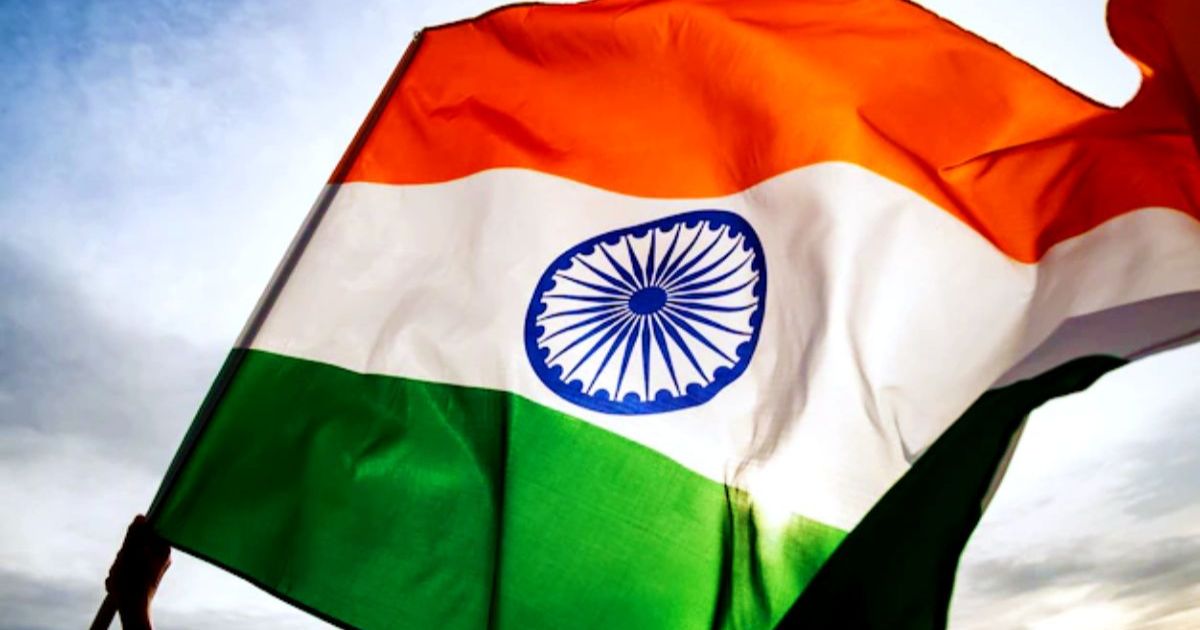
When the Indian flag waves on 15 August, it is much more than a ritual gesture. It is the palpable heartbeat of a nation that struggled out of the chains of colonialism. Every colour has a voice in this narrative. Saffron is the voice of valour and the readiness to give up one’s life for the cause of the masses. White is the voice of truth and peace in a multi-racial society. Green is the voice of fertility, expansion, and the natural wealth of the earth.
At its center rests the navy-blue Ashoka Chakra the Dharma Chakra, or “wheel of law” with 24 spokes. It reminds us that life is continuous motion and development, but stagnation is regression. It also reminds us that justice, duty, and moral living are not ideas, but everyday habits.
The Flag’s Evolution Through Time
The journey to the Tiranga as we know it wasn’t smooth. The initial one, designed in 1904 by Sister Nivedita, a follower of Swami Vivekananda, was a red-and-yellow flag bearing the words Bonde Matoram and an image of a thunderbolt.
Pingali Venkayya, in 1921, designed a two-colour flag on the personal request of Mahatma Gandhi, with a spinning wheel to represent self-sufficiency and the Swadeshi movement. White was included between green and saffron to signify peace shortly thereafter.
By 1931, the Indian National Congress formally accepted a tricolour of saffron, white, and green with the charkha in the middle. It was explained that the design was not communal in meaning it symbolized unity. Then, on 22 July 1947, the Constituent Assembly finally selected the current design, keeping the three stripes but substituting the charkha with the Ashoka Chakra, taken from the Lion Capital at Sarnath.
The Wheel of Duty: A Moral Compass for Citizens
The 24 spokes of the Ashoka Chakra are not ornamental; they symbolize 24 fundamental duties or principles that govern the country. Some of them are chastity, health, peace, sacrifice, morality, service, forgiveness, love, friendship, fraternity, organisation, welfare, prosperity, industry, safety, awareness, equality, responsible use of resources (Artha), faith in policy, justice, co-operation, fulfilling duties, respecting rights, and seeking wisdom.
This “Wheel of Duty” is a soft reminder that liberty without obligation can speedily become meaningless. These values are lived in the way citizens treat each other, guard public places, fight for what’s right, and labor for the progress of the country.
On Independence Day, when Tiranga unfurls, it is not merely a tribute to the past. It is a vow for the future to defend not only sovereignty, but also the common ideals that make the nation unbreakable. The flag invokes a call for oneness above differences, deeds above words, and a pledge to step forward as one, led by the wheel in its center.