
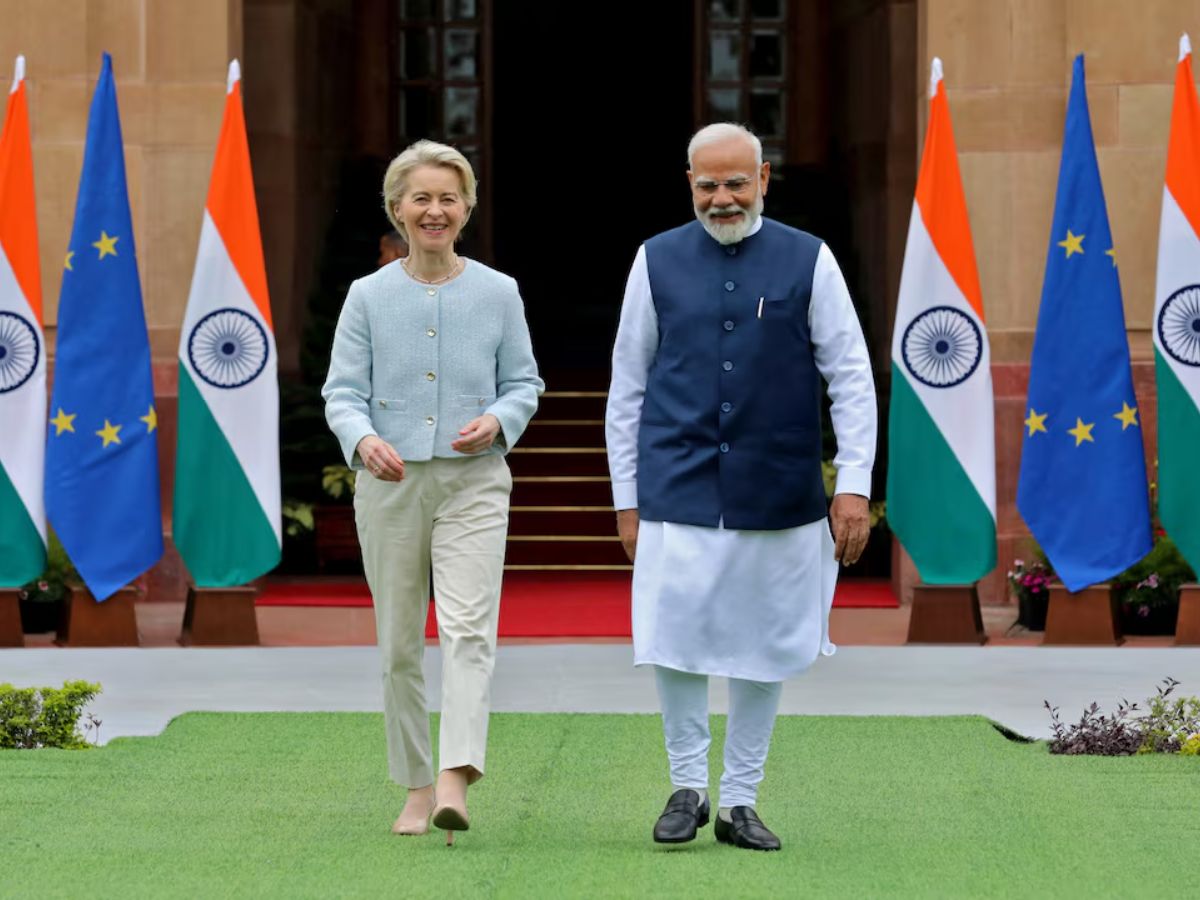
The European Union’s senior leadership made a major diplomatic move on Thursday by contacting Prime Minister Narendra Modi directly and requesting India’s support in bringing an end to the conflict in Ukraine.The high-level phone call also served to accelerate negotiations for a long-pending free trade agreement, with both sides setting a firm year-end deadline.
The conversation between PM Modi, European Council President António Costa, and European Commission President Ursula von der Leyen underscores India’s growing strategic importance on the global stage, positioning it as a potential peacemaker between Russia and the West.
What Did the EU Leaders Say?
Following the call, both President Costa and President von der Leyen took to social media with identical statements. They explicitly called on India to use its diplomatic leverage with Moscow.
“India has an important role to play in bringing Russia to end its war of aggression and helping create a path towards peace,” they stated. They also welcomed India’s ongoing engagement with Ukrainian President Volodymyr Zelenskyy, highlighting the global ramifications of the conflict by noting it “carries global security consequences and undermines economic stability.”
What Was India’s Response?
PM Modi reiterated India’s unwavering support for a peaceful resolution and the swift restoration of calm and peace, according to a readout from the country’s Ministry of External Affairs. The Indian statement was careful not to provide specifics, maintaining New Delhi’s balanced and independent stance.
The readout also emphasized that the leaders discussed how the India-EU strategic partnership is crucial for addressing global challenges and promoting a “rules-based order.” In a parallel development, External Affairs Minister S. Jaishankar spoke with his Ukrainian counterpart, Andrii Sybiha, stating India “supports an early end to this conflict and the establishment of an enduring peace.”
Why is the EU Turning to India Now?
India is a rare credible intermediate due to its unique situation. Think about these important points:
- Historic Ties: India shares a decades-long strategic relationship with Russia, yet it also maintains growing ties with the West.
- Direct Access: In recent weeks, both President Vladimir Putin and President Zelenskyy have personally called PM Modi to discuss the conflict.
- Consistent Message: India has not publicly condemned Russia but has consistently called for dialogue and peace, with Modi famously telling Putin that “this is not an era of war.”
The timing of the call is also critical. It came just two days before a meeting of EU foreign ministers to discuss a new “Anti-Circumvention Tool.” This tool could lead to secondary sanctions on countries aiding Russia in acquiring sanctioned goods. While not naming India, the EU is keen to secure cooperation before such measures become necessary.
What About the Trade Deal and Oil Purchases?
The call was not solely about Ukraine. A major focus was on finalizing the India-EU Free Trade Agreement (FTA). Both leaders “reaffirmed the shared commitment” to conclude negotiations by the end of this year, a goal set during von der Leyen’s visit to India earlier this year.
This push for economic partnership exists alongside ongoing pressure from the West on India to reduce its purchase of Russian oil, which now meets nearly 40% of the country’s energy needs. The U.S. recently imposed punitive tariffs on some Indian exports, citing their origin from Russian oil. India has said that these acquisitions are necessary for its energy security.
Also Read: India’s Quiet Power Play: EU Seeks Delhi’s Backing To End Ukraine War Ahead Of 2026 Summit
What’s Next for India-EU Relations?
The leaders agreed to work towards organizing the next India-EU Summit in India at an early date. PM Modi has already invited both Costa and von der Leyen. The summit is expected to produce a joint strategic agenda, charting the course for a partnership that must deftly navigate the complex geopolitics of war, trade, and global security.
With 12 rounds of FTA talks already completed, the stage is set for a frantic few months of diplomacy, on both the economic and geopolitical fronts.