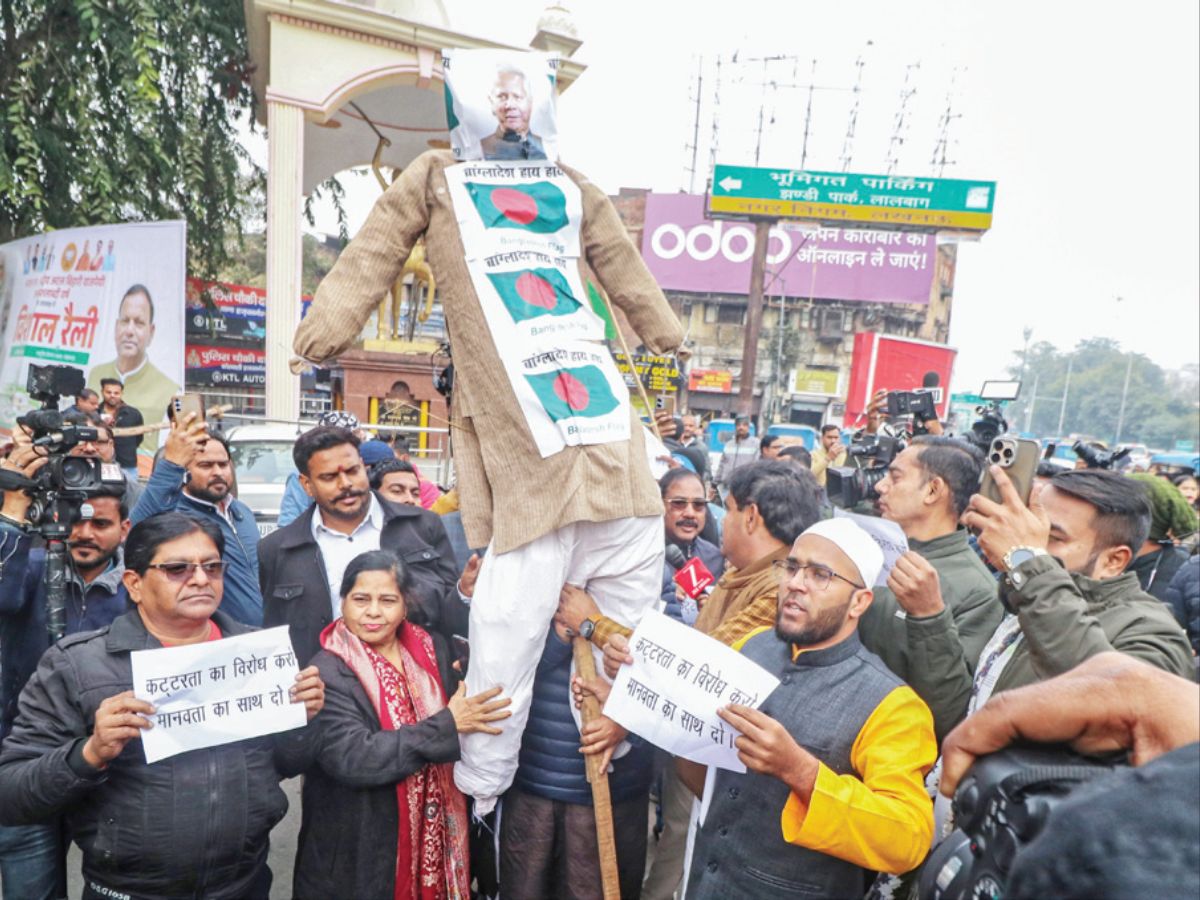
At least 522 incidents of communal violence were reported in Bangladesh between January and December 2025, according to a partial overview compiled by the Bangladesh Hindu Buddhist Christian Unity Council (BHCUC) based on media reports.
The incidents include 61 murders; 28 cases of violence against women, including rape and gangrape; 95 attacks on places of worship involving idol vandalism, looting and arson; 21 cases of occupation or attempted occupation of land belonging to places of worship; 102 attacks on homes and business establishments involving vandalism, looting and arson; 38 cases of abduction, extortion and torture; 47 incidents involving attacks, death threats and torture; 36 cases of torture and arrest on allegations of so-called religious blasphemy; 66 incidents of forcible occupation of homes, land and business establishments; and 29 other incidents.
The Council’s findings sharply contradict figures shared by Bangladesh Chief Adviser Muhammad Yunus on January 19. Yunus stated that 645 incidents involving minority communities were recorded during the same period, but claimed that only 71 were communal in nature, based on an official review of police records.
In a post on X, Yunus said the data offered a “clear and evidence-based picture”, asserting that most cases were criminal rather than communal and stressing the need to ground public discussion in facts rather than “fear or misinformation”.
The Council noted that while Yunus identified 71 incidents as communal, the remaining 574 were categorised as non-communal. According to the post cited by the Council, the 71 communal cases included 38 incidents of temple vandalism, one theft at a temple, eight cases of arson at temples, 23 incidents involving threats to vandalise idols, damage within the premises of places of worship and Facebook posts, and one murder. Among the 574 incidents labelled non-communal were 51 neighbour disputes, 23 land disputes, 106 thefts, 26 incidents linked to previous enmity, 58 cases of rape, 172 unnatural deaths and 138 incidents attributed to other causes.
The Council said this classification suggests that only incidents occurring at temples or within places of worship are being treated as communal. It pointed out that of the 173 deaths officially acknowledged by the government, only one has been recognised as a communal killing, while the remaining 172 have been categorised as unnatural deaths.
Citing the killings of Animesh Sarkar, Sukumar, Dilip Das, Piyas Majumder, Bhobesh Chandra Roy, Subrata Das, Shubho Soren, Dipu Chandra Das, Bajendra Biswas, Utpal Sarkar, Prantosh Sarkar, Amrit Mondol, freedom fighter Jogesh Chandra Roy and his wife Subarna Roy, the Council questioned how these incidents could be deemed non-communal. It also referred to the burning of five Hindu and Buddhist households in Chittagong’s Raozan by locking doors from the outside and arson attacks on five Hindu homes in Pirojpur Sadar.
“Does Professor Dr Muhammad Yunus intend to redefine communalism by suggesting that violence is communal only if it occurs at temples or within the premises of places of worship? Even 58 Hindu women were victims of rape during this period, yet these cases have also been classified as non-communal. We strongly condemn and protest against such an absurd definition of communalism,” the Council said.
The Council further reported that communal violence has continued into 2026, with 42 incidents recorded in the first 27 days of the year. These include 11 murders, one rape, nine incidents of attacks and looting of temples and churches, and 21 incidents involving attacks and looting of homes and business establishments, land grabbing and other forms of violence.
It alleged that the current government has consistently denied ongoing communal violence and has attempted to deflect the issue through what it termed irrational explanations, misleading both national and international communities.
The Council also alleged that by branding the international Hindu organisation ISKCON as “terrorist”, Prabhu Chinmoy Krishna Das Brahmachari, principal of Pundarik Dham in Hathazari, Chattogram, has been imprisoned on false charges, including sedition and murder, with mock trials already underway. It said demands to ban ISKCON have also been raised by certain quarters.
Acting General Secretary Manindra Kumar Nath said several Unity Council leaders, including its General Secretary and senior lawyer Advocate Rana Dasgupta, have been forced to stay away from normal life after being implicated in multiple false cases. The Council demanded the withdrawal of all such cases and the unconditional release of those currently imprisoned on what it described as fabricated charges.
The Council said it has observed no concrete initiatives by the government or the Election Commission to ensure a safe environment for religious and ethnic minorities and indigenous communities during the pre-election, election and post-election periods. It demanded a level playing field to allow minority voters to access polling stations without obstruction, contest elections freely and participate equally in campaigns, along with a ban on the use of religion and communalism in electioneering.
It also called for minority-dominated areas to be identified as high-risk zones, the creation of a monitoring cell, clear communication of security measures to administrative and law enforcement authorities, and a ban on election campaigning at all places of worship. The Council further demanded strict action against religious hate speech and communal propaganda, including the immediate cancellation of the candidatures of those responsible.
Urging political parties to include minority concerns in their election manifestos, the Council reiterated demands for a Minority Protection Act, a National Minority Commission and a Ministry for Minority Affairs, effective implementation of the Vested Property Return Act, constitutional reservation of 60 parliamentary seats for minorities, protection of Devottor property, an Anti-Discrimination Act, proportional representation of minorities in state institutions, full implementation of the Chittagong Hill Tracts Accord, a separate land commission for indigenous peoples of the plains, additional government holidays for Hindu, Buddhist and Christian communities, and the abolition of religious trusts in favour of foundations.