
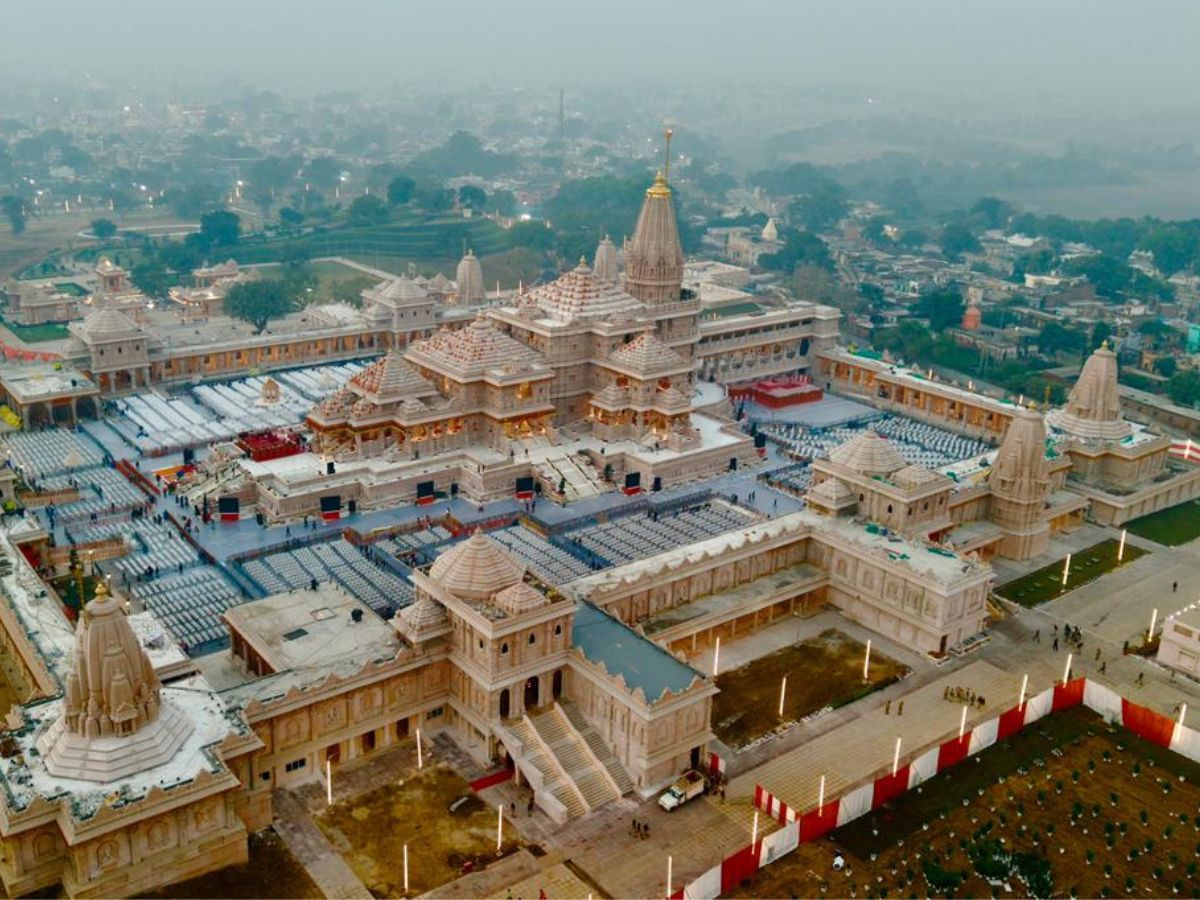
Ayodhya is at the center of national attention as the famous temple city hosts the Dhwaja Arohan, or flag hoisting, ceremony at the Shri Ram Janmabhoomi Temple.
At an event marking the formal completion of the temple, Prime Minister Narendra Modi hoisted a magnificent saffron flag atop the main spire of the temple.
Heavy security has been deployed in the city, and elaborate plans have been made for crowd and traffic management in the city on this historic occasion. Here are 5 major highlights of the auspicious day.
Ayodhya Mandir Flag Hoisting: Traffic Advisory
The city administration is all geared up to handle such a large gathering of people and the visit of the Prime Minister himself, with an enormous security and crowd management plan. Heavy vehicles were banned from entering the city.
Key restrictions include banning the movement of all vehicles and pedestrians along the 2.5 km stretch of Ram Path, the main road to the temple, between Saket Degree College and Shringar Haat, to ensure VVIPs and guests have easy access.
Tightened security features the deployment of thousands of personnel, including special units such as the ATS and NSG, while drone surveillance will continuously be implemented across the sensitive areas. The goal is to streamline the entry of visitors and maintain strict crowd control.
Ayodhya Mandir Flag Hoisting: Why the Orange Flag?
The flag being hoisted is a special 10 ft by 20 ft triangular saffron flag, also known as the Bhagwa Dhwaj. This color holds deep spiritual significance in Hinduism.
The saffron color, or bhagwa, is considered sacred and symbolizes sacrifice, fire, light, and the quest for salvation. It is the color traditionally worn by Hindu ascetics and is seen as representing the sun, which dispels darkness and provides life.
This flag is specifically designed to carry the symbols of the Sun, representing the Suryavansh lineage of Lord Ram; the sacred sound Om; and the Kovidara tree, in order to communicate dignity, unity, and continuity of culture.
Also Read: PM Modi to Hoist Saffron Flag at Ayodhya Ram Temple Today | All You Need To Know
Ayodhya Mandir Flag Hoisting: Muhurat Timing
The flag hoisting, which is a four-minute-long ceremony, was performed during an especially auspicious period called Shubh Muhurat.
The holy window, called the Abhijit Muhurat, will fall between 11:52 am and 12:35 pm on November 25, 2025. Besides this, the date also coincides with the Hindu festival of Vivah Panchami, a day that marks the divine marriage of Lord Ram and Maa Sita, adding to the spiritual significance of the ceremony.
Ayodhya Mandir Flag Hoisting: Funding & Estimated Cost
The Ram Mandir project is a mammoth job, estimated to cost ₹1,800 crore in total. Construction and other allied works were majorly funded by the public through contributions from devotees both in India and the world over. This way, the project is collective in nature, reflecting the faith and commitment of the people across the board.
Ayodhya Mandir Flag Hoisting: Guest List & Crowd Management
The event witnessed the gathering of an estimated 6,000 to 8,000 invited guests. In keeping with its character, the guest list was aimed at being inclusive, with a preference for local residents, the workers who built the temple, the shramjeevis, and members of various social groups, especially from eastern Uttar Pradesh.
While the program was more a congregation of community leaders and other functionaries of the temple, rather than the final Pran Pratishtha program that will see bigwigs attend in droves, some national-level personalities and industrialists also attended, including Mukesh Ambani and Amitabh Bachchan.
The temple trust restricted public darshan on the day of the program to regulate the crowds and keep everyone safe.