
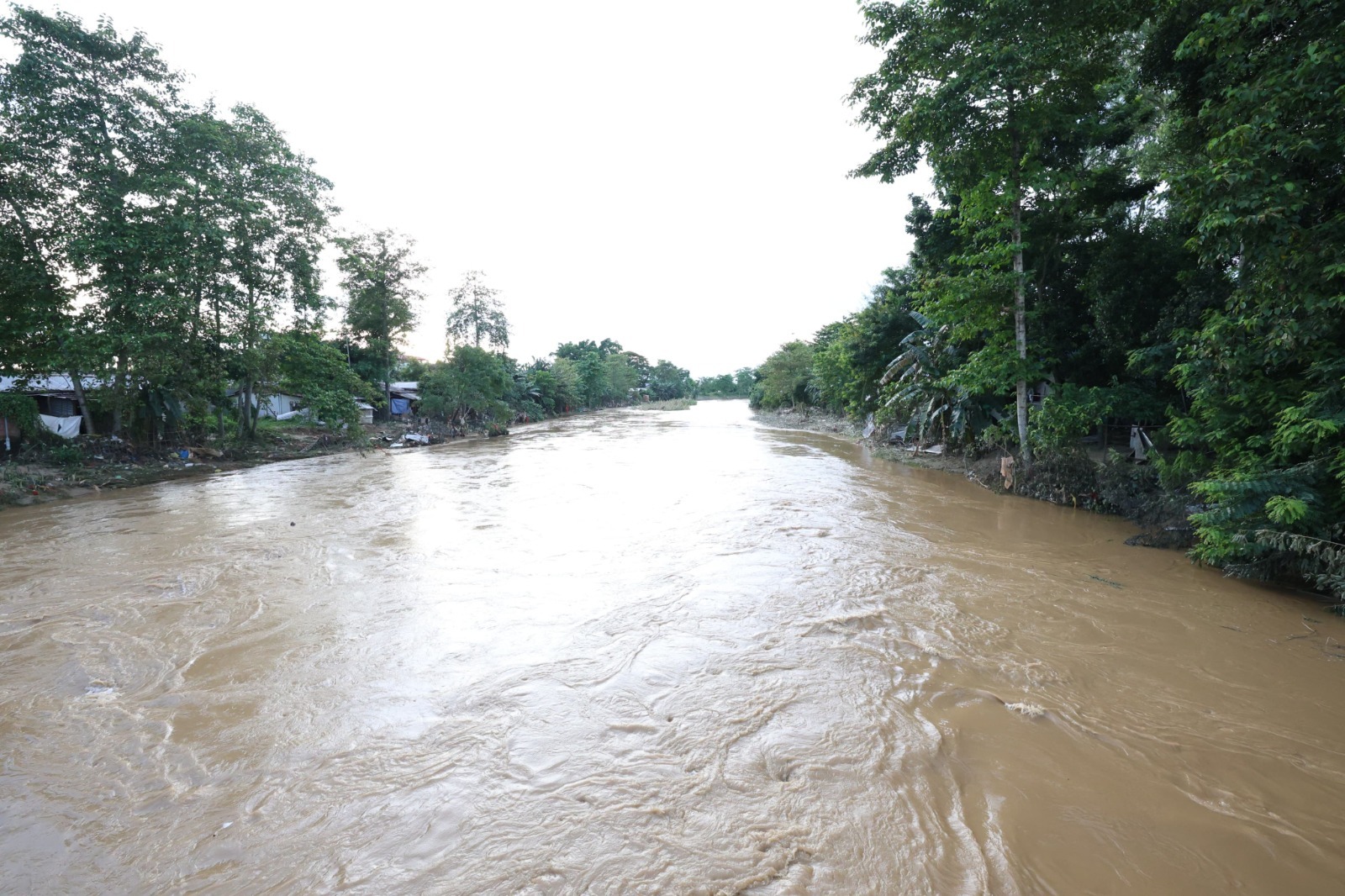
Assam is facing one of its worst natural disasters in recent years as relentless floods continue to devastate large parts of Upper Assam. The death toll has risen to 50, while around 40 people are still missing, many of whom are feared to have drowned in the floodwaters.
Chief Minister Himanta Biswa Sarma said on Friday that government teams have not yet been able to reach nearly 50,000 people in Nazira and another 30,000 in Sivasagar, even as rescue operations continue round the clock.
The floods were triggered by exceptionally heavy rainfall and massive inflows from upstream. The overflowing rivers breached embankments, submerged villages, and expanded the Brahmaputra’s floodplain across large areas. Satellite images show that the river has nearly tripled in width in some stretches, flooding homes, farmland, schools, and entire communities. Livestock, personal belongings, and official documents have also been washed away, leaving many survivors with nothing but the clothes they were wearing.
Nazira and Sivasagar remain the worst-affected districts. CM Sarma said nearly 20% of the population in the worst-hit areas of Sivasagar, Charaideo, and Jorhat is still stranded and cut off by floodwaters.
“There are around 50,000 people in Nazira and nearly 30,000 in Sivasagar whom the government has not yet been able to reach with relief,” he said.
Rescue teams from the Army, NDRF, SDRF, and state agencies are continuing operations. However, many villages remain inaccessible because of the scale of the flooding. Boats are moving through submerged neighbourhoods, while many families are sheltering on rooftops and other higher ground. Officials have warned that the death toll could increase, as the 40 people missing in Nazira alone may add to the casualty count once floodwaters recede and bodies are recovered.
More than 60,000 households remain without electricity, making relief operations more difficult. Roads and bridges have also been damaged or destroyed, cutting off several communities and slowing the movement of essential supplies.
Heavy rainfall has also triggered a landslide near New Harangajao station in Dima Hasao district, disrupting train services on the Lumding-Badarpur hill section. Railway tracks were damaged over a stretch of 200 metres, forcing restricted train operations and affecting evacuation and supply efforts.
The floods have left thousands of families separated, with children and elderly people taking shelter in relief camps after escaping rising floodwaters.
More than 7 lakh people have been affected across 77 revenue circles, while lakhs remain displaced. Large areas of agricultural land have been damaged, raising concerns about food security and rural livelihoods in the months ahead.
Health authorities are also on alert over the risk of waterborne diseases in crowded relief camps. CM Sarma said preventing disease outbreaks remains a top priority, with National Health Mission teams and doctors deployed across the affected districts.
“We are making every effort to ensure that no epidemic or disease outbreak occurs in the flood-hit areas,” he assured.
The Assam government has mobilised district administrations, volunteers, NGOs, and local residents to support rescue and relief operations. CM Sarma described the effort as being carried out on a “war footing.”
An inter-ministerial team from the Centre is scheduled to arrive on July 25 to assess the damage. Union Home Minister Amit Shah has assured full support, while the state government has been providing regular updates to facilitate assistance.
Attention is also shifting towards rehabilitation. The Public Works Department has been directed to speed up repairs to damaged roads and other key infrastructure. Assessments are underway to estimate losses to homes, livestock, and personal belongings as part of a comprehensive recovery package.
Political leaders across party lines have appealed for unity and called for a substantial central relief package. AIUDF chief Badruddin Ajmal has announced a donation of Rs 2 crore and demanded Rs 10,000 crore in assistance from the Centre.
Although floodwaters have started receding slightly in some areas, thousands of people remain stranded. Relief materials, including food packets, drinking water, medicines, and tarpaulins, are being delivered by air and by boat wherever possible.