The flood crisis that has affected Upper Assam for more than two weeks claimed three more lives in Sivasagar as on August 4 taking the state’s monsoon death toll to 85. Even as floodwaters continued to recede, around 1.36 lakh people remain affected. Two people are still missing in Sivasagar.
According to the latest Assam State Disaster Management Authority (ASDMA) bulletin, five districts: Golaghat, Jorhat, Sivasagar, Charaideo and Dhemaji remain affected across 21 revenue circles and 335 villages. Sivasagar is the worst-hit district with more than 55,000 affected people, followed by Charaideo with around 40,000 and Jorhat with nearly 22,000. Floods have damaged about 15,422 hectares of crops. A total of 54 relief camps and distribution centres are providing assistance to 13,771 people. The Dhansiri River at Numaligarh continues to flow above the danger level, keeping downstream areas on alert.
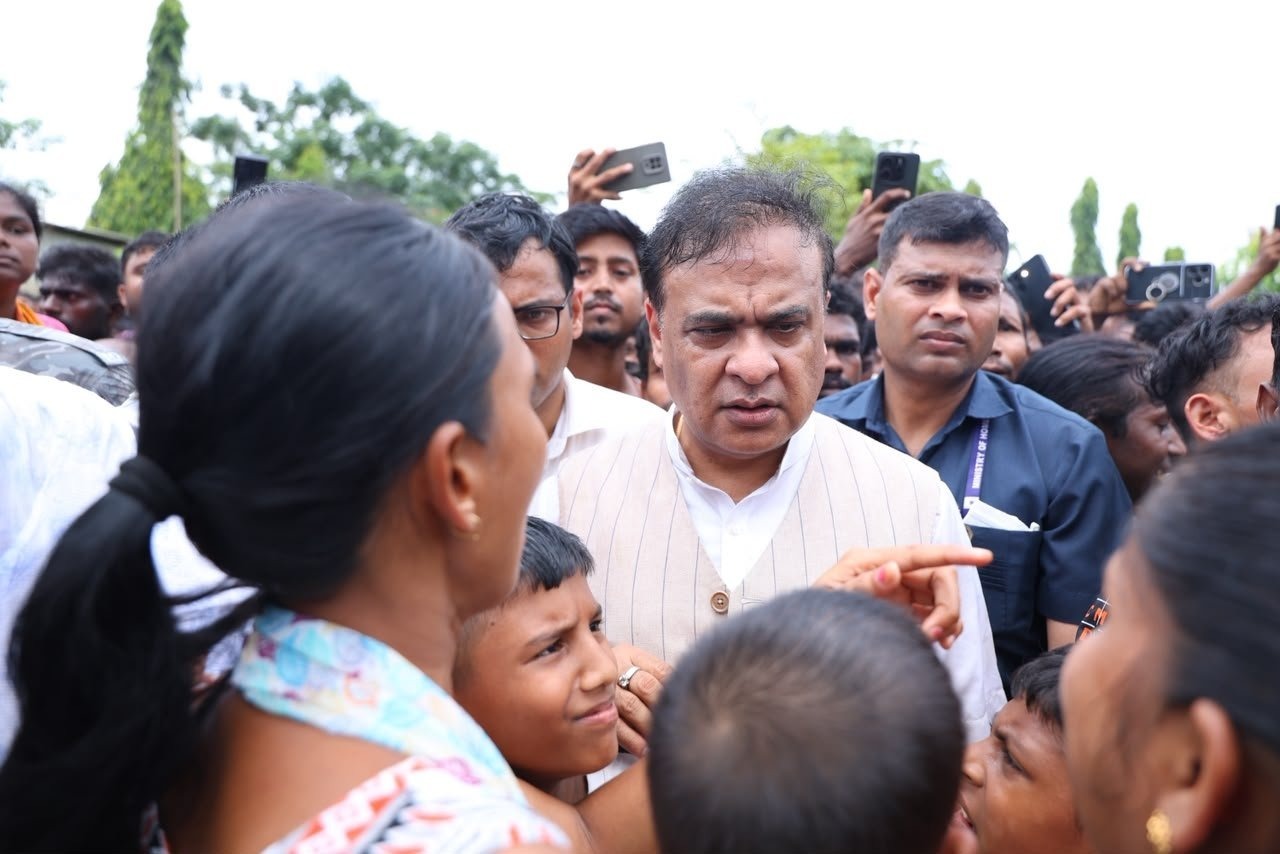
Chief Minister Himanta Biswa Sarma visited the flood-hit areas today and said the destruction on the ground was much worse than what had been shown on television. After travelling by tractor through Nepali Khuti in Sivasagar, he said some villages may have to be rebuilt completely. “The damage in Sivasagar and Charaideo is far more severe than what is being shown on television. Flood relief alone will not be enough,” Sarma said. He identified Bihubor, Nepali Khuti, Betbari and Nimaijan as areas that would need comprehensive rehabilitation beyond immediate cash assistance.
The present flood wave began after intense rainfall on July 18-19 in parts of Nagaland and the foothills of Assam. Charaideo recorded rainfall departures of more than 430 per cent from normal, while neighbouring Mokokchung in Nagaland received nearly 500 per cent. Rivers including the Dikhow, Disang and Dhansiri rose rapidly. The already swollen Brahmaputra slowed the flow of its tributaries, leading to widespread flooding across the plains. Experts said extreme upstream rainfall, heavy siltation, fragile foothill geology and long-term embankment stress together increased Assam’s flood vulnerability.
The state government on Monday started direct benefit transfers of Rs 15,000 as interim relief to nearly 75,000 affected households in Sivasagar, Charaideo, Jorhat and Golaghat under a package estimated at around Rs 112-160 crore. An additional Rs 10,000 has been planned for the worst-affected families in the two hardest-hit districts. Power supply has improved significantly in Sivasagar, with the number of affected consumers falling sharply. The government has waived electricity bills for July, up to 300 units, in Sivasagar and Charaideo. Land revenue relief has also been announced, while ex-gratia for the families of those who died has been increased to Rs 9 lakh.
Local communities have played an important role in the rescue efforts. In villages across Sivasagar, residents rescued more than 1,000 people as floodwaters rose quickly. The Army, NDRF, SDRF and civil agencies continue coordinated relief operations. A detailed damage assessment will begin around August 7-10, after which permanent compensation for damaged houses, livestock and infrastructure will be provided. Schools, many of which were damaged, are expected to reopen later this month, with funds already allocated for repairs.
Although the immediate flood situation is improving, the large-scale destruction of homes, farmland, livestock and livelihoods points to a long recovery process. Sarma said the government’s focus is now shifting from rescue to long-term rehabilitation, indicating that in the worst-affected parts of Upper Assam, rebuilding may require constructing new villages rather than restoring what the floodwaters destroyed.