
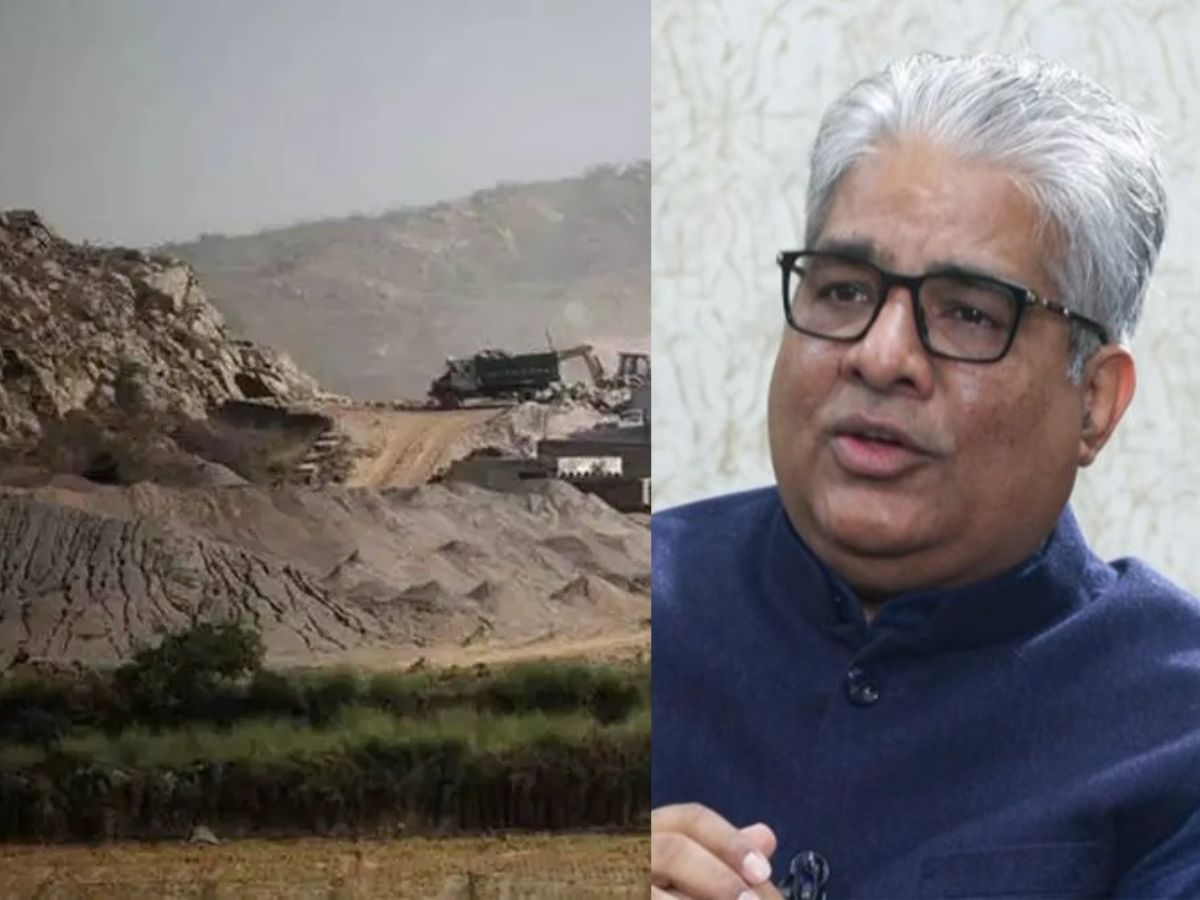
The ancient Aravalli mountain range has once again become the centre of a national debate. Protests have erupted across parts of Rajasthan and Haryana after the Supreme Court approved the Centre’s framework for regulating mining in the region.
Environmental groups fear damage to one of India’s oldest mountain systems. The government, however, says the concern is misplaced and insists the new rules actually strengthen protection.
What the Environment Minister Said on Aravalli Mining?
Union environment minister Bhupender Yadav defended the Centre’s position and said mining would be allowed in only a tiny fraction of the Aravalli range.
“Mining activity in the Aravalli range will only be possible in 0.19 per cent of the area, which is less than one per cent, and even there, no new mines have been opened… This process has been made stricter. The main problem in the Aravalli range is illegal mining. To stop illegal mining, the Supreme Court has given this definition, and a review is still pending before it. With this comprehensive definition and strict provisions, 90 per cent of the area is completely protected,” Yadav said.
He added that the Centre remains “fully committed” to keeping the Aravallis green and ecologically safe.
What Are the New Definitions of the Aravalli Hills and Range?
The Centre recently released a detailed factsheet outlining operational definitions to remove ambiguity around the Aravallis.
According to the document, the Aravalli Hills include any landform in the designated Aravalli districts with a height of 100 metres or more above local relief. Local relief refers to the height difference between the hill and the surrounding terrain.
The Aravalli Range, as per the new norm, consists of two or more such hills located within 500 metres of each other, measured from their lowest contour points.
Why the Supreme Court Asked for Clear Definitions?
The Supreme Court sought clarity on what legally constitutes the Aravalli Hills and Range to prevent confusion in environmental enforcement. The Centre says vague definitions earlier allowed illegal mining to thrive.
Bhupender Yadav highlighted this point while referring to the court’s observations.
“The Supreme Court said two things in its judgment, which people are hiding. First, in the very first paragraph, they appreciated the Ministry of Environment’s Green Aravalli Wall movement. Second, they asked: What constitutes the Aravalli Hills and the Aravalli Range?” he said.
Illegal Mining Remains the Real Threat
The Centre argues that illegal mining, not a regulated activity, poses the biggest risk to the Aravallis. Officials say stricter definitions will help authorities act faster against violators and prevent exploitation under legal loopholes.
“There is no grey area. If there is a grey area, then the matter is in court; go and present it there,” Yadav added.
Why This Matters Beyond Mining?
The Aravalli range plays a critical role in groundwater recharge, air quality control, and preventing desertification in northern India. Experts warn that any ecological imbalance could worsen climate stress in the region.
The government maintains that its framework balances environmental protection with enforcement clarity. Protesters, meanwhile, demand even tighter safeguards.
As the Supreme Court review continues, the Aravalli debate highlights a larger question — how India protects its natural heritage while closing the door on illegal exploitation.