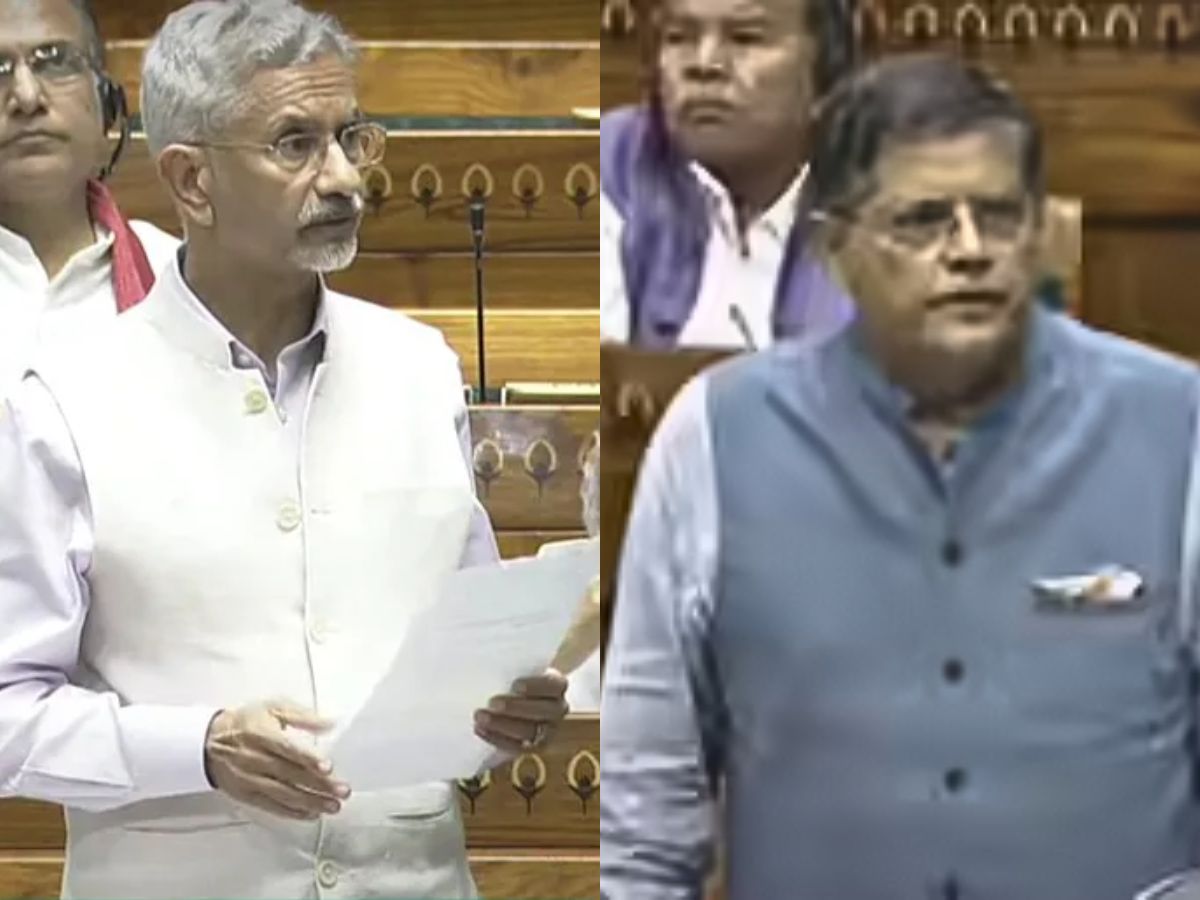
On Day 2 of the fiery Operation Sindoor debate, BJP MP Baijayant Jay Panda and External Affairs Minister S. Jaishankar took aim at the Opposition, accusing past governments—especially Congress—of institutionalizing a culture of strategic submission to Pakistan. The government asserted that its tough diplomatic stance following the Pahalgam terror attack reflects a new, irreversible security doctrine.
‘The Old Normal Was Appeasement’: Panda Rewinds Congress’s Record
Opening the offensive, Panda contrasted the “new normal” with what he termed the “old normal”—an era defined by repeated terror attacks and passive diplomacy. He recalled incidents like the 2005 Delhi blasts and the 2006 Varanasi bombings, saying, “Almost daily, Pakistani-sponsored terrorists killed Indians, yet India kept turning the other cheek. Appeasement had a long shelf life, but it’s over now.” Taking a direct swipe at Congress MP Gaurav Gogoi’s earlier remarks, Panda said it was “amusing” to hear him talk about China, Rafale, and the question of when India would get PoK back. “His party is the one that kept surrendering our interests—again and again,” Panda added.
Mumbai Attacks and Missed Chances: ‘Handshake Within 7 Months’
Panda pointedly referenced the 2008 Mumbai attacks, alleging that the then-UPA leadership ignored the military’s plans for retaliation. He said it was on record that senior officials like the NSA and Foreign Secretary advised against a strike. Moreover, within seven months of the Mumbai carnage, the then Prime Minister had a friendly meeting with the Pakistani President at the SCO summit, signaling continued dialogue despite terror. Panda contrasted this with the Modi government’s current approach, stating, “Today, as we speak, Operation Mahadev has neutralized one of the terrorists behind the Pahalgam killings. This is what real-time accountability looks like.”
‘Shashi Speaks for India, Not His Party’
While acknowledging Congress MP Shashi Tharoor’s “eloquent” but cautious remarks, Panda joked that although Tharoor speaks well, he can’t speak on behalf of his party.
“It would have been fun if Congress had given a free hand. Many of your leaders speak really well. My friend Shashi Tharoor speaks really well, but his leadership does not allow him to speak on behalf of the party. But I felt really good that no one could stop him from speaking in favour of the country.”
Jaishankar Unveils String of Diplomatic Retaliations
External Affairs Minister S. Jaishankar took the floor to outline India’s diplomatic response to the Pahalgam attack. He emphasized that India’s “red lines were crossed” and strong measures were necessary. The government decided to suspend the Indus Waters Treaty of 1960 until Pakistan completely ceases support for cross-border terrorism. India expelled Pakistani military advisors from its High Commission, closed the Integrated Check Post at Attari, revoked visa exemptions for Pakistani nationals travelling under the SARC scheme, and reduced Pakistan’s diplomatic staff strength in India from 55 to 30. Jaishankar stressed that these actions were not symbolic but designed to impose significant political and diplomatic costs on Pakistan.
Stage Set for Shah’s Address; All Eyes on PM
With the Lok Sabha extended until midnight, the debate is far from over. Union Home Minister Amit Shah is expected to address the House at noon on Tuesday, with speculation rife that Prime Minister Narendra Modi may make his remarks late in the evening or possibly on Wednesday. In the Upper House, Defence Minister Rajnath Singh will open the debate on Tuesday.
For the BJP, the message to Pakistan and internal critics is clear that the era of dossiers, silence, and “dialogue under duress” is over. India’s red lines will no longer be blurred, and the country will respond decisively to cross-border terrorism.