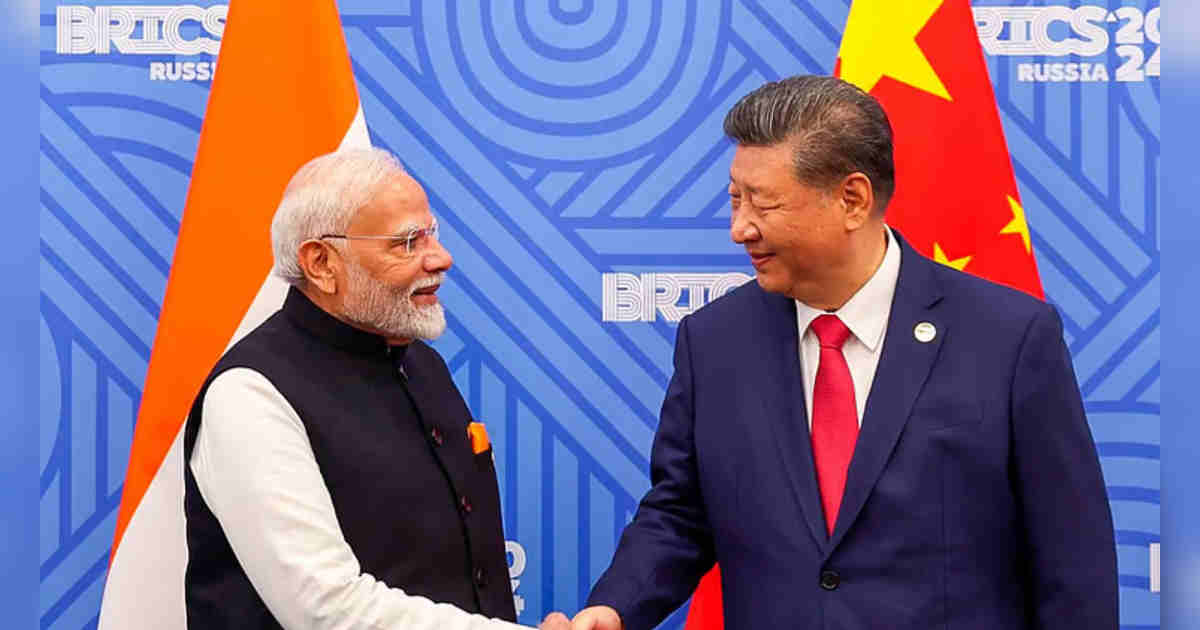
Prime Minister Narendra Modi and Chinese President Xi Jinping are expected to meet on the sidelines of the SCO summit in Tianjin on August 31–September 1, with both countries preparing fresh steps toward normalizing strained relations. Key moves include holding Lieutenant General-level Border Personnel Meetings (BPMs) across three sectors and restarting direct air services between the two nations.
Border Dialogue to Be Upgraded
One of the most significant developments is the decision to upgrade the India-China military dialogue. At present, general-level talks only take place in Chushul, Eastern Ladakh, between India’s 14th Corps Commander and the PLA’s Sinkiang Military Division Commander. However, under the new plan, Lieutenant General–Major General level talks will also be held at Chushul (western sector), Nathu La (middle sector), and Kibuthoo or Yangtze (eastern sector).
This breakthrough was decided during the 24th round of Special Representative-level talks held on August 19. Experts believe that holding as many as six high-level military meetings annually could help address Line of Actual Control (LAC) friction points in real time, reducing tensions on the ground. “If the border remains peaceful and tranquil, then there is no reason why bilateral ties cannot take an upswing between the two Asian giants,” explained a China analyst.
Also Read: Nikki Haley Warns Trump: “Don’t Alienate India While Countering China”
The US Factor in India-China Rapprochement
The timing of this normalization push is also linked to trade tensions with the United States. Both India and China are under pressure from US President Donald Trump’s tariff policies. India is set to face an additional 25% tariff on August 27, raising total duties to 50%, while China is already struggling with 54% tariffs, though it has received a 90-day reprieve on further increases.
During their meeting on August 19, Indian External Affairs Minister S. Jaishankar and Chinese Foreign Minister Wang Yi reportedly discussed how Washington’s trade actions were unfairly targeting their economies. This shared concern pushed both countries to consider strengthening ties as a way to protect their markets and reduce dependence on the US.
Limits of Partnership but Shifting Ground
Although New Delhi remains cautious about the extent of its alignment with Beijing, the recent actions of the US have changed perceptions in India. Many in the Indian leadership and public now view Washington’s approach—using tariffs and even blaming India over the Ukraine war—as a sign that the relationship with the US is turning hostile.
Analysts argue that if the US imposes another 25% tariff on August 27, relations between Washington and New Delhi could “definitely turn cold, if not frozen.” Against this backdrop, India and China appear to be recalibrating their ties, focusing first on border stability and economic cooperation.
Also Read: Inside China’s Defence Boom: How Industry Fuels Its Rapid Military Rise