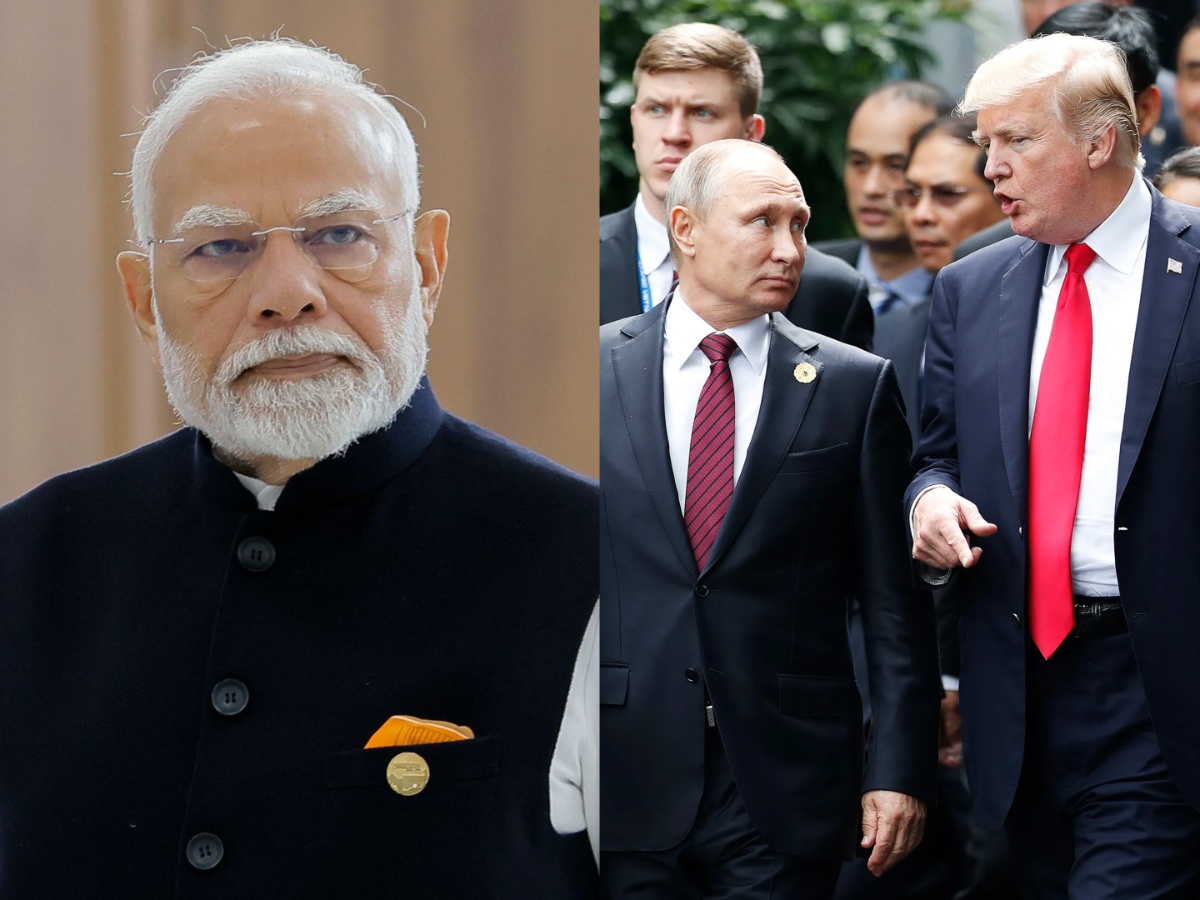
The United States has ratcheted up its condemnation of India’s expanding energy relationship with Russia. In recent weeks, senior members of the US administration—specifically Treasury Secretary Scott Bessent, Secretary of State Marco Rubio, and former President Donald Trump—have made scathing attacks on New Delhi. These attacks coincide with stalled trade talks and growing irritation in Washington.
Trump has even slapped a 25 percent tariff on Indian products and announced an extra penalty on India’s imports of Russian oil. India has reacted sharply, threatening action and invoking Western double standards. Meanwhile, statistics indicate that both the US and EU continue to import from Russia even under sanctions. India, on its part, has walked out of negotiations to purchase F-35 fighter planes from the US, indicating serious diplomatic estrangements.
What Provoked the Outburst?
Treasury Secretary Scott Bessent on Thursday voiced blatant exasperation with India. India had “not been a great global actor” and had “slow rolled” trade talks, he said. He asserted President Trump and the whole trade team were “frustrated” with broken-down negotiations. Bessent pointed to India’s huge buy-up of bargain-priced Russian crude oil as one big point of contention.
Secretary of State Marco Rubio seconded the concern. He blamed India for financing Russia’s war in Ukraine by persisting with importing oil. Rubio referred to the policy as a cause of “irritation” to the US, while still confirming that India is a strategic partner.
Trump Adds Fuel to the Fire
Trump ratcheted up the rhetoric on his Truth Social site. He announced he didn’t care about what India was doing and called both India’s and Russia’s economies “dirty.” He stated their “dead economies” could “go down together,” condemning India’s high tariffs and decades of defense buying from Russia.
Trump also pointed to India’s energy connections with Moscow and asserted they were undercutting world efforts to isolate Russia for the Ukraine war.
India Pushes Back Hard
India responded diplomatically at first. It indicated that it was considering the new tariffs and was still committed to a balanced and equitable trade agreement. New Delhi went tougher afterwards, though, following Trump’s social media statements. It declared that it was no longer interested in buying US-made F-35 fighter jets.
The Indian government reemphasized that national interest would be its greatest priority. The officials referred to the hypocrisy of the West—citing that even the US and Europe continue to trade with Russia.
ALSO READ: US Redeploys Nukes to UK After 16 Years — A Warning to Putin?
US and EU Still Trade with Russia
Despite sanctions, US-Russia trade continues unabated. In 2022 alone, the US imported $15 billion worth of goods from Russia. By May 2025, imports reached $2.1 billion. The US remains purchasing fertilizers, metals, wood, chemicals, and machinery.
US imports from Russia in 2024 amounted to $3 billion, while exports reached approximately $526 million. Fertilizers dominated the imports at $1.3 billion.
At the same time, EU-Russia trade declined but did not vanish. EU imports from Russia went down from $105.6 billion in 2022 to $39.5 billion in 2024. Exports too declined from $177.7 billion to $34.7 billion.
Nevertheless, the European countries still purchase Russian LNG and gas. Hungary, Slovakia, and Austria have gas imported through pipelines, while France, Spain, Belgium, and the Netherlands have LNG imported. The EU has promised to end all purchases of Russian gas by 2027, but most analysts are skeptical that schedule is workable.
China Joins the Criticism
China came to the defense of India. In the UN Security Council, China’s Deputy Permanent Representative Geng Shuang condemned America for trading with Russia despite disapproving of others. He condemned Washington as hypocritical and questioned why America could trade with Russia but not others.
A Shifting Global Trade Order
This show time uncovers an expanding schism in international diplomacy. As India and China push back against American pressure, the capacity of Washington to drive global trade behavior diminishes. India has made it clear—it will follow its own strategic and economic interests. The US and EU now have to address the contradiction of their policies if they need to remain credible in this new multipolar world.