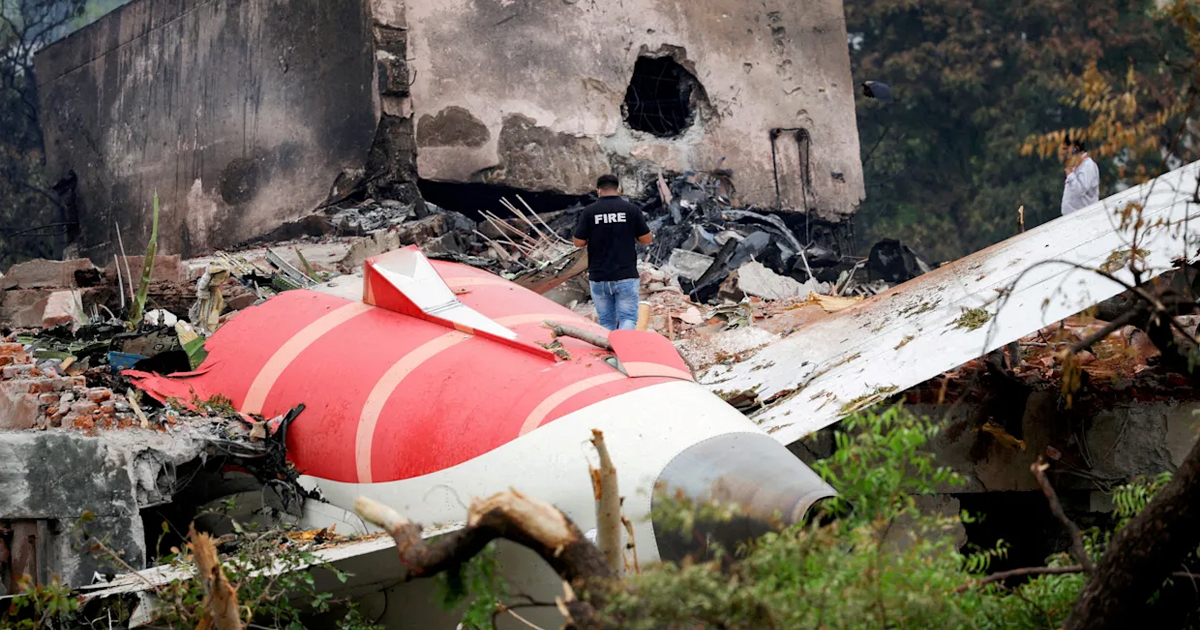
The critical throttle control module (TCM) of the Air India Boeing 787-8 Dreamliner, which crashed in Ahmedabad earlier this month, was replaced twice before the accident, as per Boeing’s recommendations, sources informed PTI. The plane, registered VT-ANB, was on its way to London when it crashed on June 12, killing everyone on board, all 260 people.
The replacements were in 2019 and 2023, according to Boeing’s Maintenance Planning Document (MPD), which requires the TCM to be replaced every 24,000 flight hours. The TCM contains fuel control switches, which the investigators suspect were inadvertently switched to “CUTOFF” just a matter of seconds after takeoff, shutting down both engines and making the plane lose altitude and crash into a building.
Investigators Investigate Fuel Control Switches, but No Known Defect Yet
The Indian Aircraft Accident Investigation Bureau (AAIB) issued its preliminary report over the weekend. Though it confirmed the TCM replacements, the agency explained that the replacements were routine and not associated with any recognized defect in the fuel switches.
The sudden activation of the switches has raised serious safety concerns, particularly as cockpit voice recordings indicated clear confusion between the two pilots.
Why did you shut down the fuel?” one pilot could be heard asking. “I did not,” replied the other.
The AAIB investigation revealed that both engines temporarily recovered when the switches were switched back to “RUN,” but again failed, and the plane was not able to climb high enough.
FAA and Boeing Declare Fuel Switch Locks Safe
On the heels of the report, the US Federal Aviation Administration (FAA) issued a Continued Airworthiness Notification on July 11, announcing that the fuel control switch design on the Boeing 787 is not an unsafe condition. Thus, it stated, an AD was not required.
Boeing, through a Multi-Operator Message, repeated the FAA position and advised no action at this time, according to sources quoted by Reuters.
Air India Missed 2018 Optional Fuel Switch Check
The initial report also cited a 2018 FAA advisory, which suggested checking the locking mechanism of the fuel cutoff switches to avoid accidental movement. But because the advisory was optional, Air India failed to carry out the check.
Despite this, the AAIB observed that Air India had adhered to all relevant airworthiness directives and service bulletins. Inspection records verified that the TCM was replaced twice throughout the operational life of the aircraft, as mandated.
Final Report on Hold as Questions Continue to Arise Over Cutoff Activation
Investigators are still working to identify what led to the activation of the fuel cutoff switches during takeoff. The accident, which resulted in a catastrophic dual-engine failure, is already under close international scrutiny.
The final accident report is due later this year and will probably target the TCM system, human factors in the cockpit, and potential design weaknesses.