Almost 40 days since the AIR India AI-171 disaster, investigators are still assembling what led to the deadly crash. The Boeing 787-8 plane crashed 26 seconds after departure from Runway 23 of Ahmedabad’s Sardar Vallabhbhai Patel International Airport.
All 260 onboard perished. The Aircraft Accident Investigation Bureau (AAIB) is now investigating the tail section of the aircraft, possible electrical issues, and cockpit maneuvering in the last minutes. A preliminary report has raised that both engines suffered power failure from fuel cutoff, which raises pressing questions regarding the plane’s systems and the actions of the crew.
Tail Wreckage May Hold Vital Clues
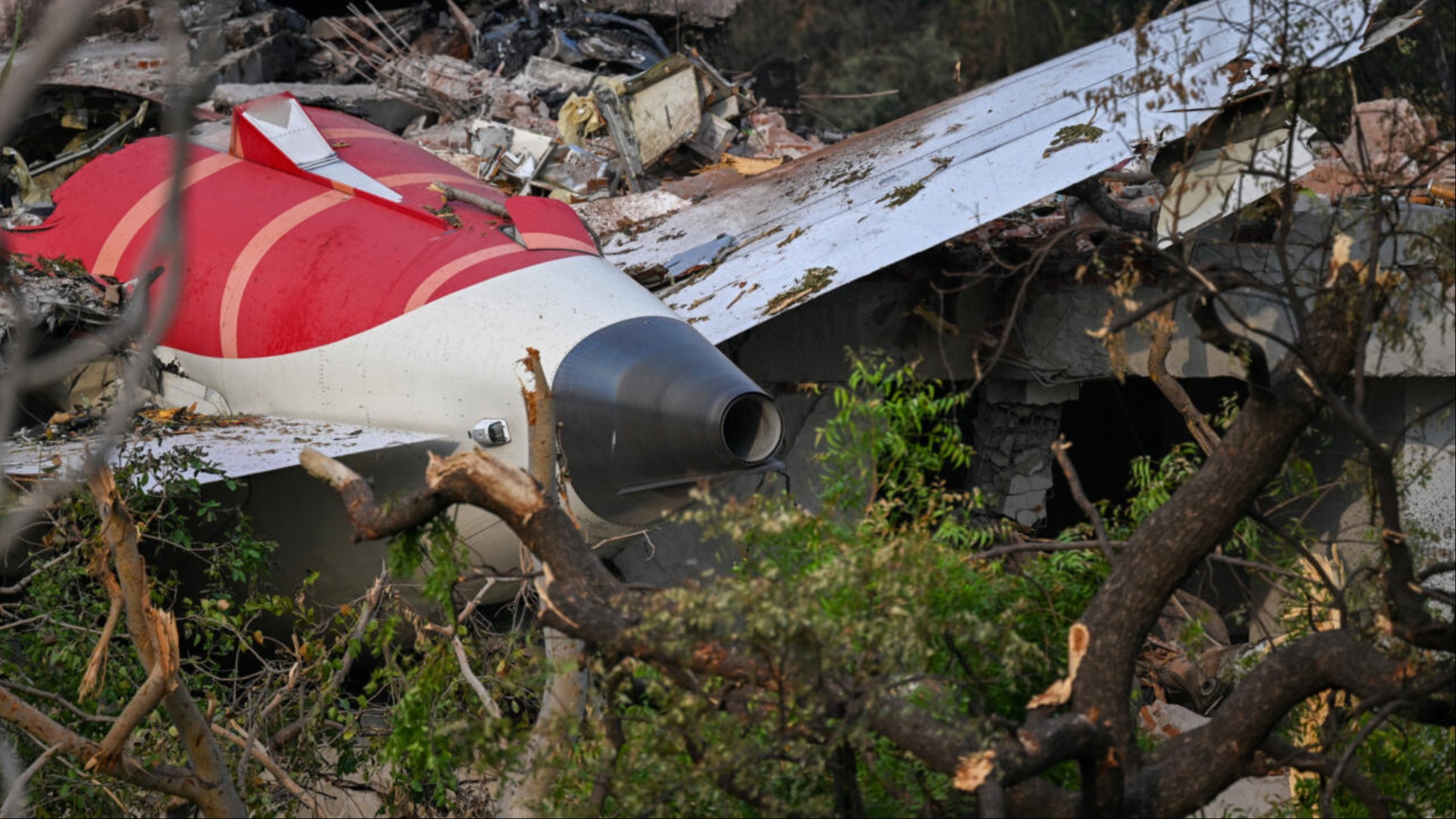
Officials have shifted focus to the empennage—the tail assembly—of the crashed plane. Investigators found this section mostly intact despite the rest of the aircraft being consumed by fire. The tail had separated during the crash but escaped major fire damage. It was embedded in Building A of the BJ Medical College hostel mess, but the fire didn’t spread to the structure.
Within the tail, pieces such as the Auxiliary Power Unit (APU), stabilizer position transducers, rudder systems, and the rear black box are being examined. The APU has been recovered and already examined. The black box was heat-damaged heavily, indicating a “contained electric fire” in the tail section.
Prior Technical Problems Raise Questions
Members of a previous Air India flight—AI-423 located between Delhi and Ahmedabad—had recorded a malfunction in the Stabilizer Position Transducer, which is also in the empennage. Engineers resolved the problem prior to AI-171’s departure, but its repetition is being probed.
Eyewitness Account Supports Power Failure Theory
Survivor Viswashkumar Ramesh spoke of flickering cabin lights, suggesting a potential power outage. Experts are of the view that the plane’s systems may have shifted between main and backup power very quickly, potentially initiating the ram air turbine (RAT). CCTV captured RAT deployment immediately after take-off, which is normally seen in complete electrical failure.
Fuel Cutoff and the Cockpit Voice Recording
The AAIB’s initial report, published on July 12, disclosed that the two fuel-control switches shifted to the “cutoff” position mere seconds after liftoff. That deprived the engines of fuel, resulting in the crash. One pilot was heard saying, “Why did he cut off?” with the other responding, “I didn’t.” The pilots’ voices are still not known. This shocking dialogue has fueled speculation, but officials have called for restraint.
Pilots Under Fire Amid Rising Speculation
Western media accounts suggested pilot involvement, which was met with intense backlash. India’s Civil Aviation Minister Ram Mohan Naidu cautioned against speculation. Indian Commercial Pilots’ Association (ICPA) came to the defense of the crew, terming the speculations unethical and harmful. The Federation of Indian Pilots (FIP) has served legal notice on Reuters and The Wall Street Journal for their reporting.
AAIB Brings Veteran Pilot into the Probe
As a response to calls for technical input, the AAIB has hired Captain RS Sandhu, a retired Air India director of operations and Boeing 787-8 examiner. The hiring came after calls by the Airline Pilots’ Association of India (ALPA India) to add a pilot representative to the probe.
Still Too Early for Final Conclusions
US National Transportation Safety Board Chairman Jennifer Homendy underscored that it’s too early to determine what caused the June 12 crash. It still goes on, this time with the focus now on electrical systems, tail structures, and pilots’ reactions in those all-important 26 seconds of flight after take-off.