
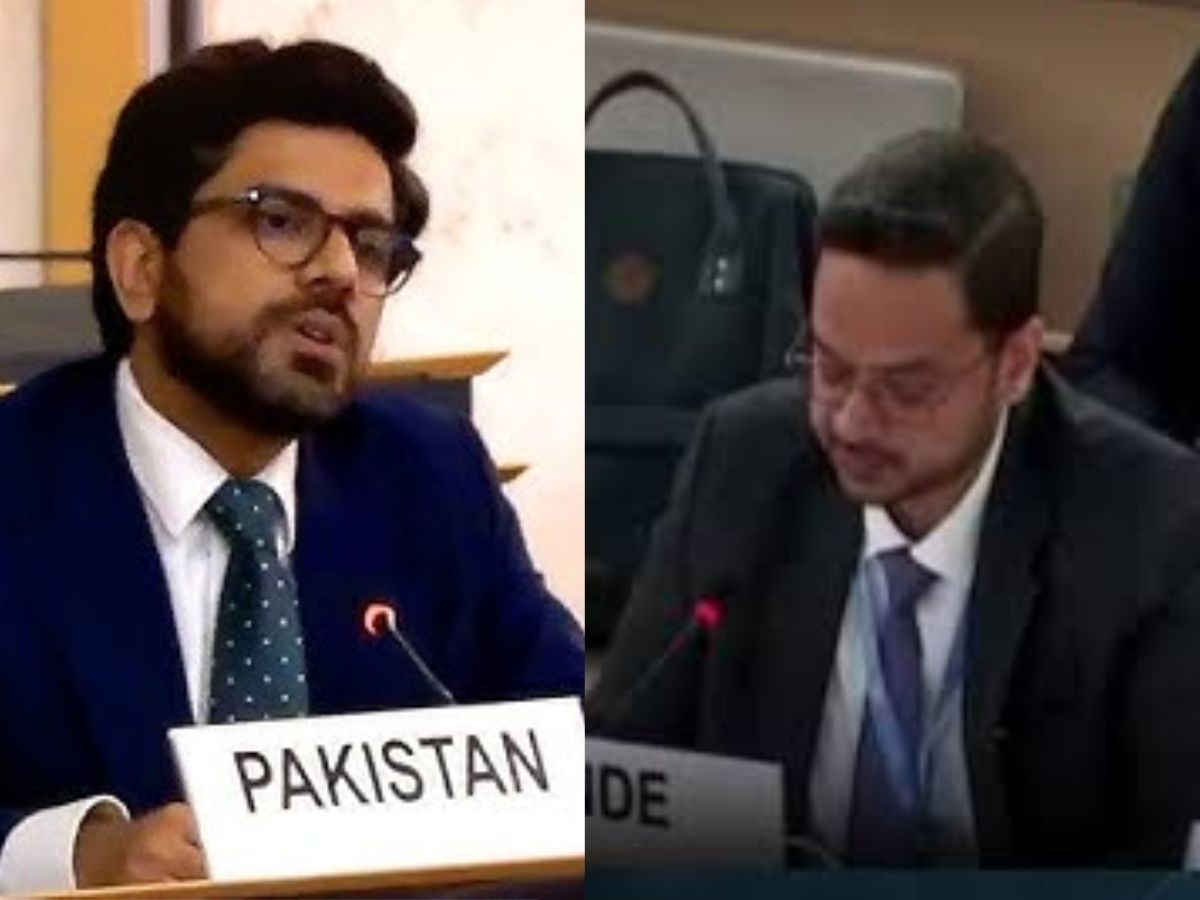
In a powerful and uncompromising response at the United Nations in Geneva, Indian diplomat Kshitij Tyagi launched a sharp critique of Pakistan on Tuesday, advising its delegation to focus on its own domestic crises, including a recent deadly airstrike on its civilians, rather than leveling “baseless” allegations against India. The remarks came during a Right of Reply, a procedural right to respond to another delegation’s comments.
The diplomat’s statement directly referenced the tragic airstrike a day earlier in Pakistan’s Khyber Pakhtunkhwa province, which local officials claim killed at least 30 civilians, turning the spotlight onto Pakistan’s internal affairs.
What Prompted India’s Strong Response?
Pakistani diplomats’ remarks about India’s internal affairs during a UN Human Rights Council session set off the exchange. Exercising India’s Right of Reply, Kshitij Tyagi, a 2012-batch Indian Foreign Service officer, did not mince words.
He accused the Pakistani delegation of continuing “to abuse this forum with baseless and provocative statements against India.” This set the stage for a comprehensive rebuttal that shifted the focus squarely onto Pakistan’s actions.
What Did India Say?
Tyagi’s statement was a multi-pronged attack on Pakistan’s political, economic, and human rights record. He sent Pakistan a list of concerns he believed should be given top priority.
The Territorial Claim: “Instead of coveting our territory, they would do well to evacuate the Indian area under their illegal possession,” the envoy told Islamabad, directly addressing the central dispute.
A Failing State? They should concentrate on “rescuing an economy on life support, a polity muzzled by military supremacy,” he said, referring to Pakistan’s internal conflicts.
The Human Rights Charge: Directly referencing the recent airstrike, Tyagi highlighted a “human rights record stained by persecution,” suggesting they find time “away from exporting terrorism, harbouring UN-proscribed terrorists, and bombing their own people.”
Pakistan’s Controversial Airstrike on Civilians
The phrase “bombing their own people” was a direct allusion to an event that occurred on Monday. A Pakistani Air Force airstrike in the Matre Dara village of Tirah Valley resulted in significant civilian casualties.
What is the local account? According to local officials and eyewitnesses, the strike killed at least 30 people, including women and children. Videos of the destruction, including burning cars, bodies being collected, and rubble, were making the rounds on social media.
Who is being blamed? Residents, opposition lawmakers, and Pashtun tribal leaders from the Afridi tribe have accused the military of deliberately targeting a civilian area, claiming no militants were present.
Official Reaction: The Human Rights Commission of Pakistan (HRCP) expressed “shock” at the reports of civilian deaths.
India’s Core Concern
India’s strong stance in the UN stems from a long-standing and vital security issue: Pakistan’s encouragement of transnational terrorism. The diplomatic rebuttal provided a forum for reiterating this topic internationally.
Recent intelligence reports and dossiers from Indian agencies have indicated that new terror hubs are emerging within Pakistan. The reference to “exporting terrorism” and “harbouring UN-proscribed terrorists” gains context from events like recent public rallies held by Jaish-e-Mohammed terrorists in Pakistan, where anti-India rhetoric was openly propagated.