
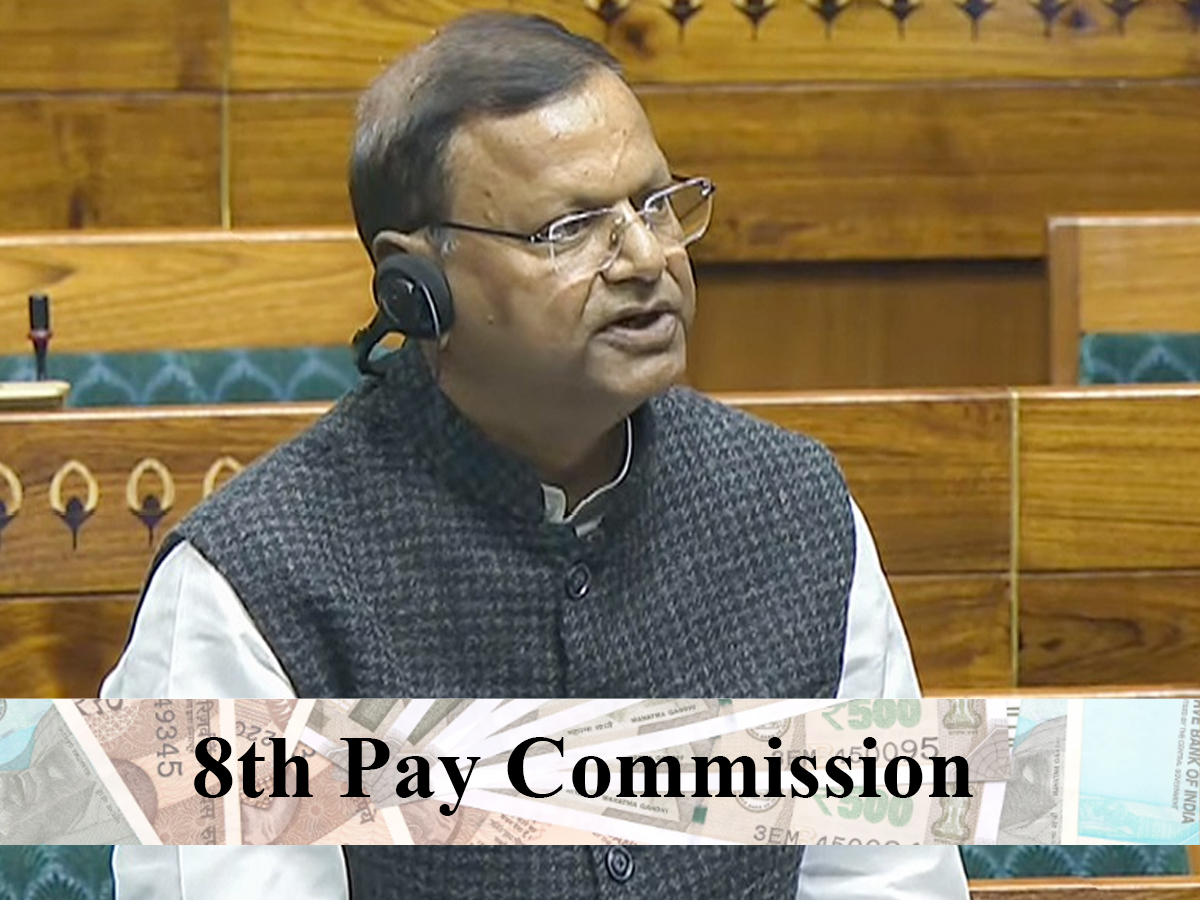
The Centre has officially set up the 8th Central Pay Commission (8th CPC). Its Terms of Reference (ToR) were notified on November 3, 2025.
In a written reply to Parliament, Pankaj Chaudhary, Minister of State for Finance, confirmed the formation. He said the decision marks the beginning of a new pay and pension review cycle.
8th Pay Commission: Who Will Benefit
According to the government’s data, approximately 50.14 lakh central government employees and around 69 lakh pensioners will fall under the scope of the 8th CPC.
This coverage spans a wide array of central services, including industrial and non-industrial employees, All India Services personnel, defence forces, UT staff, regulatory bodies under Acts of Parliament (excluding the RBI), Supreme Court and High Court employees (for UT jurisdictions), and judicial officers of subordinate courts in UTs.
8th Pay Commission: What the Commission Will Review
The 8th CPC will examine and offer recommendations on:
- Basic pay and allowances
- Pension, gratuity, bonuses
- Other emoluments and retirement benefits (in cash or kind)
- Structures under both existing pension schemes and non-contributory pension plans
- Death-cum-Retirement Gratuity and other retirement-related payments
The ToR instructs the Commission to factor in the country’s economic conditions, fiscal prudence, allocation for development and welfare schemes, and long-term pension liability. It must also consider prevailing pay levels in central PSUs and the private sector.
8th Pay Commission Timeline: What Happens Next
The 8th CPC has been given 18 months from the date of its constitution to submit its recommendations.
However, the actual implementation date will be decided by the government. In Parliament, the minister said that the date will be fixed only after recommendations are finalised.
The government also assured that proper funds will be allocated to implement accepted recommendations.
Pensioners Included – Clarification Eases Concern
There had been confusion over whether pensioners would be covered. Some earlier versions of the ToR did not explicitly mention “pensioners” or “family pensioners.”
But the government later clarified that retirement benefits — including pensions — are part of the mandate. This was a major relief for pensioner groups who had feared exclusion.
8th Pay Commission: What Remains Uncertain
- The exact effective date of the pay/pension revision remains undecided.
- Whether components like Dearness Allowance (DA) / Dearness Relief (DR) will be merged or reset (as typical in earlier pay-commission revisions) is still under consideration. Some reports note there is no proposal now to merge DA/DR with basic pay.
- The final size of the raise — in terms of fitment factor and actual increase — will depend on the 8th CPC’s recommendations.