
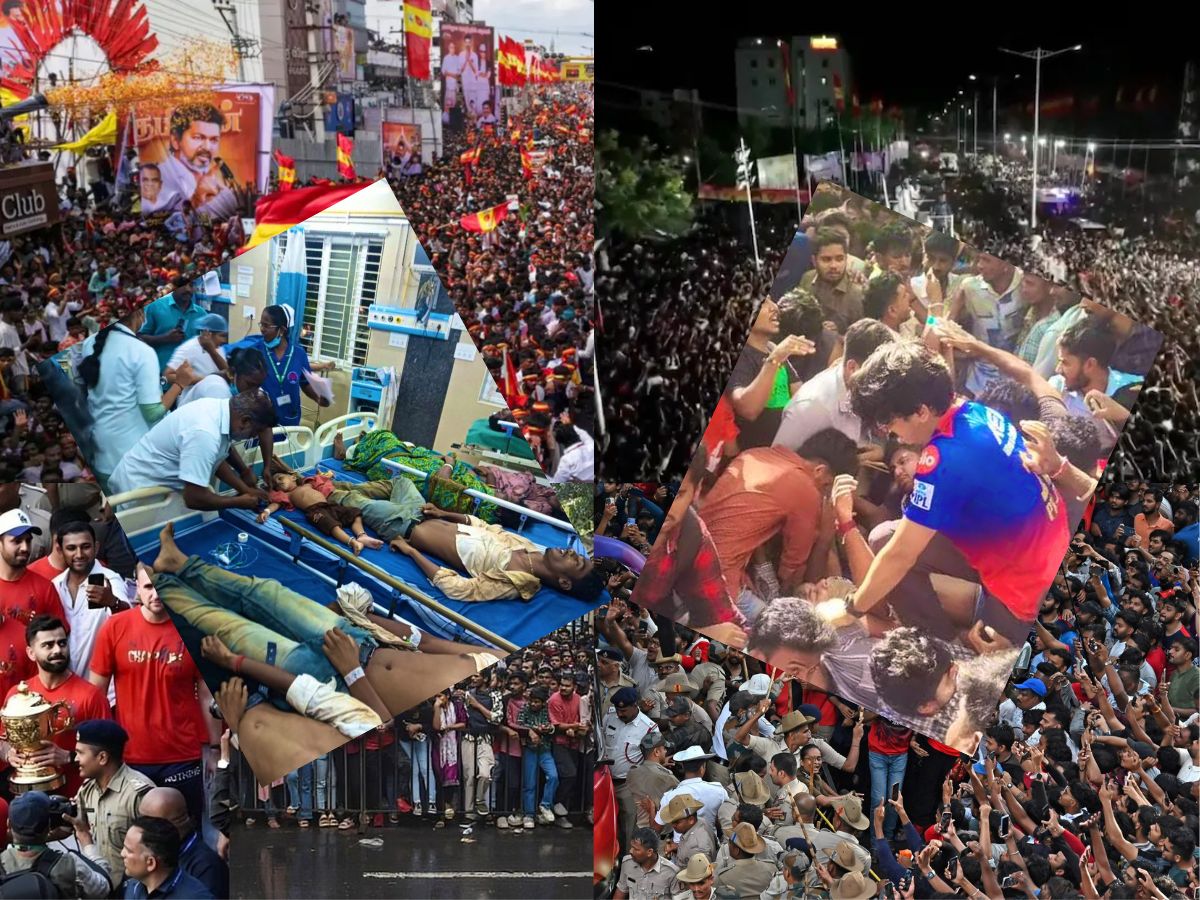
Several stampede tragedies in India over the past six months have killed and injured many, prompting calls for improved crowd control and accountability. The Karur stampede yesterday killing several people in politician Vijay’s rally brings back the unpleasant memories of several such mis-happenings this year, and pushes us to introspect what exactly goes wrong with mass gatherings at such events.
Major Stampede Tragedies Across Indian States
From Tamil Nadu’s Karur political rally disaster that had taken 39 lives to religious processions in Odisha and the mayhem in Bengaluru’s IPL celebration, crowd tragedies have continuously struck again and again. Stampedes in Goa’s temple festival, the New Delhi railway station congestion, and the sprawling Maha Kumbh Mela in Uttar Pradesh were also of similar magnitude. Let’s have a look on the latest one viz. the Karur stampede during actor-turned-politician Vijay’s rally.
Common Factors Behind These Tragedies
The common thread is poor planning, overestimation of the number of people, and poor control measures. Over enthusiastic public and lack of discipline have also contributed to this. Uncontrolled rushes at the entry or exit gates, overloaded facilities, and slow emergency response have made things worse. Affective intensity and absence of crowd direction further escalated panic.
What Could Have Prevented These Incidents?
Effective crowd management demands strict entry controls with pre-registration, phased access, and several dispersed entry points. Technology such as CCTV and drones may be used to monitor crowd density in real time. More security staff trained for managing crowds, unambiguous public communication, and emergency medical preparedness on-site are some of the preventive measure that can be taken.
Accountability of Leaders and Organisers
It is the responsibility of event organisers, political parties, and the authorities. The appointment of an inquiry commission following the Karur tragedy is a step in the right direction, but institutional accountability is essential. This involves open safety audits, punitive action for negligence, and giving priority to safety over vote-seeking politics.
Takeaway: Urgent Need for Reform
While mass gatherings are culturally significant, India’s frequent stampede tragedies reveal lack of sensibility towards disciplined behaviour in masses, and systemic governance failures. Enhanced planning, technology use, community awareness, and stringent leadership accountability are crucial to prevent future loss of life and ensure safer public events.