The 350th martyrdom anniversary of Sri Guru Tegh Bahadur ji has turned into one of the most engaging commemorations Punjab has witnessed in recent years, as more than 20,000 devotees scanned a simple QR code on their phones to watch a 360 degree animated film based on the Ninth Guru’s life and sacrifice. What began as a digital experiment has grown into a powerful collective moment in which technology is being used to deepen faith, memory and historical awareness.
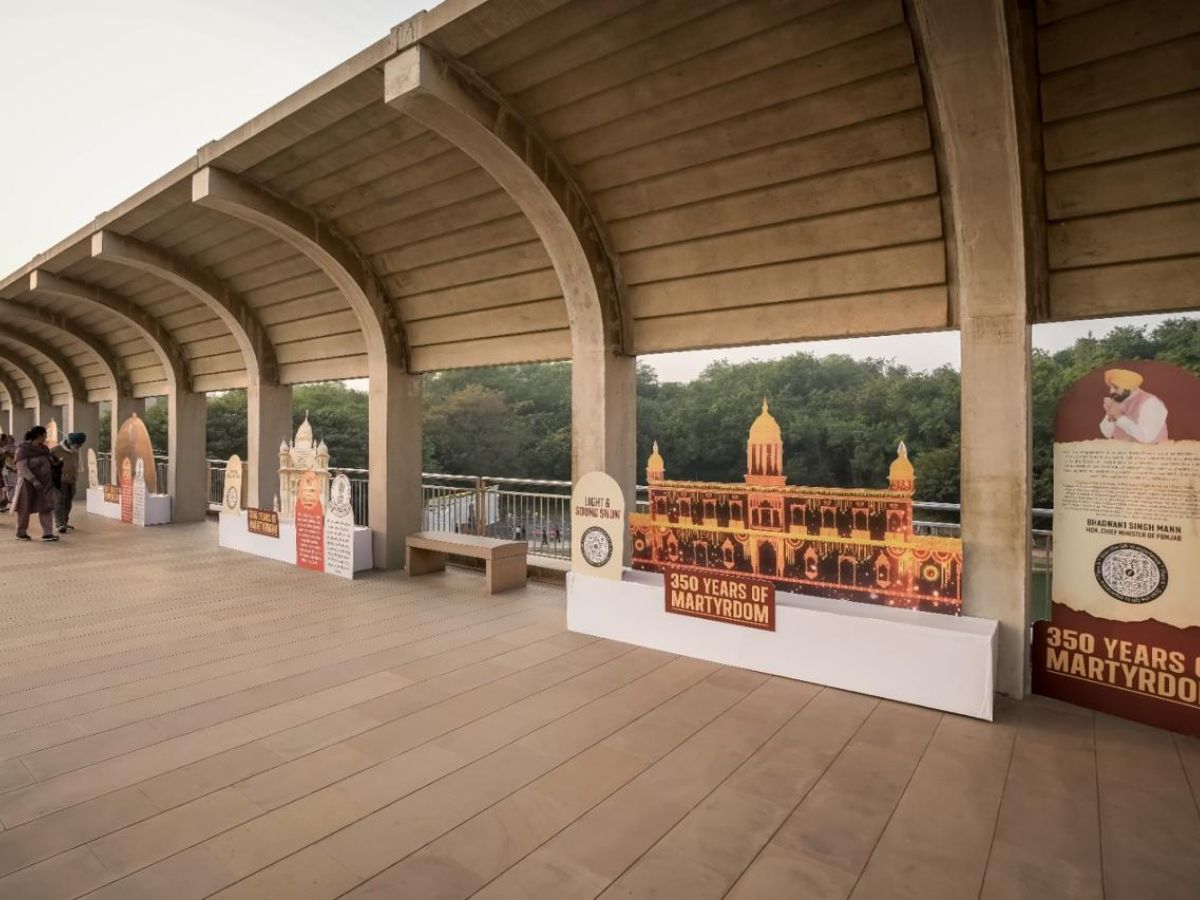
At the heart of this initiative is a mixed reality presentation titled Hind Di Chadar, a tribute designed to take viewers inside 11 defining episodes of Guru Tegh Bahadur ji’s spiritual journey. The Government of Punjab introduced the concept during the ongoing commemorative events in Chandigarh and Sri Anandpur Sahib, placing QR code standees at key points for easy access. Devotees only had to point their smartphone cameras at the code to enter an immersive world that carried them back three and a half centuries.

The mixed reality experience also brings into focus the unshakeable courage of Bhai Mati Das, Bhai Sati Das and Bhai Jaita ji, whose devotion to Guru Tegh Bahadur ji forms an inseparable part of this chapter in Sikh history. Their stories appear in the 360 degree journey not as separate episodes but as a powerful extension of the Guru’s stand for righteousness.
The animation pauses at the moment when Bhai Mati Das is called forward in Delhi. His calm, fearless presence is shown through a slow, steady frame that captures his resolve. The creators have kept the scene simple, allowing viewers to focus on his unwavering faith as he is bound between wooden posts. The narration explains that even as the saw moved through his body, he continued to recite the Japji Sahib, offering a lesson in spiritual strength that has inspired generations. In the mixed reality format, devotees can turn their screens to see the expressions of the Sangat around him, heightening the emotional impact of his supreme sacrifice.
The next sequence features Bhai Sati Das, who faced a brutal death but remained firm in his devotion to the Guru. The animation shows him wrapped in cotton before being set on fire, yet standing steady with complete acceptance of the Guru’s will. His face has been drawn with remarkable restraint, reflecting peace rather than pain. The narration highlights his message: that love for the Guru is stronger than any fear of suffering. Children watching the scene during the commemorative events were seen asking their elders about the importance of such steadfastness, turning the moment into a quiet lesson in values.
A particularly compelling moment in the experience is the portrayal of Bhai Jaita ji, later known as Bhai Jeevan Singh. The creators have shown him arriving at Chandni Chowk just after the martyrdom of Guru Tegh Bahadur ji. The film captures the intensity of his determination as he gathers the Guru’s sacred head and begins the long, dangerous journey to Sri Anandpur Sahib. The path through the forests and narrow routes is shown from a ground-level perspective, giving viewers a sense of movement and urgency. His act of bravery ensured that the Guru’s pristine honour was preserved, and the scene is one of the most moving segments in the entire 360 degree tribute.
Together, these portrayals strengthen the emotional core of the mixed reality experience. They remind viewers that the Ninth Guru’s martyrdom was not a solitary act but part of a larger tapestry of courage woven by his devoted companions. Their sacrifices add depth to the narrative and complete the story of the moment that shaped Sikh identity for generations to come.
The narrative then moves to one of the most meaningful parts of Sikh history: his stand against forced conversions to Islam and any attack on the right to practise one’s faith. His decision to defend the Kashmiri Pandits, who had approached him seeking protection from persecution, has been portrayed through a sequence that focuses on the essence of his teaching — that the defence of another person’s right to worship is a divine duty. The creators have used a careful mix of sound, colour and movement to explain why the community began to call him Hind Di Chadar, the Shield of India.
The animated depiction of the events leading up to his arrest in Delhi has been handled with restraint, keeping the focus on his calm acceptance of suffering. The 360 degree format allows viewers to feel as though they are standing within the scene. Some devotees at Sri Anandpur Sahib described the experience as “walking inside history” while others said it helped children in their families understand the depth of the Guru’s sacrifice in a way school lessons alone could not provide.
The most emotional chapter remains the moment of his martyrdom at Chandni Chowk, where he gave his life to uphold the right to religious freedom for all. As the scene unfolds, the soft shift from day to dusk is paired with narration that explains the moral of his final stand. It is here that the mixed reality format reaches its full impact, because devotees can turn their phone screens in any direction and watch the setting expand around them.
The film then moves to the quiet bravery of the community that ensured the Guru’s cremation despite restrictions. The depiction of Lakhi Shah Vanjara’s act of burning his own home in Rakab Ganj so he could perform the Guru’s final rites offers one of the most moving moments in the animation. This chapter highlights not only the loss felt by the people of that time, but also the undying love with which they protected the Guru’s honour. Many viewers who watched this part of the experience during the Nagar Kirtan described it as “the scene that brings tears”.
Along with the 360 degree experience, visitors were treated to a light and shadow show that moves in harmony with the theme of the film. The shifting lights form silhouettes of the Guru’s journeys, the sword of justice, and the flame of truth. It has added a meditative tone to the commemorative events, encouraging devotees to sit for long periods and watch the play of light as shabad kirtan plays in the background.
Officials involved in the commemoration said the goal was not entertainment but meaningful connection. The team worked with historians and Sikh scholars to ensure the details were accurate. Animation artists were instructed not to exaggerate facial expressions or add elements that could distort historical memory. Instead, they kept the frames simple, respectful and centred on the values the Guru stood for.
For many devotees, this experience has become a way to revisit the Guru’s teachings in a modern world where attention shifts quickly. The QR code format allows them to rewatch it at home, share it with relatives abroad or use it to explain Sikh history to children. The fact that the experience remains on their phones after the event is a subtle extension of the commemoration itself.
As per a devotee hailed from Patna, Amarpreet Singh, “In many ways, this initiative marks a turning point in how history is shared. It suggests that digital tools can strengthen cultural understanding when used with sensitivity. It shows that technology does not always distance people from faith. Sometimes it brings them closer.”
The tribute to Guru Tegh Bahadur ji is not only a look back at 350 years of history. It also represents a step forward in how communities can preserve memory with care. The thousands who watched the 360 degree film did not simply view an animation. They stepped into a moment in time, held together by courage, sacrifice and the spirit of standing for truth.
And in doing so, they turned a simple QR scan into a shared act of remembrance for one of the greatest defenders of freedom the world has known.