
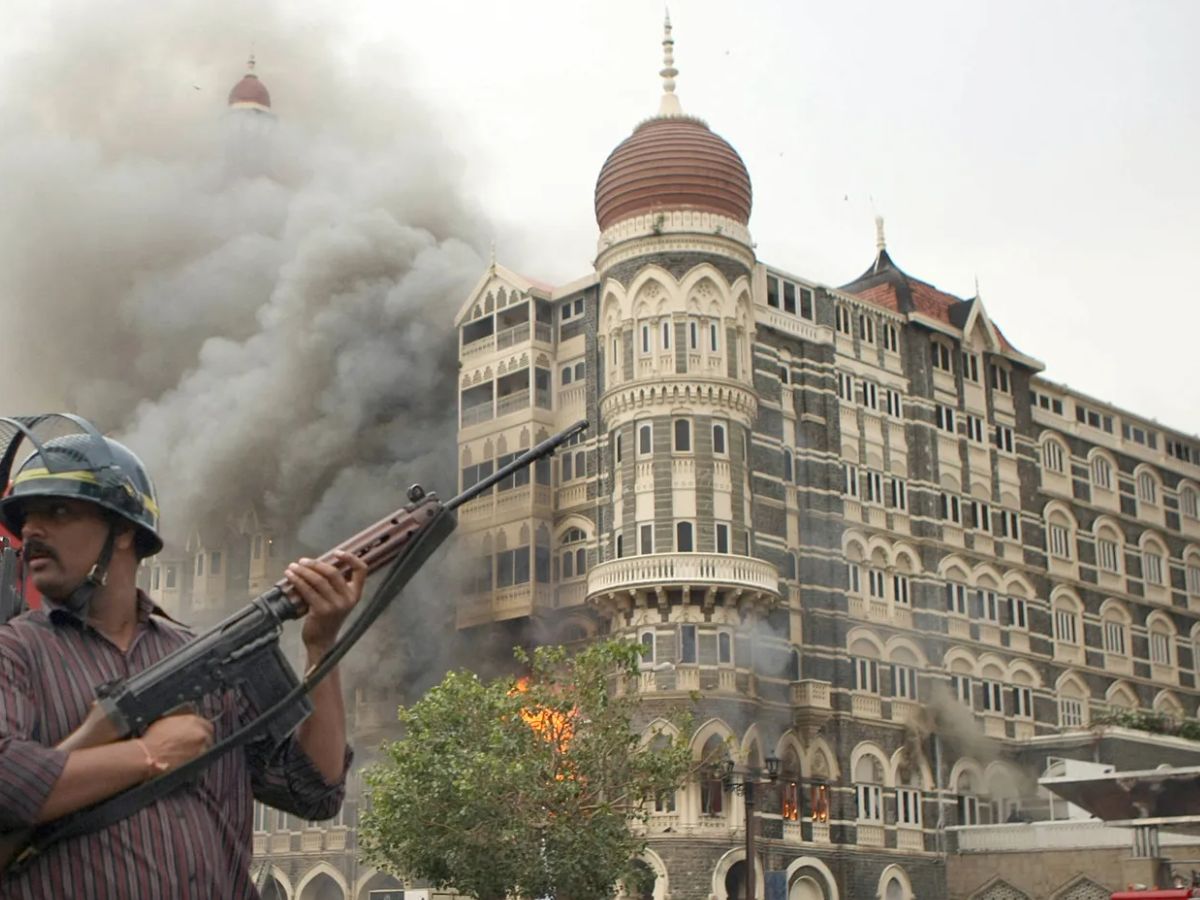
This year cmpletes 17 years since the Pakistan-backed terror group Lashkar-e-Taiba (LeT) carried out a brutal attack in Mumbai on November 26, 2008. It is widely known as 26/11, the coordinated strikes by 10 armed terrorists created fear across India and the world. The attackers entered Mumbai through sea way at the night of November 26 and, over the next four days, targeted some of the city’s busiest locations. Their rampage left 166 people dead and 300 injured, making it one of the worst terror attacks in India’s history.
ISI’s Active Role Through Lashkar-e-Taiba
An FPJ report said that the 69-page dossier contains solid evidence that ISI played a pivotal role using its proxy Lashkar-e-Taiba. According to the report, the entire operation was overseen by the “S” branch of the ISI with the objective of expanding Pakistan’s theater of conflict beyond Kashmir.
Global Investigation Uncovers Osama Bin Laden’s Involvement
More details are provided in The Exile, by British correspondents Cathy Scott-Clark and Adrian Levy. The book quotes two former associates of Hafiz Saeed as saying that Osama Bin Laden went to Manshera to attend a big meeting on the 26/11 attacks.
The authors point out that it was a meeting “facilitated by Lashkar, overseen by the ISI’s S-wing and sponsored by Al Qaeda.” Files recovered after the U.S. operation that killed Bin Laden reportedly showed that Hafiz Saeed stayed in constant contact with the Al Qaeda chief till his death.
Former Pakistani FIA Chief Admits LeT’s Role
These findings are strengthened by the fact that former Pakistan FIA director Tariq Khosa, in a 2015 op-ed for Dawn, accepted that all ten attackers belonged to LeT. He confirmed the forensic tests, which proved that the terrorists trained at a camp in Sindh, and he revealed that Pakistani authorities had seized the Karachi control room used to direct the assault along with the ship that transported the gunmen.
Pakistan Still Avoids Action Against LeT Handlers
Despite these confirmations, Pakistan has taken no decisive action against LeT or its key handlers, including Major Iqbal and Sajid Majeed. Instead, Pakistan continues to dismiss them as “non-state actors.”
Local Mumbai Support Helped Terrorists Execute Plan
The probe also underlines an important and lesser-known perspective: the local support in Mumbai. Officials believe the terrorists could not have carried out the attack with such precision without local support.
Dawood Ibrahim’s gang is long believed to be connected to the 1993 Mumbai blasts and is suspected to have closely supported LeT in the operation.
The Alleged Dawood Gang Role in Assisting Terrorists
Sources close to the investigation revealed that operatives of Dawood’s network, particularly those operating around the Mumbai docks, facilitated Ajmal Kasab and his team in evading the Coast Guard patrols. They guided them to a particular landing point near Badhwar Park in Colaba. After landing, the local spotters reportedly escorted the gunmen to their targets, including Cafe Leopold, Chabad House, CST station, and the Taj Mahal Palace Hotel.
Ground Network Strengthens Reconnaissance Work
Although David Headley did detailed reconnaissance for LeT, investigators believe that the ease with which the terrorists moved around Mumbai suggests that a strong local support system helped them carry out their attacks with so much precision.
Seventeen Years Later, Key Questions Still Unanswered Seventeen years after one of India’s darkest terror attacks, the search for justice remains incomplete. The issues of official Pakistan involvement and local collusion within Mumbai remain major, yet largely unresolved, concerns.
Also REad: Indian Constitution Day 2025: History, Significance & What is the Story Behind November 26