
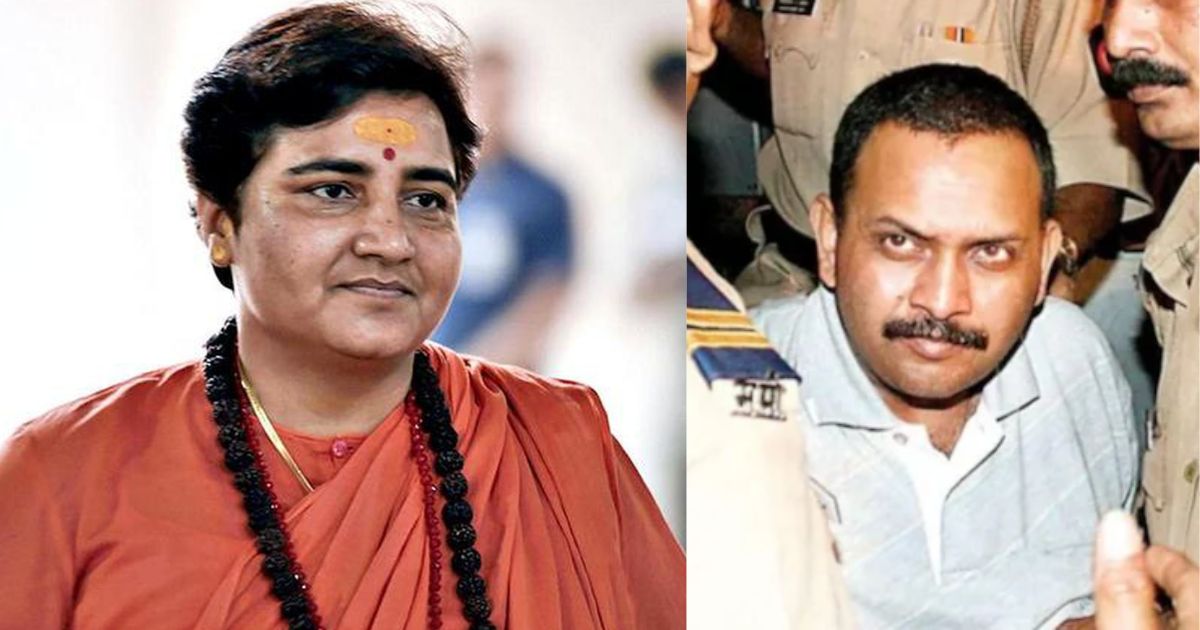
A special court of the NIA on Thursday acquitted all seven charged in the 2008 Malegaon blast case. They included Bharatiya Janata Party’s ex-MP, Pragya Singh Thakur. The blast that had killed six and injured more than 100 in the communally sensitive town of Malegaon had provoked nationwide outrage.
Strict anti-terror laws, including the Unlawful Activities (Prevention) Act (UAPA) and various provisions of the Indian Penal Code, were employed to prosecute the defendants. The ruling ends a 17-year legal journey, but it raises serious concerns about the administration of justice, political meddling, and handling cases involving terrorism.
Who is Pragya Thakur?
One of the prime accused involved in the 2008 Malegaon blast was Pragya Thakur. She was arrested in the same year, and the charges against her included murder, conspiracy, and terrorism.
According to the National Investigation Agency (NIA), she was part of a larger design that aimed at inciting communal violence. Though Pragya Thakur denied all charges against her, she spent several years in prison and was granted bail in 2017, citing health grounds.
Political Debut and Victory in Bhopal
Pragya Thakur joined active politics in 2019. The BJP nominated her as its candidate from the Bhopal Lok Sabha constituency, where she ran against Congress stalwart Digvijaya Singh.
Regardless of her controversial record, she won the election by a huge margin of 364,822 votes. Her victory marked the increasing acceptance of polarising personalities in Indian politics.
Thakur’s Defence & Claims of Innocence
At the trial, Thakur consistently asserted that the allegations against her were “illegal” and politically inspired. In her last statement to the court, she accused the evidence of being tampered with and claimed she was wrongly implicated.
Her lawyers had contended that she was made a scapegoat because of her ideological orientation.
Controversies & Public Outrage
During her political life, Pragya Thakur has uttered several inflammatory remarks. The most egregious among them was her comment terming Nathuram Godse, the assassin of Mahatma Gandhi, a “patriot.”
This raised sharp criticism, even from senior BJP leaders. Yet, she continued to be a sitting MP till the end of her term despite public censure.
Religious Identity & Past Affiliations
Before entering electoral politics, Thakur was a “sadhvi” and was closely linked with the Akhil Bharatiya Vidyarthi Parishad (ABVP), a student organisation of the RSS. Her religious and philosophical inclinations were instrumental in her political alignment.
Responsibility & Public Trust in Investigation Agencies
Though the verdict is a relief to the accused, it throws a long shadow on the functioning of investigation agencies. The NIA, which was once celebrated for its impartiality, now has some unsavory questions to answer.
Why did a case of serious allegations under UAPA result in complete acquittal? Was the case weak, botched, or politicized? The public has a right to straight answers. In the case of high-profile ones, justice must not only be delivered but also appear to be done. When it doesn’t, institutions incur a credibility deficit.
What the Verdict Mean for India’s Justice System?
A high-stakes trial concluded with Pragya Thakur’s acquittal, but it also highlights serious issues with India’s legal system. Systemic flaws are indicated by a 17-year delay, contradictory investigations, and a total acquittal in a case involving terrorism charges. The public’s trust is shaken when cases involving communal violence and national security fall apart so thoroughly.
Justice must be impartial, prompt, and immune to political bias. Even though this decision is legally binding, it will probably spark ongoing discussions about how India handles terror cases and whether justice is being done.