
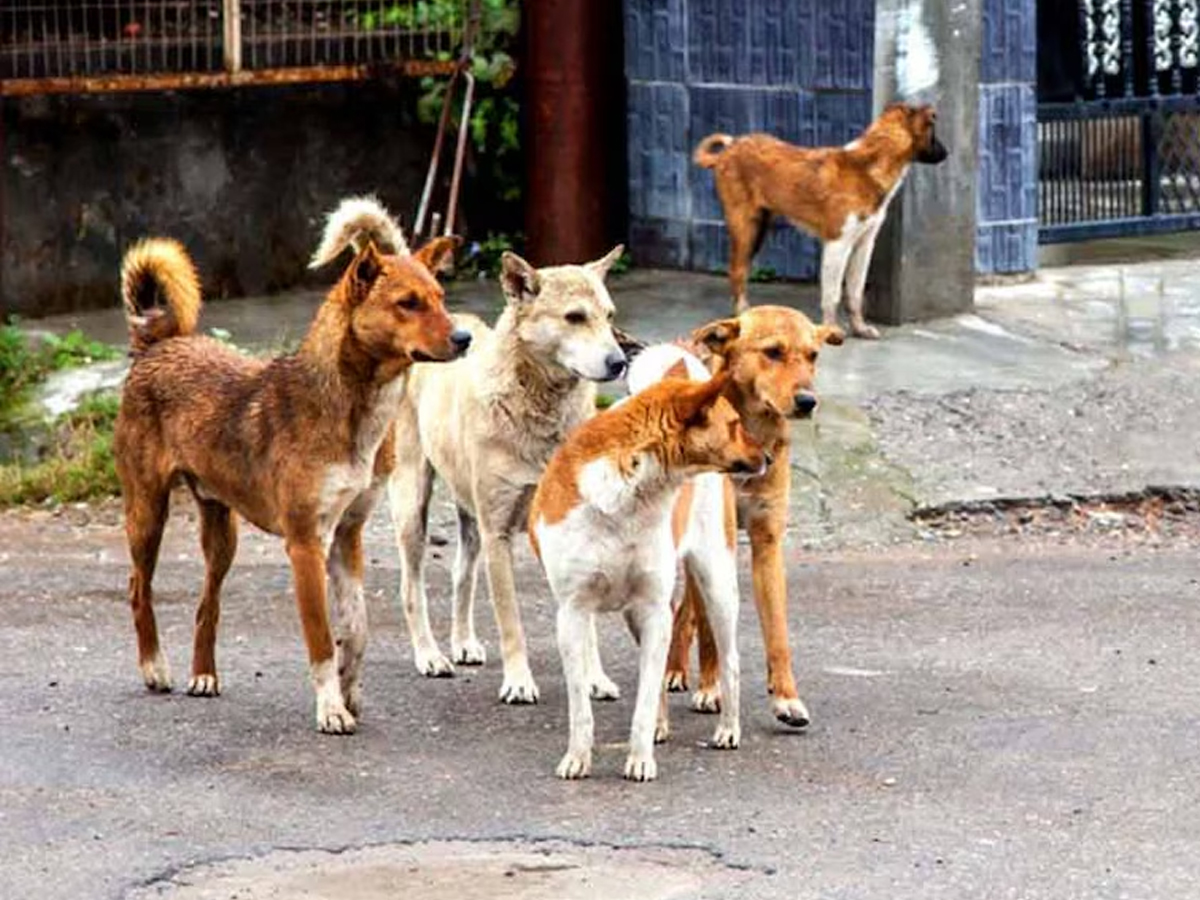
The Supreme Court has directed civic bodies in Delhi-NCR to relocate all stray dogs from residential neighbourhoods to shelters. The order aims to make the streets “absolutely free” of stray dogs in the public interest. The civic bodies have been given eight weeks to report progress.
The ruling has triggered a fierce debate. While some welcome the move, citing rising dog bite cases, animal lovers call it “inhumane” and impractical.
Shelter Space: The Biggest Roadblock
Delhi has an estimated 10 lakh stray dogs, though the last official count in 2009 recorded 5.6 lakh. To house them all, about 2,000 shelters—each with a capacity of 500 dogs—would be required. Currently, the Municipal Corporation of Delhi (MCD) operates just 20 animal control centres, which are designed for short-term care after sterilisation, not long-term housing.
READ MORE: Stray Dogs in Delhi-NCR: What We Know So Far About the Supreme Court’s Removal Order
Even if these centres were upgraded, they could accommodate fewer than 5% of the city’s stray dogs. Land allocation, funding, and construction time remain major challenges.
Manpower and Logistics Challenges
Civic bodies lack adequate resources to catch and transport stray dogs. Each MCD zone has only 2–3 vans and limited trained handlers. Catching dogs is complicated by their territorial instincts and likely resistance from local animal lovers.
Once caught, feeding and caring for lakhs of dogs daily would require hundreds of crores annually. Shelters would need veterinary staff, animal ambulances, CCTV security, and regular maintenance, adding to the financial burden.
Rising Stray Dog Incidents
Delhi has recorded 26,000 dog bite cases and 49 rabies cases this year till July 31, according to official data. Over 65,000 dogs were sterilised and vaccinated between January and June.
The Supreme Court bench of Justice JD Pardiwala and Justice R Mahadevan said, “We are not doing this for us, it is for the public interest. So, no sentiments of any nature should be involved. Action should be taken at the earliest. All these animal activists, will they be able to bring back those who have fallen prey to rabies? We need to make streets free of stray dogs.”
Animal Rights Groups Push Back
Animal rights organisations, including PETA India, argue the ruling is neither humane nor effective. They warn that forcibly removing dogs could cause “uproar” and would not control the population or reduce rabies.
READ MORE: Stray Dogs in Delhi-NCR: What We Know So Far About the Supreme Court’s Removal Order
PETA India stated, “Displacement and jailing of dogs is not scientific and has never worked. It will also ultimately do nothing to curb the dog population, reduce rabies, or prevent dog bite incidents… Instead of wasting time, effort, and public resources on ineffective and inhumane displacement drives, an effective sterilisation program is still the solution and an urgent need.”
Another Angle: Urban Planning and Human Safety
Experts say the stray dog crisis in Delhi is also tied to poor urban planning and waste management. Open garbage dumps provide a steady food source for stray dogs, allowing their numbers to expand. Without increasing cleanliness and waste management, just relocating the caning might not be a long-term solution.
Some urban planners also warn that sudden mass relocation could upset the city’s ecological balance. Stray dogs, they argue, help control rodent populations and prevent other pests from thriving. Removing them without alternative measures could create new public health risks.
The Road Ahead
Civic bodies are expected to meet soon to discuss shelter locations, funding, and operational logistics. But with no concrete infrastructure in place and opposition from animal welfare groups, implementation appears far from straightforward.
For now, the Supreme Court’s directive has brought the stray dog problem into sharp focus, forcing policymakers to confront a complex challenge that mixes public health, animal welfare, and urban governance.
MUST READ: ‘Jailing Dogs Never Worked’: PETA Slams SC’s Stray Dog Removal Order