NEW DELHI: Radio has always carried a certain charm — intimate yet expansive, simple yet powerful. It slips quietly into daily life, asking for little but offering companionship, information and a sense of belonging. Long before screens dominated attention, radio was the trusted voice in the room — connecting distant geographies, diverse languages and countless lives through shared listening.
Many historical moments are etched in collective memory through radio announcements. How can one forget the night of August 14-15, 1947 when the radio sets cackled to announce the independence of India. In that singular broadcast, radio did not simply deliver news — it united a vast, diverse nation in one shared sound of freedom.
HISTORICAL BACKGROUND
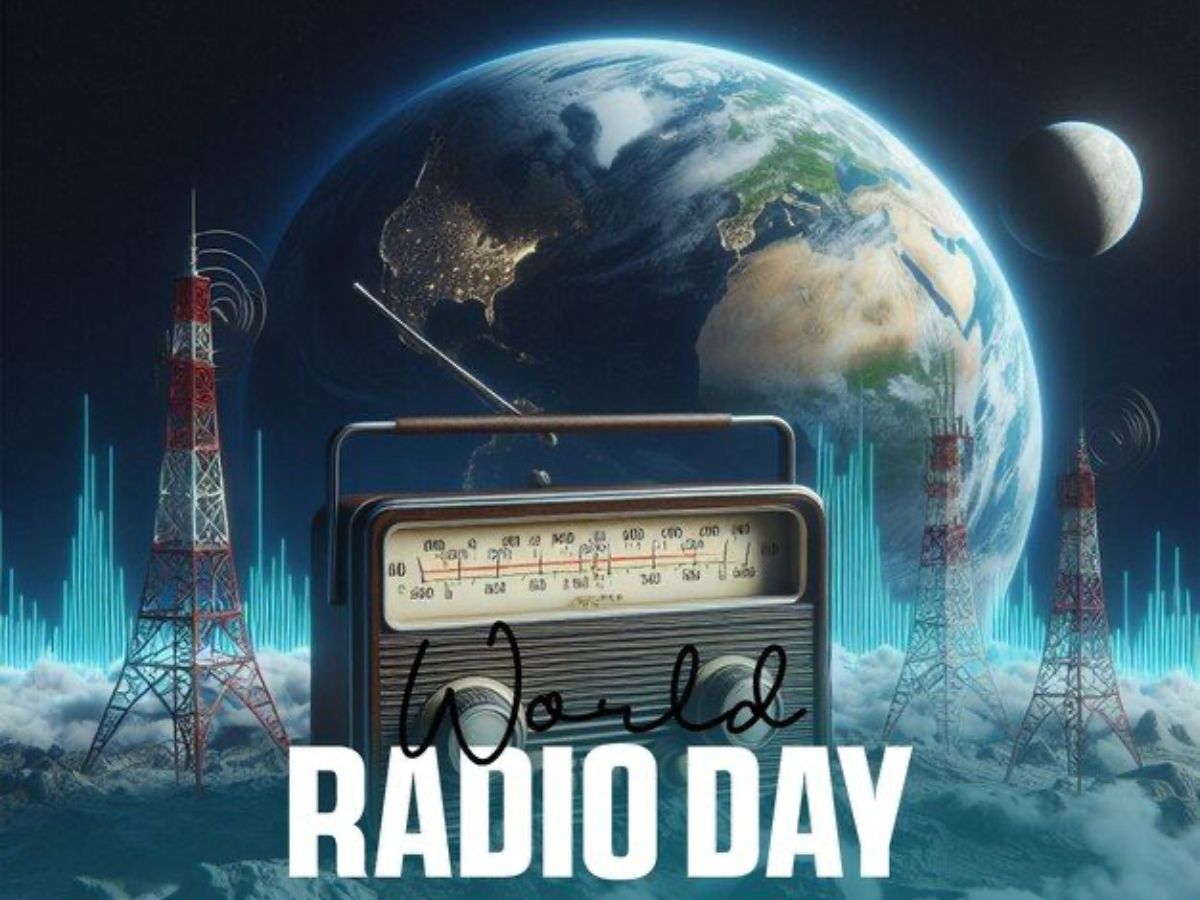
World Radio Day (WRD) was proclaimed by United Nations Educational, Scientific, and Cultural Organization (UNESCO) at its 36th General Conference in 2011 and was later adopted by the United Nations General Assembly during its 67th session in 2012, making it an officially recognised international observance. It is celebrated annually on 13th February, to commemorate the establishment of United Nations Radio in 1946, which began broadcasting soon after World War II and symbolised an early commitment to global communication and information sharing.
THEME OF WORLD RADIO DAY 2026
The theme of World Radio Day 2026 — “Radio and Artificial Intelligence: AI is a tool, not a voice” — underscores the growing role of Artificial Intelligence in the broadcasting ecosystem. It highlights how AI can enhance content production, archiving, translation, audience engagement and accessibility, making radio more efficient and inclusive. At the same time, the theme emphasises that technology must remain a support system, not a substitute for the human voice, editorial judgement and credibility that define radio. By encouraging ethical and responsible use of AI, the theme reaffirms that innovation should strengthen radio’s core values of trust, authenticity and community connection in the digital age.
RAIPUR TO HOST WORLD RADIO DAY CONCLAVE 2026
To mark World Radio Day 2026, All India Radio (AIR), Raipur, Chhattisgarh, in collaboration with UNESCO, is organising a World Radio Day Conclave on 13 February 2026 from 10:00 AM onwards at Hotel Babylon Capital, Raipur. The conclave is centred on the official theme, “Radio and Artificial Intelligence”, and will deliberate on how AI can strengthen content creation, audience engagement and accessibility while preserving the human voice at the core of radio broadcasting.
ALL INDIA RADIO: INDIA’S PUBLIC SERVICE BROADCASTER
All India Radio (AIR), popularly known as Akashvani, is the radio vertical of Prasar Bharati, India’s national broadcaster and has been serving the nation since its inception with the motto “Bahujan Hitaya, Bahujan Sukhaya”, (for the welfare and happiness of the masses). Established in 1936 and brought under public ownership after Independence, AIR has grown into one of the largest broadcasting organisations in the world, in terms of the number of languages broadcast and the diversity of audiences served.
AIR’s Home Service comprises 591 broadcasting centres across the country, covering nearly 92% of India’s geographical area, and 99.19% of its population. Terrestrially, it originates programming in 23 languages and 182 dialects, reflecting India’s vast socio-economic and cultural diversity. Through Medium Wave (MW), Short Wave (SW), FM and digital platforms, AIR reaches audiences in metropolitan cities as well as in remote, rural and border regions.
Its programming spans news, current affairs, agriculture, education, health awareness, youth content, classical and folk music, and cultural programming. During emergencies and natural disasters, AIR has consistently provided timely alerts and verified information.
As the media landscape evolves, AIR continues to transform and expand its footprint while remaining committed to inclusivity, credibility and national integration, embodying the enduring spirit of World Radio Day. This was evident during the COVID-19 pandemic, when schools in rural Bihar, Jharkhand and parts of Madhya Pradesh were shut and digital access remained limited, students relied on All India Radio (AIR) educational broadcasts to continue learning. In areas where smartphones and stable internet were scarce, radio quietly ensured continuity of education. Similarly, in disaster-prone coastal regions of Odisha and Tamil Nadu, fishermen routinely depend on AIR weather bulletins before venturing into the sea. During severe cyclones such as Fani (2019), timely radio alerts enabled many to return safely to the shore, reaffirming radio’s role as a dependable emergency communication tool when mobile networks fail.
COMMUNITY RADIO IN INDIA: LIFELINE FOR LOCAL VOICES
Community Radio Stations (CRSs) are low power, non-commercial stations set up and operated by local communities to address their specific communication needs. Community Radio (CR) is the third tier of radio broadcasting in India, distinct from Public Service and Commercial Radio.
The journey of Community Radio in India started in the year 2002, when the Government of India approved a policy for the grant of licenses for setting up of Community Radio Stations to well established educational institutions including IITs/IIMs. The first Community Radio Station was inaugurated on February 1, 2004 by Bharat Ratna Shri Lal Krishna Advani. A key milestone followed in 2008 with the launch of Anna Community Radio (90.4 MHz) by Anna University.
Community Radio serves as a platform for local voices, focusing on issues such as health, nutrition, education, agriculture, and social development. Broadcasting in local languages and dialects, it ensures wider reach and instant community connect. In a culturally and linguistically diverse country like India, CRSs also play a significant role in preserving folk traditions, local music, and cultural heritage, while providing opportunities for local artists.
Over the years, the sector has grown steadily, and India currently has 520 Community Radio Stations, underscoring the role of Community Radio as an effective instrument of grassroots communication and community empowerment.
VOICES FROM THE GROUND — RADIO IN EVERYDAY INDIA
Radio also plays a critical role during emergencies. When natural disasters or crises disrupt electricity, internet services, or other communication networks, radio often remains the most reliable source of trusted and timely information. Even today, it continues to be a lifeline for public safety and awareness. Radio’s strength lies not only in its reach, but in its relevance.
The following examples demonstrate how radio remains deeply embedded in India’s social, developmental and emergency communication framework.
Community participation further strengthens radio’s grassroots impact. In Bundelkhand, women-led community radio initiatives have provided platforms to discuss girls’ education, agriculture and welfare schemes, empowering first-time broadcasters to become local changemakers. In Kutch, community radio preserves dialects and oral traditions, safeguarding cultural heritage. In Kutch, Gujarat, community radio stations broadcast in the Katchi dialect, airing folk songs, oral histories and storytelling sessions. As local dialects gradually decline, radio serves as a cultural archive and an emotional bridge for migrants living away from home.
In Tihar Jail, Delhi, inmate-run radio initiatives produce programmes on legal awareness, mental health, music and poetry, fostering expression, confidence and rehabilitation through constructive engagement.
In the hills of Uttarakhand, where internet connectivity is often unreliable, community radio provides landslide warnings, farming advisories, job information and folk music, remaining accessible and dependable for remote and elderly populations.
In metropolitan cities like Delhi and Mumbai, FM radio continues to be part of daily urban life, with taxi and auto drivers tuning in for traffic updates, cricket commentary, music and interactive shows — underscoring radio’s enduring relevance even in a highly digitised city.
RAM SINGH BOUDDH: THE RADIO MAN OF INDIA
Ram Singh Bouddh, often described as the “Radio Man of India”, from Gijraula, Amroha District, Uttar Pradesh, has transformed a personal passion into a national cultural contribution. Recognised by Guinness World Records in 2025, Bouddh holds the record for the largest collection of radios in the world, comprising 1,257 distinct radio sets spanning decades of technological evolution. His collection narrates the story of radio, from bulky wooden receivers of the early twentieth century to compact transistor sets that brought news and entertainment into millions of Indian homes.
Bouddh’s journey is deeply rooted in his fascination with history and public communication. Inspired by the enduring relevance of radio, particularly programmes such as Mann Ki Baat, he began systematically collecting radios from across India. What started as a hobby gradually became a mission to preserve a disappearing legacy. Despite financial constraints and social scepticism, he continued his pursuit with remarkable perseverance.
Today, his collection is housed in a museum located at Siddharth Inter College, managed by his family. The space serves as a living archive, enabling students, researchers, and visitors to understand radio’s role in shaping public opinion and national consciousness. Bouddh’s achievement stands as a tribute to radio’s timeless relevance and to individual efforts that safeguard India’s communication heritage.
At 71, the retired government worker continues to marvel at the journey his passion has taken him on. Ram Singh Bouddh’s story is not just about radios, it’s a testament to the love of history, and the power of one individual to preserve the voices of an entire nation.
PRIVATE FM RADIO — EXPANDING REACH AND LOCAL CONTENT
Private FM radio complements public broadcasting by delivering local entertainment and information across urban and regional India. In August 2024, the Union Cabinet approved the rollout of 730 new FM channels in 234 previously uncovered cities and towns, with a reserve price of ₹784.87 crore, marking a significant step toward expanding regional content and generating new employment opportunities. This expansion further reinforces the role of private FM radio in complementing public broadcasting by delivering local entertainment, news, and information across urban and regional India. As per the Ministry of Information & Broadcasting, 391 private FM channels are currently operational in 113 cities under the FM Phase-III policy.
The theme of World Radio Day 2026 — “Radio and Artificial Intelligence: AI is a tool, not a voice” — underscores the growing role of Artificial Intelligence in the broadcasting ecosystem.
MANN KI BAAT — REINFORCING THE POWER OF RADIO IN THE DIGITAL AGE
In an era dominated by digital and social media platforms, the choice of radio by Prime Minister Narendra Modi as a primary medium for direct communication with citizens underscores the enduring relevance and trust associated with radio. Launched on 3 October 2014, Mann Ki Baat is a monthly radio programme broadcast on All India Radio (AIR) and carried across multiple languages and regions, ensuring its reach to the remotest corners of the country.
Aired usually on the last Sunday of every month, Mann Ki Baat has completed 130 editions, making it one of the longest-running radio outreach initiatives by a head of government. The programme exemplifies how radio continues to be an effective tool for mass communication even in the digital age, transcending barriers of literacy, internet access and geography. Through Mann Ki Baat, the Prime Minister highlights grassroots innovations, social movements, cultural traditions and citizen-led initiatives, reinforcing participatory governance and national integration. Its simultaneous availability on digital platforms further demonstrates radio’s ability to seamlessly integrate with new technologies while retaining its core strength — credibility, simplicity and inclusiveness. The sustained success of Mann Ki Baat reaffirms radio’s unique capacity to connect with people at scale, making it a powerful and relevant medium in contemporary public communication, in line with the spirit of World Radio Day.
CONCLUSION
World Radio Day highlights the continued relevance of radio as a trusted, easily accessible and inclusive medium. Despite rapid digitalisation, radio remains vital in reaching diverse and underserved populations, overcoming barriers of literacy, language and connectivity, and supporting public information, education and disaster communication.
In India, public service and community radio strengthen participatory communication by amplifying local voices and contributing to development and social cohesion. As emphasised by UNESCO, sustained policy support and innovation are essential to preserve radio as a platform for free expression, credible information and inclusive dialogue, ensuring its enduring role in a rapidly evolving media landscape.