NEW DELHI: The Supreme Court of India, in its order dated 20 November 2025, accepted the recommendations of the Committee constituted under the leadership of the Ministry of Environment, Forest and Climate Change (MoEF&CC) to frame a uniform, scientific definition of the Aravalli Hills and Ranges for regulating mining. Emphasising that uncontrolled mining poses a “great threat to the ecology of the nation,” the Court directed strict safeguards and imposed an interim moratorium on new mining leases until a comprehensive Management Plan for Sustainable Mining (MPSM) is prepared.
The Committee—comprising representatives from Delhi, Haryana, Rajasthan, Gujarat, the Forest Survey of India, Geological Survey of India, and the Central Empowered Committee—recommended adopting a uniform criterion of landforms rising 100 metres above local relief, along with protection of supporting slopes and clusters of hills within 500 metres as part of the Aravalli Range. These definitions ensure scientific clarity, objective mapping, and landscape-level conservation.
M/O EF&CC COMMITTEE REPORT FINDINGS
The Committee, constituted by MoEF&CC pursuant to Supreme Court directions had extensive consultation with State Governments in which it emerged that only Rajasthan has a formally established definition for regulating mining in the Aravalli definition which was based on the 2002 Committee Report of the State Government relying on Richard Murphy landform classification which identified all landforms rising 100 m above local relief as hills and based on that , prohibiting mining on both the hills and its supporting slopes. State of Rajasthan has been following this definition since 9th January, 2006.
During deliberations, all States agreed to adopt the aforementioned uniform criterion of “100 metres above local relief” for regulating mining in the Aravalli region as had been in force in Rajasthan since 09.01.2006 while unanimously agreeing to make it more objective and transparent. All the landforms enclosed within the lowest binding contour encircling hills of height 100 metre or more irrespective of their height and slopes are excluded for the purposes of grant of mining lease. Similarly, Aravalli range has been explained as all the landforms which exists within 500 metres of two adjoining hills of height 100 metre or more.
All landforms existing within this 500 metre zone irrespective of their height and slopes are excluded for the purposes of grant of mining lease. It is, therefore, be wrong to conclude that mining is permitted in all landforms below 100 metre height. The Committee constituted by the Supreme Court proposed several improvements over the definition currently followed by Rajasthan to strengthen it and to make it more transparent, objective and conservation centric:
-
A clear, objective, and scientifically robust criterion for determining local relief, enabling uniform application across all States and ensuring full protection of the entire hill landform up to its base.
-
Explicit protection to ranges, which was absent in Rajasthan’s definition. The Committee recommended that hills within 500 metres of each other constitute a range and must be protected accordingly.
-
Mandatory marking of Aravalli hills and ranges on Survey of India maps before any mining activity is considered.
-
Clear identification of core/inviolate areas where mining is strictly prohibited.
-
Detailed guidance for enabling sustainable mining and effective measures to prevent illegal mining.
The aforesaid measures ensure a clear, map-verifiable operational definition of “Aravalli Hills” and “Aravalli Range,” and a regulatory framework that protects core/inviolate areas, restricts new mining, and hardens safeguards and enforcement against illegal mining. In its final judgment dated 20.11.2025, the Hon’ble Supreme Court commended the Committee’s work including the assistance of the Technical Committee (para 33 of the Order) and also appreciated its recommendations regarding prevention of illegal mining and permitting only sustainable mining in Aravalli Hills and Ranges (para 39 of the Order). The Supreme Court has accepted these recommendations and imposed an interim moratorium on new leases until a landscape-wide MPSM is prepared.
OPERATIONAL DEFINITIONS
Aravalli Hills: Any landform located in the Aravalli districts, having an elevation of 100 metres or more from the local relief, shall be termed as Aravalli Hills. For this purpose, the local relief shall be determined, with reference to the lowest contour line encircling the landform (as per the detailed procedure mentioned in the Report). The entire landform lying within the area enclosed by such lowest contour, whether actual or extended notionally, together with the Hill, its supporting slopes and associated landforms irrespective of their gradient, shall be deemed to constitute part of the Aravalli Hills.
Aravalli Range: Two or more Aravalli Hills, as defined above, located within the proximity of 500m from each other, measured from the outermost point on the boundary of the lowest contour line on either side forms Aravalli Range. The area between the two Aravalli hills is determined by first creating buffers with a width equal to the minimum distance between the lowest contour lines of both hills. An intersection line is then generated between the two buffer polygons by joining the intersection of both buffer polygons. Finally, two lines, are drawn perpendicularly from both endpoints of the intersection line and extended till it intersects the lowest contour line of both hills. The entire area of landforms falling between the lowest contour lines of these Hills as explained, along with associated features such as Hills, Hillocks, supporting slopes, etc., shall also be included as part of Aravalli Range.
These definitions are not just technical but they are ecological safeguards. By clearly identifying what counts as an Aravalli Hill or Range, they ensure that all critical landforms, slopes, and connecting habitats remain under statutory protection, thereby preventing ecological degradation.
Comprehensive inclusion of landforms: By defining Aravalli Hills as any landform rising 100 metres or more above local relief, along with their supporting slopes, the entire ecological unit is protected. This prevents piecemeal exploitation of slopes or foothills that are vital for soil stability, water recharge, and vegetation cover.
Cluster-based definition of ranges: Hills within 500 metres proximity are grouped into Aravalli Ranges. This ensures that valleys, intervening slopes, and smaller hillocks between major peaks are also safeguarded. Ecologically, this protects connectivity of habitats, wildlife corridors, and the integrity of the ridge system.
Mapping on official toposheets: Using Survey of India maps to mark hills and ranges makes the boundaries objective and enforceable. This reduces ambiguity and strengthens regulatory enforcement against illegal mining or construction making it objective and transparent.
Protection of core/inviolate areas: The definition is tied to ecological safeguards—Protected Areas, Tiger Reserves, Eco-Sensitive Zones around Protected Areas, wetlands, and CAMPA plantations are automatically included. This ensures that the most fragile and biodiversity-rich zones are off-limits to mining or development.
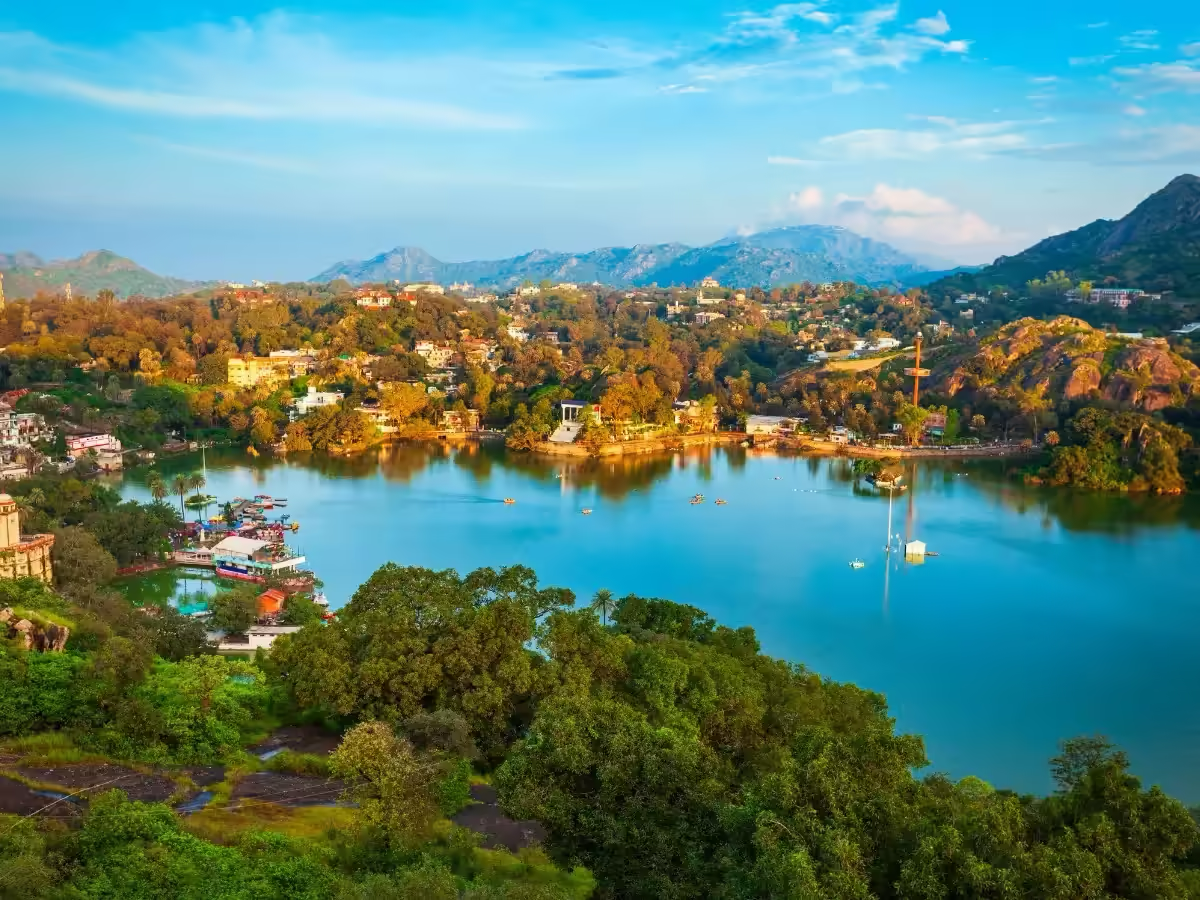
The Aravalli Range is a mountain range in north-western India, running approximately 670 km (420 mi) in a south-west direction, starting near Delhi, passing through southern Haryana and Rajasthan, and ending in Ahmedabad, Gujarat. The biggest peak is Guru Shikhar in Mount Abu, Rajasthan at 1,722 m (5,650 ft). The Aravalli Range is the oldest fold-mountain belt in India, dating back to the Paleoproterozoic era.
-
Hon’ble Supreme Court in its order dated 20/11/2025 has inter-alia given the following directions:
-
“We accept the recommendations made by the Committee with regard to the definition of Aravalli Hills and Ranges given by MoEF&CC;
-
We further accept the recommendations with regard to the prohibition of mining in core/inviolate areas except in case of critical, strategic and atomic minerals (Atomic minerals notified in part B and Critical and Strategic minerals notified in Part D of the First Schedule of MMDR Act) and minerals listed in the Seventh Schedule of the MMDR Act 1957;
-
We also accept the recommendations for sustainable mining in Aravalli Hills and Ranges and the steps to be taken for preventing illegal mining in Aravalli Hills and Ranges;
-
We, however, direct the MoEF&CC to prepare a Management Plan for Sustainable Mining (MPSM) through Indian Council of Forestry Research and Education (ICFRE) for the entire Aravallis, i.e., understood as the continuous geological ridge extending from Gujarat to Delhi on the lines of the MPSM for Saranda and the MPSM must:
-
Identify permissible areas for mining; ecologically sensitive, conservation-critical and restoration-priority areas within the Aravalli landscape where mining shall be strictly prohibited or permitted only under exceptional and scientifically justified circumstances
-
Incorporate a thorough analysis of cumulative environmental impacts and the ecological carrying capacity of the region, and include detailed post-mining restoration and rehabilitation measures.
-
We further direct that till the MPSM is finalised by the MoEF&CC through ICFRE, no new mining leases should be granted;. We further direct that upon the MPSM being finalised by MoEF&CC in consultation with the ICFRE, mining would be permitted as per the MPSM only in those areas wherein sustainable mining could be permitted; and In the meantime, the mining activities in the mines which are already in operation would be continued in strict compliance with the recommendations made by the Committee regarding sustainable mining in the report.”
FREEZE ON NEW MINING LEASES
Because the definition is now operational, the Supreme Court has ordered no new mining leases until a Mining Plan for Sustainable Mining (MPSM) has been prepared by ICFRE on the lines of the one prepared by it for Saranda Forests in Jharkhand. This acts as a preventive shield against immediate ecological threats.
Landscape-level conservation: By treating the Aravallis as a continuous geological ridge, the definition protects the entire landscape, not just isolated hills. This guards against fragmentation, which is one of the biggest ecological risks.
ECOLOGICAL FUNCTIONS PRESERVED:
Prevents desertification by maintaining the natural barrier against the Thar Desert. Safeguards groundwater recharge zones in foothills and valleys. Maintains biodiversity habitats across slopes, ridges, and intervening areas. Protects Delhi-NCR’s “green lungs” that regulate air quality and climate.
HOW THE ARAVALLIS ARE PROTECTED
The Committee’s findings, later upheld by the Supreme Court, provide a clear scientific basis for identifying the Aravalli Hills and Ranges. These findings, combined with strict mining regulations and monitoring, ensure that the ecology of the Aravallis remains safeguarded and free from imminent threat.
Transparent, Objective and Scientific: Aravalli Hills are defined as landforms rising 100 metres or more above local relief, including their supporting slopes. This prevents loopholes and ensures all genuine hill areas are covered.
Ranges mapped comprehensively: Hills within 500 metres proximity are clustered into Aravalli Ranges, so intervening valleys, slopes, and smaller hillocks are also protected.
Core/Inviolate zones safeguarded: Mining is absolutely prohibited in protected areas, eco-sensitive zones, tiger reserves, wetlands, and CAMPA plantation sites.
No new mining leases: The Supreme Court has ordered a freeze on new mining leases until a detailed sustainable mining plan (MPSM) is prepared.
Strict regulation of existing mines: Current operations must comply with environmental clearance, forest clearance, and continuous monitoring; violations can lead to suspension.
Illegal mining prevention: Surveillance with drones, CCTV, weighbridges, and district task forces ensures strong enforcement against unauthorized activity.
Landscape-level planning: The upcoming MPSM to be prepared by ICFRE will identify permissible and prohibited zones, assess ecological carrying capacity, and mandate post-mining restoration.
SAFEGUARDS FOR MINING AND ECOLOGICAL PROTECTION
The findings upheld by the Supreme Court set out strict measures to ensure that mining does not compromise the ecological integrity of the Aravallis. These safeguards combine absolute prohibition in sensitive zones, sustainable mining practices, and strong enforcement against illegal operations.
SUSTAINABLE MINING SAFEGUARDS Forest land approvals: Forest clearance (Van Adhiniyam, 1980) in addition to EC; compensatory afforestation, Net Present Value, wildlife plans, safety-zone greenbelts, and soil-moisture conservation are mandatory.
Environmental appraisal and EC: EAC/SEAC appraisal with ToR and standard EC conditions plus site-specific conditions; robust EIA/EMP addressing cumulative impacts as per the provisions of EIA Notification 2006, as amended.
Compliance monitoring: Six-monthly reports; first-year joint inspections by MoEF&CC RO, SPCB, SEAC, DMG, Forest, and CGWB/SGWB. EC may be held in abeyance upon non-compliance.
Audits and enforcement: Periodic checks by MoEF&CC RO and SPCBs, online monitoring; environmental auditors; repeated breaches can trigger EC/CTO revocation and penalties.
Groundwater safeguards: NOCs for DARK zones or when operations meet groundwater; protect hydrogeology and recharge functions.
Cultural heritage: NOC from ASI when near protected monuments (e.g., forts).
Preventing Illegal Mining Regulated mining only: Permit with stringent conditions in designated areas; inviolate areas remain untouched.
Surveillance: Drones, CCTV (including night-vision), high-tech weighbridges, trenches on access paths, and special anti-illegal mining patrols.
Governance: District-level task forces (Revenue, Forest, Police, Mining), control rooms with toll-free complaint lines, and signage declaring prohibitions and penalties.
Logistics oversight: E-challan matching for dispatches; SPCB-led teams for monitoring transport and storage; immediate closure of any illegal mines.
CONCLUSION
The Aravalli Hills remain under robust protection through the Ministry of Environment, Forest and Climate Change and coordinated efforts with state governments. The Government reiterates its commitment to ecological preservation, sustainable development, and transparency.
Contrary to alarmist claims, there is no imminent threat to the Aravallis’ ecology. Ongoing afforestation, eco-sensitive zone notifications, and strict monitoring of mining and urban activities ensure that the Aravallis continue to serve as a natural heritage and ecological shield for the nation. India’s resolve is clear: the Aravallis will be safeguarded for present and future generations while balancing conservation with responsible development.