
NEW DELHI: India has seen steady progress in cleanliness over the past few years. Initiatives under the Swachh Bharat Mission have strengthened sanitation and waste management systems across cities, laying the foundation for cleaner urban spaces.
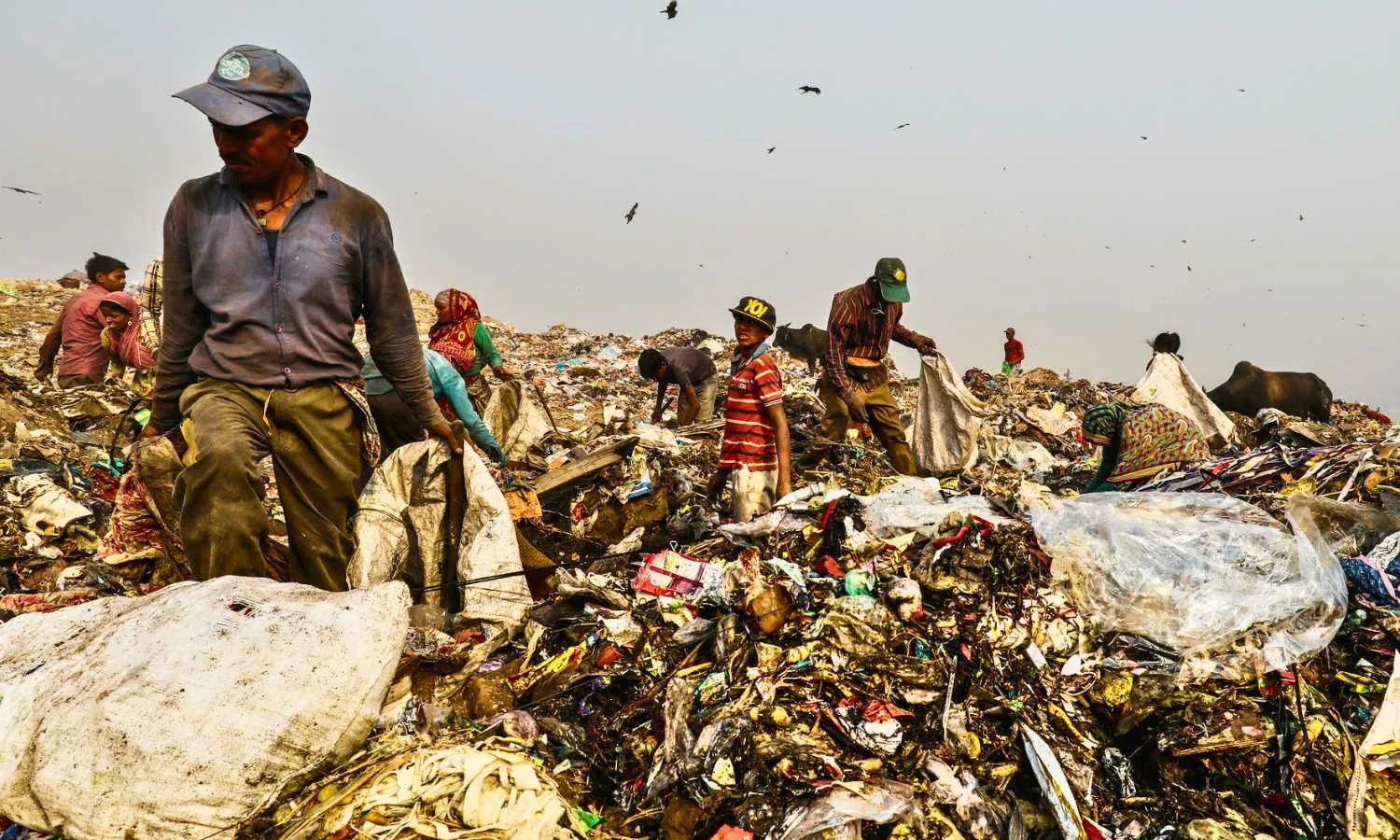
Building on this foundation, efforts are now focused on remediating legacy waste dumpsites. These are large accumulations of waste formed over many years. Eliminating these dumpsites represents the next phase of India’s urban cleanliness efforts. To accelerate this work, the Government of India launched the Dumpsite Remediation Accelerator Programme (DRAP) in November 2025, with the objective of achieving “Lakshya Zero Dumpsites” by October 2026, with most dumpsites targeted for clearance within this timeframe.
LEGACY DUMPSITES: CURRENT SITUATION
A dumpsite refers to land used by Urban Local Bodies for the disposal of municipal solid waste. Often this waste is accumulated over decades through unscientific disposal. When waste is disposed of in an open dumpsite, it adversely affects the surrounding environment by contaminating groundwater and soil, degrading air quality, and releasing methane, a highly potent greenhouse gas. Such dumpsites also pose fire hazards, attract disease-carrying vectors, and emit toxic fumes, leading to long-term health risks for nearby communities.
Legacy Dumpsite Remediation is the process of scientifically cleaning up the old legacy waste dumpsites while utilising inert & C&D waste for road construction and combustible fraction for energy generation.
Approximately 2,427 dumpsites have been identified across the country, primarily those containing legacy waste of 1,000 tonnes or more. These sites together contain an estimated 25 crore metric tonnes of accumulated waste, spread across nearly 15,000 acres of land. The scale of legacy waste is compounded by rising urban waste generation. Cities currently produce nearly 1.62,000 tons of municipal solid waste each day, and total waste generation is projected to increase to 165 million tonnes by 2030 and 436 million tonnes by 2050. In the absence of timely remediation and scientific processing, greenhouse gas emissions from the municipal solid waste sector could rise to 41.09 million tonnes of CO2-equivalent by 2030.
URBAN WASTE: FROM SWACHH BHARAT TO MISSION ZERO
Over the past decade, India has transformed its sanitation landscape through the Swachh Bharat Mission (SBM), enhancing waste collection, cleanliness, and public health awareness. The mission has brought awareness, built over 100 million toilets, and strengthened systems for cleaner, safer communities. In continuation, the government launched SBM-Urban 2.0 in 2021, deepening the progress further by expanding solid-waste processing capacity, promoting segregation at source, and strengthening scientific waste management systems.
FRAMEWORK: THE 5P MODEL
The DRAP is built on the 5P Framework of Bharat Mission-Urban 2.0, launched in 2021, including Political Leadership, Public Finance, Partnerships, People’s Participation, and Project Management, ensuring every stage of dumpsite remediation, including planning and execution, remains accountable, adequately financed, partnership-driven, community-oriented, and monitored.
Political Leadership: Under DRAP, senior political and administrative leaders play a direct role in accelerating remediation by adopting dumpsites. This approach strengthens top-level supervision, supports timely decision-making, and helps resolve on-ground challenges more efficiently. One such example is Delhi’s 70-acre Bhalswa dumpsite, adopted by Union Minister Manohar Lal. Between 17 September and 6 November 2025, Bhalswa remediated 4,79,500 MT of legacy waste. As part of the ongoing transformation, 25 acres of the site have been remediated. Of this, 5 acres have been developed with bamboo plantations, while the remaining 20 acres are being prepared for sanitation-related activities and processing infrastructure.
Public Finance: Provides enhanced financial assistance to cities with substantial legacy waste loads. In addition to the funds given under SBM-U 2.0, Financial support includes:
-
Central Financial Assistance (CFA) calculated at 550 per tonne of legacy waste.
-
Disbursement categories of 25%, 33%, or 50% of the project cost, depending on the city type.
-
Funding available not only for legacy waste remediation but also for processing fresh waste, ensuring that no new dumpsites are created.
-
Projects worth 6,700 crore had already been approved for the 214 targeted sites.
Partnerships: Collaboration with institutions to ensure that remediation setthvites progress efficiently and at scale. The programme promotes partnerships with:
-
Corporate and PSU partners for financial contributions, logistical support, disposal pathways, and technology integration.
-
State PWDs, State Highways Departments, and NHAI to utilise large quantities of inert waste for road construction and infrastructure.
-
Cement plants, waste-to-energy facilities, and industrial units to absorb and process Refuse-Derived Fuel (RDF) generated from remediation.
-
Technical experts and engineering partners for biomining solutions, site assessments, engineering designs, and scientific validation.
-
NGOs and civil society organisations for community engagement, worker mobilisation, awareness campaigns, and health and safety activities for Safai Mitras and site workers.
People’s Participation: Communities living near dumpsites face the direct impact of fumes, fires, odour, and disease. The programme engages communities living near dumpsites through targeted awareness and participation initiatives, including:
-
Work with NGOs to organise health camps, awareness drives, and information campaigns.
-
Promote safe working conditions for Safai Mitras and remediation workers.
-
Use site-specific branding to create local pride, visibility, and ownership. By amplifying the voices of the most impacted populations, DRAP aims to make dumpsite remediation not just a technical exercise but a socially inclusive transformation.
Project Management: The backbone of DRAP is a strong, technology-enabled project management system that reduces delays and increases accountability.
DUMPSITE TO RESOURCE: WHERE WASTE GOES AFTER REMEDIATION
Legacy waste is biomined, a process in which old waste is scientifically stabilised and separated into different usable parts, reducing pressure on landfills and ensuring that nothing returns to the dumpsite. Each recovered material is sent for appropriate reuse or processing, following the broader circular-economy approach, which aims to use resources sustainably by limiting raw-material consumption and waste generation through principles such as reducing, reusing, recycling, refurbishing, recovering, and repairing.
As part of dumpsite remediation, legacy waste is scientifically segregated into different material streams. The following section outlines the end-use pathways adopted for each category of waste:
Inert & Soil-Like Material: Inert and construction debris are reused to build roads, strengthen embankments, and level low-lying areas, supporting urban development without extracting new raw material. This helps in reducing the need for fresh sand and soil.
Construction & Demolition (C&D) Waste: The waste from demolished buildings or structures falls in this category. The waste will be processed into paver blocks, tiles, bricks, and aggregates.
Refuse-Derived Fuel (RDF): means fuel derived from combustible in nature but is not recyclable, such as soiled paper, soiled cloth, contaminated plastics, multilayer packaging materials, other packaging materials, pieces of leather, rubber, tyre, polystyrene (thermocol), wood, etc. The RDF is supplied to cement factories, waste-to-energy plants, and other industries as an alternative to coal.
Recyclables: Recyclables include materials like plastic, paper, metal, glass, and cardboard that are segregated and sorted from mixed waste. These are processed through recycling, where they are reprocessed to create new products.
-
Biodegradable Waste: Biodegradable waste refers to any organic material that can be broken down by micro-organisms into simpler, stable compounds. This includes food scraps, kitchen waste, garden waste, and other naturally decomposable materials.
-
Only non-reusable rejects: Sent to scientific landfills, not dumped in the open.
-
This circular approach ensures that legacy dumpsites are eliminated permanently while enabling sustainable resource recovery.
Waste Processing Ecosystem under SBM-Urban 2.0: Strengthening Material Recovery Facilities (MRFs): The mission aims to set up at least one Material Recovery Facility (MRF) in each city. At present, there are 2,900 operational MRF plants with a total capacity of 67,000 TPD. Additionally, 43,800 TPD of MRF capacity has been approved under SBM-U 2.0. Under SBM-U 2.0, the Ministry of Housing and Urban Affairs (MoHUA) is promoting the mechanisation of MRFs with capacities above 50 TPD to reduce manual intervention in waste management practices.
Expansion of Wet Waste Processing and Composting: Waste-to-compost plants are strengthening wet waste management across urban areas. Currently, there are 2,800 operational compost plants with a total capacity of 1.14 lakh TPD. Under SBM-U 2.0, an additional composting capacity of 47,200 TPD has been approved.
Biomethanation and Compressed Biogas (CBG) Plants: At present, 331 biomethanation plants with a cumulative capacity of 4,353 TPD are operational across the country, while 145 compressed biogas (CBG) plants with a capacity of 20,155 TPD are at various stages of implementation.
Waste-to-Electricity (WtE) Facilities: In Large Cities: Cities with a population of more than 10 lakh are required to establish higher-order processing facilities, such as Waste-to-Electricity (WtE) plants for the treatment of dry waste. Currently, there are 17 operational WtE plants with a total processing capacity of 20,100 TPD and a power generation capacity of approximately 261 MWh.
WAY FORWARD: CLEANER CITIES, HEALTHIER COMMUNITIES
Achieving Zero Dumpsites by 2026 will help strengthen the foundations of modern urban governance by embedding scientific waste management into daily municipal operations and integrating waste pickers and sanitation workers into the formal waste management chain. The elimination of legacy dumpsites supports the shift from open dumping to circular waste practices, contributing to SDG 11 (Sustainable Cities and Communities) and SDG 12 (Responsible Consumption and Production), while reduced methane emissions from unmanaged waste advance SDG 13 (Climate Action).
Over the longer term, the removal of dumpsites will support improved land-use planning, reduced environmental stress, and healthier urban living conditions. By enabling cleaner, more resource-efficient, and better-managed cities, Mission Zero Dumpsites contributes to the broader vision of Viksit Bharat 2047, where urban growth is aligned with sustainability, productivity, and long-term quality of life.