Bimbisara, an eminent ruler of the Haryanka dynasty, reigned over the Magadha kingdom from around 543 to 492 BCE. Known for his military skills, diplomatic skills, and religious patronage, he transformed Magadha into one of the most powerful kingdoms of ancient India. His reign not only laid the groundwork for future dynasties like the Mauryas and Nandas but also witnessed significant cultural and spiritual developments. Tragically, Bimbisara’s life ended in prison after being overthrown by his son, Ajatashatru.
Early Life and Rise to Power
Born into the Haryanka dynasty around 544 BCE, Bimbisara ascended the throne at the young age of 15. Despite his youth, he quickly demonstrated remarkable leadership abilities, earning respect from his subjects and neighboring kingdoms. His early rule marked the beginning of Magadha’s transformation from a regional power into a dominant empire in North India.
Expansion of Magadha: Conquests and Alliances
One of Bimbisara’s most notable achievements was expanding Magadha’s territory and influence. He employed a combination of military conquest, strategic marriages, and diplomacy:
-
Conquest of Anga: Bimbisara defeated the powerful Anga kingdom (modern Bihar and Bengal), annexing it to Magadha.
-
Marriage Alliances: He married princesses from influential regions to strengthen ties and expand his influence:
-
A Kosalan princess brought the fertile Kashi region as dowry.
-
A Licchavi princess from Vaishali helped secure an alliance with the Vajji confederacy.
-
A princess from Madra (Punjab region) further enhanced political relations.
-
-
Military Strength: Bimbisara maintained a disciplined army to defend and extend his empire, ensuring Magadha’s supremacy in the region.
These strategies not only expanded Magadha’s borders but also created a network of loyal allies, reinforcing political stability.
Administration and Governance
Bimbisara established Rajagriha (modern Rajgir, Bihar) as his capital, transforming it into a center of administration and military strategy. He introduced an efficient governance system, dividing the empire into manageable regions and appointing capable officials to maintain law, order, and taxation.
He encouraged trade and agriculture, which brought prosperity to Magadha and strengthened its economic base. His administrative reforms were crucial in creating a well-organized kingdom capable of supporting a powerful army and sustaining growth over decades.
Patronage of Buddhism and Jainism
Bimbisara was a contemporary of Gautama Buddha and Mahavira, the founder of Jainism. He became a devoted patron and close follower of Buddha, providing the Veluvana (Bamboo Grove) monastery near Rajagriha for the Buddha and his disciples.
He also supported Jainism, showing religious tolerance and respect for spiritual leaders. His support helped both religions flourish in Magadha, making his reign a notable period for cultural and religious development.
Challenges and Tragic Downfall
Legacy: Foundations for Future Empires
Bimbisara is remembered as a visionary king who combined military strength, diplomacy, and efficient administration to make Magadha a central power in ancient India. His policies and governance created the conditions for future dynasties, including the Nandas and Mauryas, to expand Magadha into a dominant empire.
-
Military and Diplomacy: Expanded Magadha’s territory and forged strong alliances.
-
Cultural Patronage: Supported Buddhism and Jainism, leaving a lasting spiritual impact.
-
Economic Growth: Encouraged trade and agriculture, ensuring long-term prosperity.
-
Political Vision: Laid the foundations for future imperial dynasties.
Bimbisara’s reign exemplifies how wise governance, strategic marriages, and religious tolerance can shape a kingdom into a lasting empire, earning him a prominent place in Indian history.
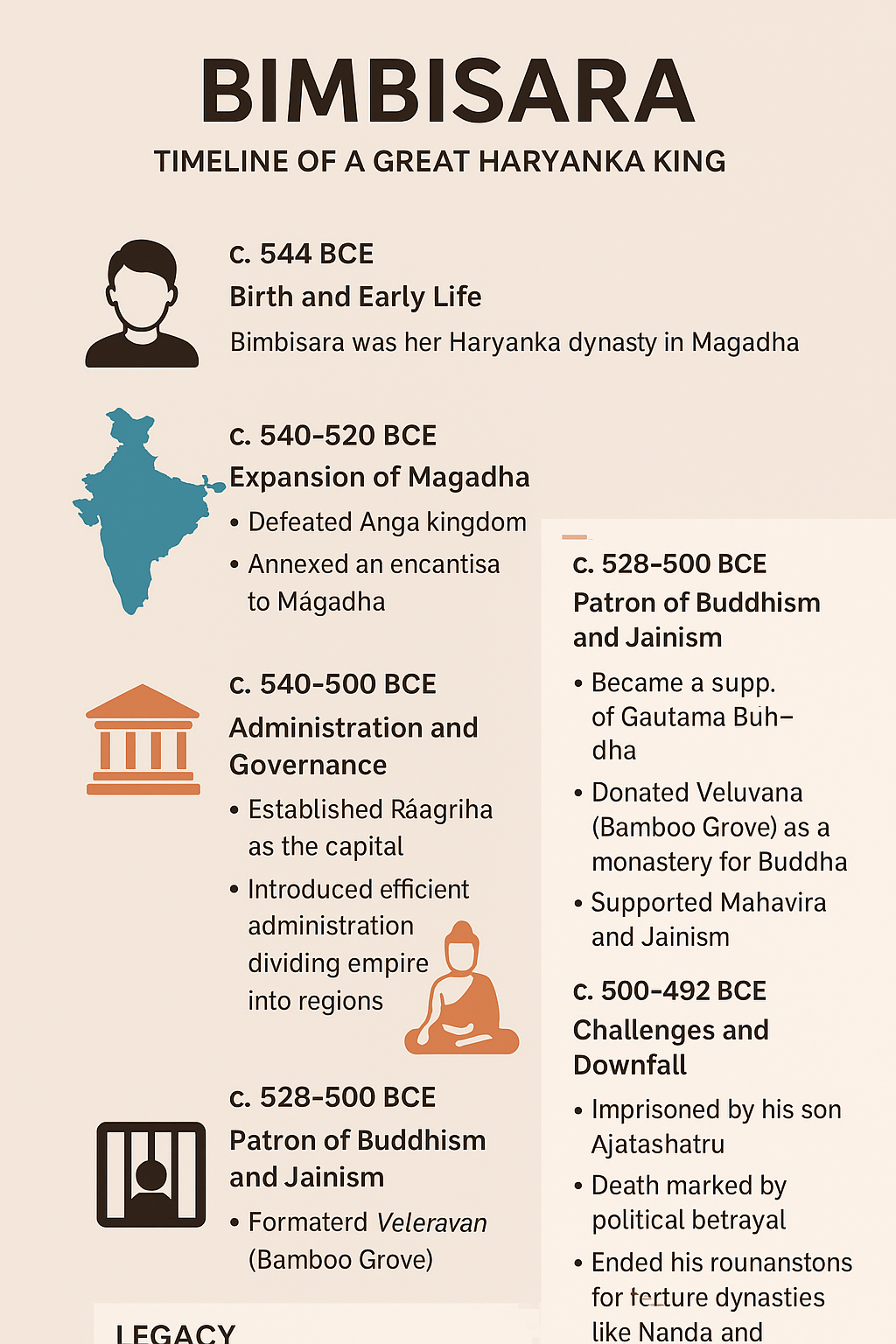
Timeline of Bimbisara’s Life and Achievements
-
c. 544 BCE – Early Life: Born into the Haryanka dynasty; ascended the throne at 15.
-
c. 540–520 BCE – Expansion: Conquered Anga; married princesses from Kosala, Licchavi, and Madra to strengthen alliances.
-
c. 540–500 BCE – Governance: Established Rajagriha as capital; introduced efficient administration; promoted trade and agriculture.
-
c. 528–500 BCE – Religious Patronage: Supported Buddha and Mahavira; donated Veluvana monastery.
-
c. 500–492 BCE – Downfall: Imprisoned by son Ajatashatru; died in custody.
-
Legacy: Made Magadha a dominant kingdom; laid groundwork for future dynasties; remembered as a patron of culture and religion.
Disclaimer: The above article is provided for informational purposes only. The Daily Guardian is not responsible for any discrepancies