
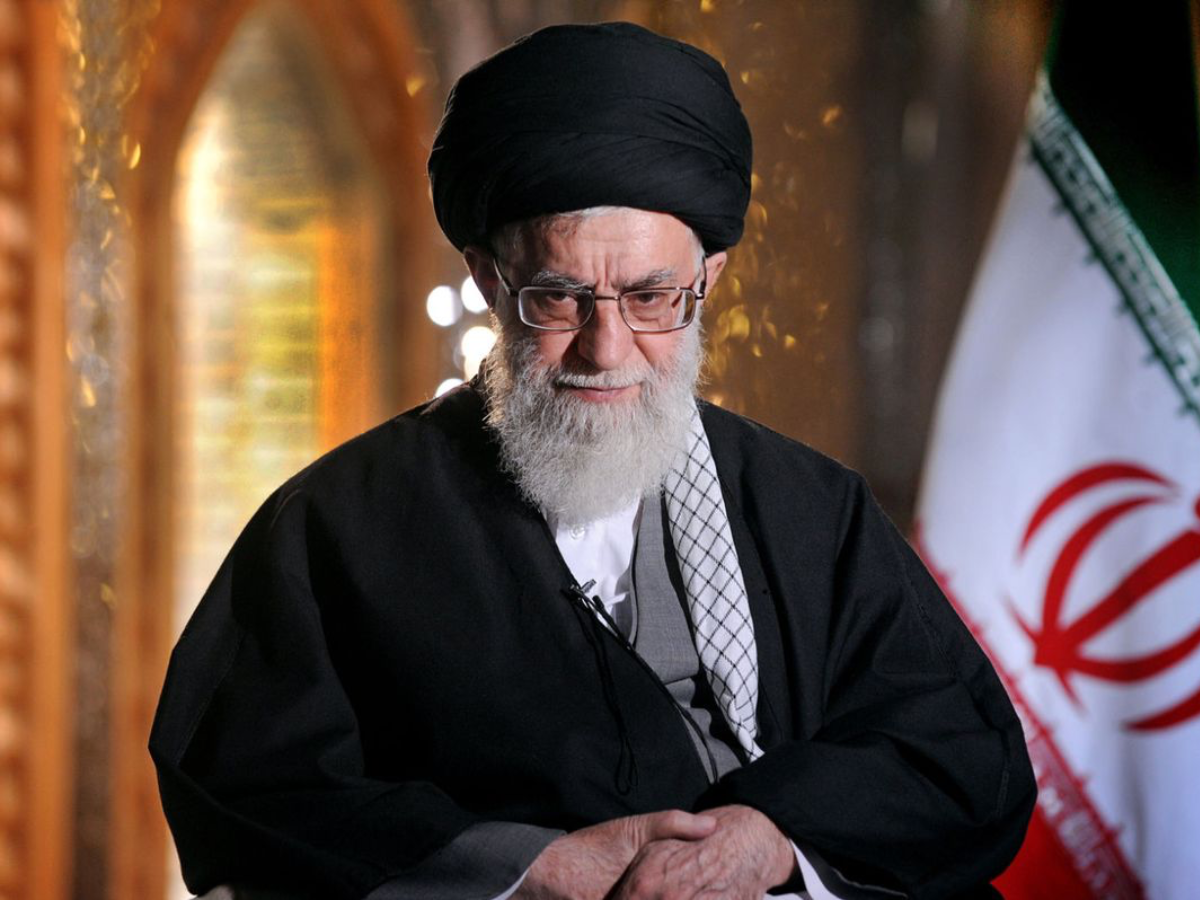
NEW DELHI: Who was Ayatollah Ali Khamenei? Ayatollah Ali Hosseini Khamenei served as the Supreme Leader of the Islamic Republic of Iran from 1989 until his death in March 2026, making him one of the longest-serving and most powerful political figures in the modern Middle East. His tenure spanned 37 years, during which he wielded authority that superseded that of Iran’s presidents, parliament and judiciary — combining religious, political, military and intelligence power in one office.
Born April 19, 1939, in Mashhad, a major Shi ite religious city in north-east Iran, Khamenei came from a religious family and pursued advanced Islamic studies in Qom, Iran’s theological capital. Long before he became supreme leader, he was deeply involved in the 1979 Islamic Revolution that overthrew the Pahlavi monarchy and established the Islamic Republic under Ayatollah Ruhollah Khomeini.
EARLY LIFE, EDUCATION AND REVOLUTIONARY YEARS
Khamenei’s early life was shaped by religion, politics and resistance. As a young student in Qom, he was drawn to the clerical opposition movement against the shah — especially the ideas of vel yat-e faq h (guardianship of the Islamic jurist), championed by Ayatollah Khomeini. This doctrine held that religious jurists should guide political power in a society governed by Islamic law.
His activism cost him: he was arrested and imprisoned several times by the shah’s security forces in the 1960s and 1970s. After the 1979 Revolution succeeded, Khamenei became one of its most trusted officials — initially serving in defense roles and as deputy minister of defense. He was also involved in shaping the Islamic Revolutionary Guard Corps (IRGC), which later became a pillar of the regime’s military and political influence.
PRESIDENCY (1981–1989)
In 1981, during the tense and violent early years of the Islamic Republic — which included an eight-year war with Iraq — Khamenei was elected president of Iran. That same year, a bomb exploded at a mosque where he was speaking, leaving him seriously injured and partially paralysed.
As president, his role was constitutionally weaker than that of the prime minister, but he emerged as a key figure in directing Iran’s military and political strategy during the Iran-Iraq war. His presidency laid the groundwork for his future consolidation of power and entrenched his position within the revolutionary elite.
RISE TO SUPREME LEADERSHIP
When Ayatollah Khomeini died in 1989, Iran faced a leadership crisis. Khomeini had initially designated another cleric, Ayatollah Hossein Ali Montazeri, as his successor, but later removed him amid political disagreements. Instead, Iran’s clerical elite turned to Khamenei — even though at the time he lacked the highest clerical rank (marja’) usually required for the position.
To accommodate his appointment, Iran’s Assembly of Experts amended the constitution to loosen the qualifications for the supreme leadership. Khamenei was then elevated to ayatollah and selected leader in June 1989. From that moment on, he became the most powerful individual in Iran’s political system.
AUTHORITY AND POLITICAL SYSTEM UNDER KHAMENEI
As Supreme Leader, Khamenei operated above Iran’s constitutional institutions. His position allowed him to:
-
command the Islamic Revolutionary Guard Corps (IRGC) and armed forces
-
appoint the heads of the judiciary and the state broadcasting corporation
-
determine Iran’s major foreign and strategic policies
-
influence — and often override — the elected president and parliament
The Supreme Leader isn’t elected by popular vote; he is chosen and overseen by the clerical Assembly of Experts, a body of 88 senior Islamic jurists elected every eight years.
Under Khamenei, Iran became a highly centralized theocratic state where religious authority justified political power — a system critics describe as a de facto dictatorship.
DOMESTIC POLICIES: REPRESSION AND DISSENT
Khamenei’s rule was marked by strict internal control and repression of political dissent. Key events include:
-
The 2009 “Green Movement” protests against disputed election results, which were violently suppressed.
-
Waves of protests in 2017-2018 over economic hardship.
-
The 2022 “Woman, Life, Freedom” uprising, sparked by the death of Mahsa Amini in morality police custody, which symbolised growing discontent with social repression.
-
Renewed and widespread demonstrations in late 2025, driven by persistent economic issues and dissatisfaction with leadership.
Those protests were met with harsh crackdowns, mass arrests, and, according to some human rights organisations, thousands of deaths.
Supporters of Khamenei portrayed these actions as necessary to preserve the Islamic Republic’s stability, while critics condemned them as gross violations of human rights and democratic freedoms.
FOREIGN POLICY AND REGIONAL INFLUENCE
On the international stage, Khamenei’s strategy was defined by perpetual opposition to the United States and Israel and a network of regional alliances and proxy groups often labelled the “Axis of Resistance.”
Under his leadership, Iran:
-
Backed Hezbollah in Lebanon.
-
Supported Hamas in Gaza.
-
Allied with militias in Iraq and Syria, and
-
Helped the Houthi rebels in Yemen.
These relationships expanded Iran’s influence but also drew powerful adversaries.
Khamenei also oversaw Iran’s controversial nuclear programme, maintaining that it was for peaceful purposes while resisting Western demands to curb uranium enrichment. This stance triggered decades of sanctions and diplomatic crises, especially after the U.S. withdrew from the 2015 nuclear agreement under President Donald Trump.
CONFLICTS WITH GLOBAL POWERS AND THE 2026 STRIKES
Tensions between Iran, the U.S. and Israel escalated dramatically in early 2026. On February 28 and March 1, 2026, Iran was struck in a coordinated military campaign by U.S. and Israeli forces, which killed Khamenei and several members of his inner circle at his compound in Tehran — a watershed in regional geopolitics.
U.S. officials framed the operation as a blow against Iran’s leadership and a response to Iran’s regional policies and alleged nuclear ambitions. Israeli government sources confirmed the strike and subsequent attacks in Tehran.
The death of Khamenei has sent shockwaves through Iran and beyond, sparking both domestic celebrations by anti-regime groups and fears of intensified conflict.
LEGACY AND POLARISED PERCEPTIONS
Khamenei’s legacy is deeply contested:
Supporters see him as a steadfast defender of Iran’s sovereignty, resisting foreign pressure and preserving the Islamic Revolution’s ideals.
Critics describe him as an authoritarian ruler whose policies isolated Iran, stifled dissent and contributed to economic hardship and human suffering.
Whether admired or reviled, his influence shaped every dimension of Iranian society — political, religious, military, and cultural — for almost four decades.
SUCCESSION AND UNCERTAINTY
Unlike previous transfers of power within Iran’s political system, Khamenei left no officially appointed successor. As of March 2026, the interim leadership is handled by a Leadership Council including clerics and senior officials tasked with guiding the transition until the Assembly of Experts selects a new supreme leader.
This succession process will be critical for Iran’s future — determining whether the country continues its hardline trajectory, reforms internally, or fractures under domestic and international pressure.
WHY KHAMENEI’S DEATH MATTERS
Khamenei’s death is not just the passing of a leader — it is a geopolitical inflection point:
-
It disrupts a centralized power structure that has dominated Iranian politics since the revolution.
-
It introduces the possibility of internal factional conflict between hardliners, moderates, military elites, and reformists.
-
It could alter Iran’s posture toward the U.S., Israel, and its neighbours — potentially reshaping Middle Eastern alliances and conflicts.
-
It raises questions about Iran’s nuclear ambitions and the future of sanctions and diplomatic negotiations.
In short, Khamenei’s rule and death define an era in Iranian history — and the next chapter will influence regional stability and global diplomacy for years to come.
CONCLUSION
Ayatollah Ali Khamenei was more than a political leader: he was the architect of Iran’s modern theocratic state, centralising authority across military, judicial, and religious institutions. Born into a religious family, hardened by revolutionary struggle, and fortified by strategic alliances and ideological rigidity, he became a symbol of Iran’s defiance against external pressures and internal reform movements alike.
His tenure, lasting nearly four decades, was one of intense turmoil, unwavering ideological commitment, and enduring controversy. His death in 2026, at the hands of a powerful foreign military coalition, marks the end of one chapter in the Islamic Republic’s story — and the uncertain beginning of another.