Introduction
In an era defined by artificial intelligence, semiconductor diplomacy, resilient supply chains and Indo-Pacific geopolitics, India and Japan stand closer than ever before. Today, the two Asian democracies are strategic partners collaborating on everything from bullet trains and digital infrastructure to defence cooperation and emerging technologies. Yet this partnership did not begin in boardrooms or government summits. Its roots stretch back nearly 1,500 years, when Buddhist teachings travelled from India to Japan, creating a civilizational bond that would endure through centuries of change.
The story of India–Japan relations is one of remarkable continuity. It spans ancient monks and medieval temples, anti-colonial revolutionaries and post-war diplomacy, industrial investments and high-speed rail corridors. What started as a spiritual connection evolved into an economic partnership and has now become a crucial strategic alliance shaping the future of Asia. As both nations navigate a rapidly changing world, their relationship reflects a unique blend of shared values, mutual trust and common aspirations.
From Buddha to bytes, from sacred texts to semiconductor chips, the India–Japan story is not merely a tale of two countries—it is a 1,500-year journey of ideas, innovation and enduring friendship.
The Buddhist Bridge: How India and Japan First Connected
Long before diplomats, trade agreements and bullet trains connected India and Japan, Buddhism created a spiritual bridge between the two civilizations. The relationship traces its roots to the 6th century CE, when Buddhist teachings that originated in India travelled through China and Korea before reaching Japan.
Although direct contact between the two countries was limited in ancient times, India occupied a sacred place in Japanese imagination as the birthplace of the Buddha. Buddhist scriptures, rituals and philosophical traditions carried strong Indian influences that gradually became embedded in Japanese culture.
One of the most significant figures in this early connection was the Indian monk Bodhisena, who arrived in Japan in 736 CE. He participated in the consecration ceremony of the Great Buddha statue at Todai-ji Temple in Nara in 752 CE, an event that remains one of the most celebrated moments in Japanese Buddhist history.
Over the centuries, Buddhism influenced Japanese art, architecture, literature and education. Sanskrit words entered religious traditions, while Indian stories and symbols found their way into Japanese cultural life. Even today, traces of ancient Indian influence can be found in Japanese temples, manuscripts and rituals.
This shared spiritual heritage laid the foundation for a relationship built on mutual respect and cultural admiration. Long before political alliances emerged, Buddhism had already connected the two societies through ideas and faith.
Freedom, Friendship and the Birth of Modern Relations
The modern chapter of India–Japan ties emerged in the late nineteenth and early twentieth centuries, shaped by anti-colonial movements, intellectual exchanges and the upheavals of World War II.
Japanese thinker Okakura Kakuzō played a major role in promoting the idea of Asian solidarity. His interactions with Indian intellectuals, particularly Nobel laureate Rabindranath Tagore, encouraged discussions about culture, nationalism and the future of Asia. Their exchanges reflected a shared belief that Asian civilizations could contribute unique ideas to the modern world.
During India’s struggle for independence, Japan became an important centre for anti-colonial activism. Revolutionary leader Rash Behari Bose sought refuge there after fleeing British authorities. He later became a prominent figure in mobilising support for India’s freedom movement and helped establish the Indian Independence League.
The relationship entered a new phase after World War II. Unlike many countries that supported punitive measures against defeated Japan, India adopted a more conciliatory approach. In 1952, India signed a separate peace treaty with Japan, emphasising reconciliation and mutual respect. This gesture left a lasting impression on Japanese public opinion and helped establish goodwill between the two nations.
Another milestone followed in 1958 when Japan extended its first-ever Official Development Assistance (ODA) loan to India. The loan marked the beginning of a long-term development partnership that would transform India’s infrastructure landscape over the following decades.
Infrastructure, Technology and the Economic Era
From the late twentieth century onward, India–Japan relations increasingly revolved around economic cooperation, industrial growth and technological exchange.
Japan played a significant role in India’s economic modernisation. Japanese companies such as Toyota, Suzuki, Sony and Hitachi became familiar names in Indian households and industries. Their investments introduced advanced manufacturing techniques, improved quality standards and strengthened India’s industrial base.
Perhaps the most influential success story was the partnership between Suzuki and Maruti. Beginning in the 1980s, the collaboration revolutionised India’s automobile industry. The Maruti 800 became a symbol of middle-class aspiration and helped bring affordable personal mobility to millions of Indians.
Japanese assistance also supported some of India’s most ambitious infrastructure projects. Funding and technical expertise contributed to the development of the Delhi Metro, Dedicated Freight Corridor, industrial corridors and power networks. These projects improved connectivity, enhanced logistics and strengthened economic productivity.
As globalisation accelerated, strategic cooperation also gained momentum. Both countries shared concerns about maritime security, freedom of navigation and regional stability. The growing importance of sea lanes in the Indian Ocean and Pacific regions encouraged closer collaboration.
Recognising the changing geopolitical environment, India and Japan elevated their ties to a Strategic and Global Partnership in 2006. The move signalled that the relationship had expanded beyond economics and was beginning to acquire a broader strategic dimension.
By the early 2010s, Japan had emerged as one of India’s most important development partners, providing investment, technology transfer and infrastructure financing on an unprecedented scale.
From Bullet Trains to Bytes: The New Strategic Partnership
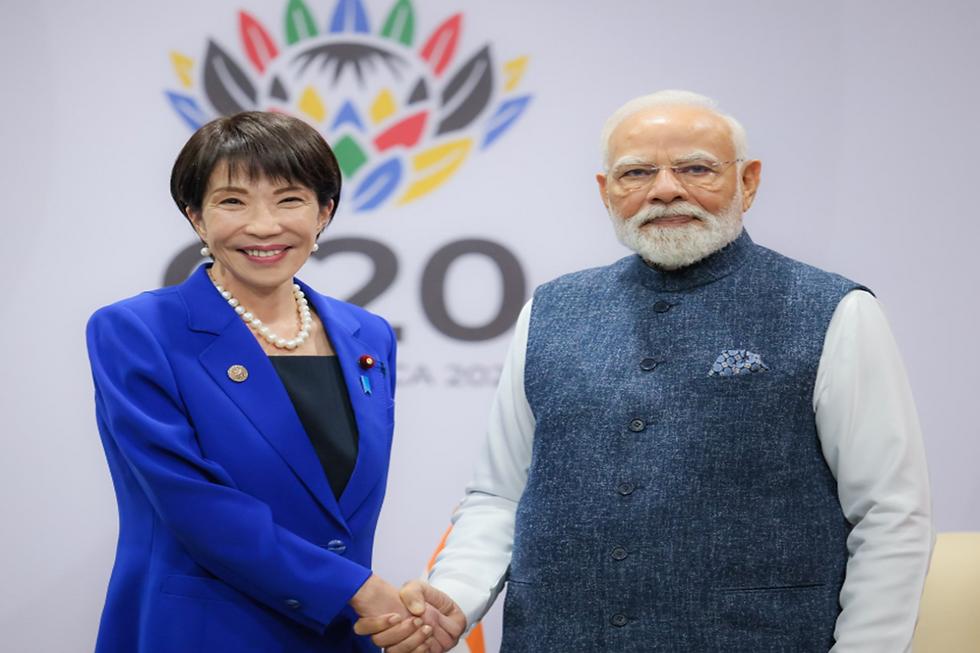
The period from 2014 to 2026 represents the most dynamic phase in India–Japan relations. During these years, cooperation expanded from traditional infrastructure projects into emerging technologies, security partnerships and Indo-Pacific strategy.
The strong personal rapport between Indian Prime Minister Narendra Modi and former Japanese Prime Minister Shinzo Abe helped accelerate this transformation. Both leaders shared a vision of a free, open and prosperous Indo-Pacific and worked to deepen cooperation across multiple sectors.
One of the most visible symbols of this partnership is the Mumbai–Ahmedabad High-Speed Rail Corridor. Based on Japan’s world-renowned Shinkansen technology, the project represents India’s entry into the era of high-speed rail and showcases the depth of Japanese technological cooperation.
At the strategic level, India and Japan emerged as key pillars of the Indo-Pacific framework. Both countries support a rules-based maritime order, freedom of navigation and stronger regional connectivity. Their cooperation has become increasingly important amid changing power dynamics in Asia.
Defence and security ties have also strengthened considerably. The two nations conduct regular military exercises, cooperate on maritime surveillance and engage in dialogue on regional security issues. Joint naval activities and defence consultations have become routine features of the relationship.
Perhaps the most transformative development, however, has been the shift toward digital and technological collaboration. The partnership now encompasses artificial intelligence, semiconductor supply chains, cybersecurity, digital public infrastructure, green technology and clean energy.
The COVID-19 pandemic highlighted vulnerabilities in global supply chains, prompting India and Japan to work together on supply-chain resilience initiatives. Both countries have sought to diversify manufacturing networks and reduce dependence on single sources of production.
Recent agreements on critical minerals, energy cooperation, digital innovation and advanced technologies demonstrate how the relationship is evolving to meet twenty-first-century challenges.
Today, the India–Japan partnership combines civilizational trust, economic cooperation, technological innovation and strategic convergence. It is no longer confined to bilateral interests; it has become a key component of Asia’s broader economic and security architecture.
The story of India and Japan is unique in international relations. Few modern strategic partnerships can trace their origins to ancient spiritual exchanges that began more than fifteen centuries ago. From the arrival of Buddhist monks in Japan to collaborations in artificial intelligence and semiconductors, the relationship has continually adapted to changing times while preserving its foundation of mutual respect.
What began as a cultural connection evolved into a friendship forged through anti-colonial solidarity, strengthened through economic cooperation and transformed into a strategic partnership for the digital age. As Asia confronts new challenges and opportunities, India and Japan are increasingly working together to shape a stable, innovative and interconnected future.
From Buddha to bytes, their journey remains one of the most remarkable examples of how history, culture and technology can come together to create an enduring partnership.