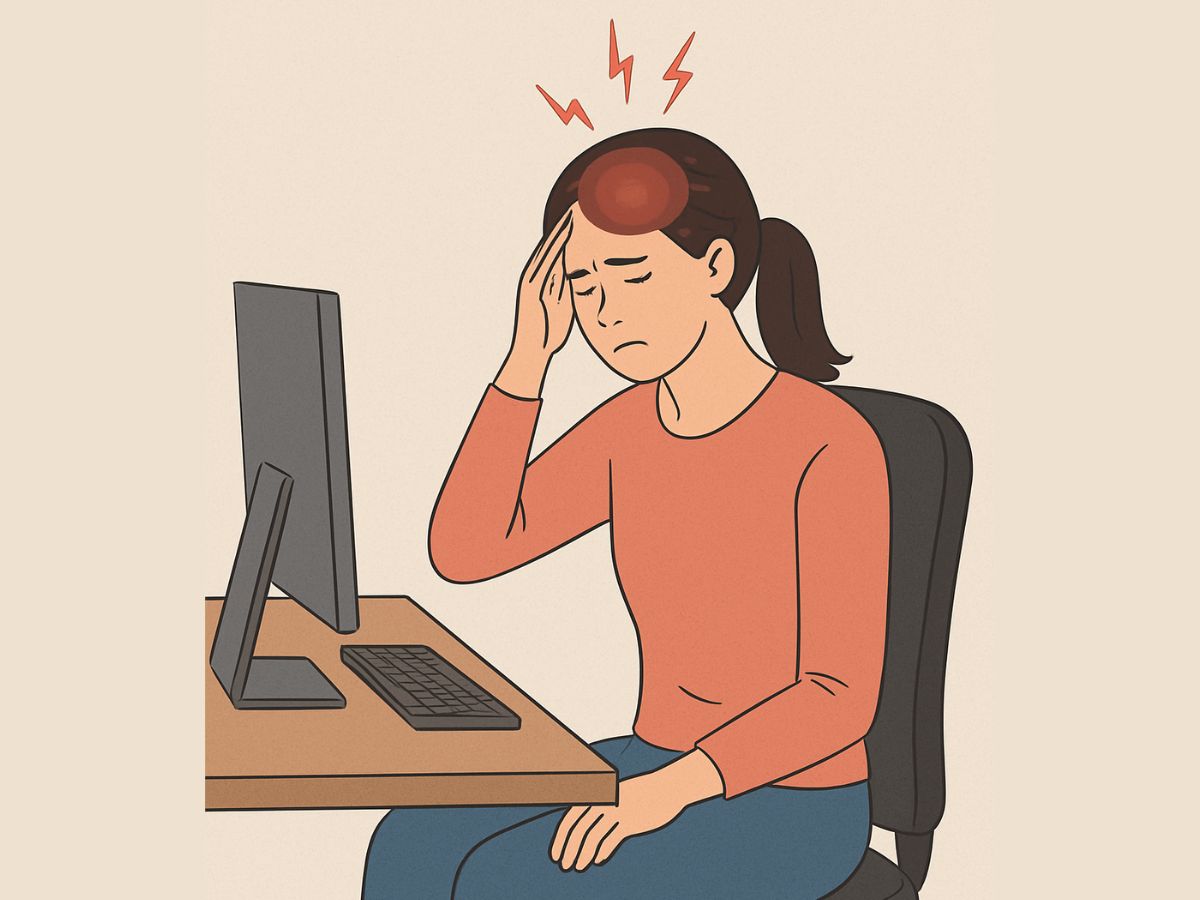
You’re not alone if you’ve ever crouched in front of a screen for a long day only to be rewarded with a pounding headache that begins at the base of your skull. Eye strain, dehydration, or stress could be the cause. But what if the real culprit has been hiding in plain sight?
Enter the world of cervicogenic headaches, common, yet commonly misread, where the ache in your head is, in fact, a warning flare from your neck.
How Do You Define a Cervicogenic Headache?
Unlike common tension headaches or migraines, which are considered primary headaches, a cervicogenic headache is a secondary headache. This is a crucial distinction. It indicates that the headache is a symptom of an underlying disease in the cervical spine, or your neck, rather than the actual problem.
It is a classic case of “referred pain,” where a problem in one part of the body causes pain in another. The bony structures, joints, or soft tissues of the neck become irritated or injured. These structures share a nerve pathway with parts of your head, so when they scream in pain, your brain gets the message—but misinterprets the location. The result? You feel a headache, but the root cause is 100% cervical.
How Can You Tell If It’s a Cervicogenic Headache?
This type of headache presents with a unique progression. It starts not with sharp pain but with stiffness or pressure in the neck. The sensation often travels from the neck’s base toward the temples, across the back of the head, and at times behind the eyes.
Some of the main symptoms that frequently accompany it are:
- Dizziness or a feeling of unsteadiness.
- Blurred vision in one eye.
- Pain that worsens with specific neck movements or holding a position (like looking down at your phone).
- The muscles on the side of the neck or the base of the head feel sensitive when pressure is applied.
- A limited range of motion, you might find it hard to turn your head fully to one side.
Although it can range from moderate to severe, the pain is rarely as intense as a severe migraine, which is characterized as constant and non-throbbing. This subtlety is the reason it goes unnoticed so frequently.
What’s Causing This Neck-Head Connection?
While poor posture is public enemy number one, it’s not the only trigger. The modern sedentary lifestyle is a perfect breeding ground for this condition. The cervical spine is under tremendous, continuous stress from hours of bending forward over laptops and cellphones, which compresses vertebrae and strains supporting muscles.
Other typical reasons are as follows:
- Sleeping in an awkward position that doesn’t support the neck.
- Old injuries, such as whiplash from a car accident.
- Degenerative diseases such as disc problems or cervical arthritis.
- Sudden, jerky movements that strain a neck muscle.
- Repetitive activities that involve neck extension or flexion.
Neglecting these early signs can lead to a chronic cycle of pain, reduced mobility, and weakened neck muscles, making the problem harder to resolve over time.
Also Read: Scientists find over 200 hidden proteins that may drive Alzheimer’s: Study
How Can You Manage the Pain at Home?
Simple, conservative at-home methods can be very successful for mild, sporadic episodes. The objective is to relieve tension, loosen tense muscles, and address the underlying postural issue.
Heat Therapy: A heating pad or warm compress applied to the neck and shoulders can ease tightness and improve blood flow.
Gentle Stretching: Slow, careful neck stretches can improve flexibility and reduce stiffness. Don’t move jerkily, and never push yourself to stretch when it hurts.
Posture Check: This is the most critical step. Place your screen at eye level and sit up straight with your shoulders relaxed. Pay attention to the “text neck” position.
Ergonomic Setup: Ensure your workspace supports a neutral spine. Think about using a standing desk and a supporting chair.
Take Breaks: Every 30 minutes, get up, move around, and gently roll your shoulders. Set a timer if you have to.
Supportive Sleep: Instead of propping your neck up or bending it at an angle, use a pillow that keeps it in line with your spine.
OTC Option: Pain relievers available without prescription can reduce inflammation and discomfort, though they serve as a temporary fix, not a long-term answer. Dependence on them obscures the issue rather than resolving it.
When Should You Seek Professional Help?
Severe or recurring neck pain is a sign to consult a healthcare professional. When therapy is guided by an accurate diagnosis—typically with exercises for posture correction, mobility, and muscle support—recovery becomes more effective. Chronic pain should not be ignored; it is your body’s signal to seek help.