
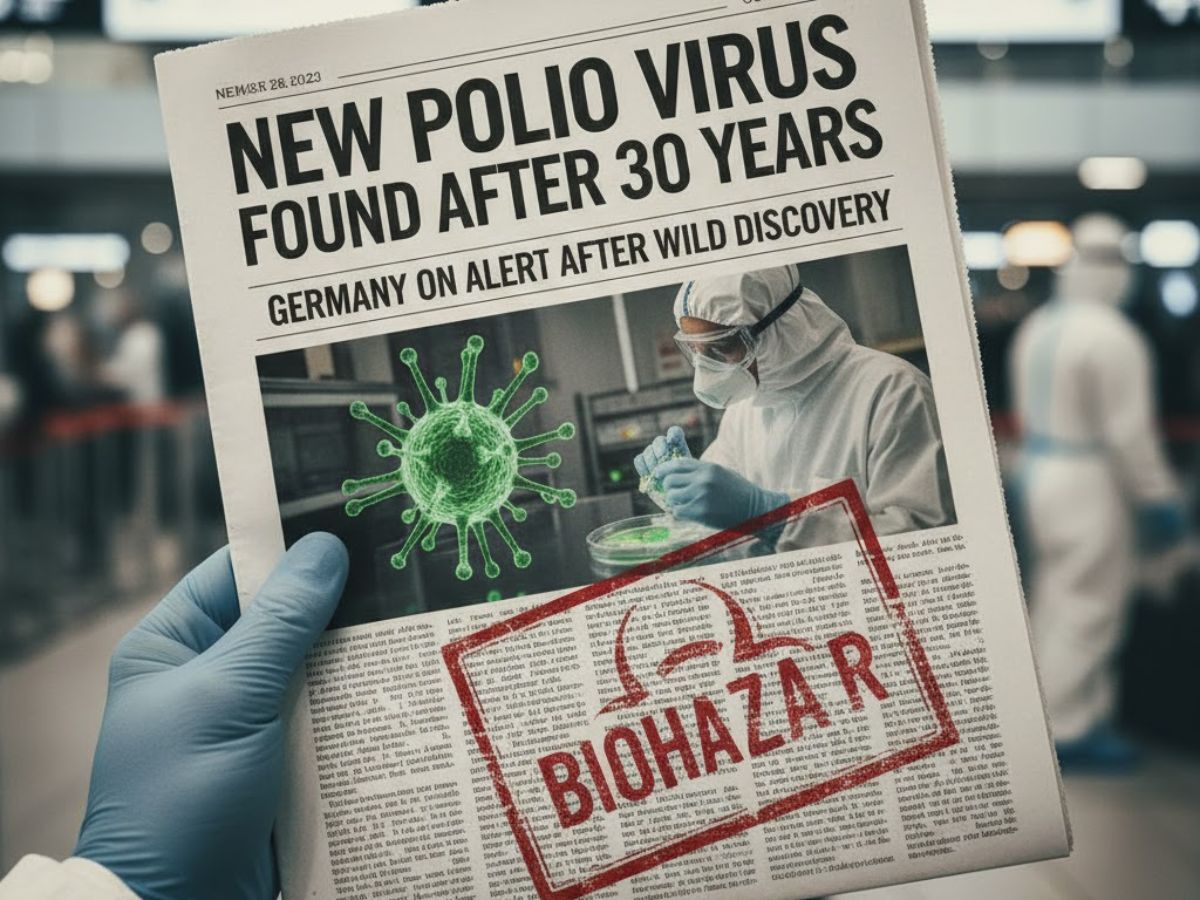
In a quiet public health development, the wild polio virus has been found in Germany for the first time in decades. The discovery was made not in a person, but within the nation’s wastewater systems, triggering a swift but measured response from health authorities and raising questions about global virus transmission.
What Exactly Was Found in Germany?
A routine sewage sample taken in Hamburg in early October 2025 tested positive for wild poliovirus type 1 (WPV1). This is the most common form of the virus that causes polio and can lead to irreversible paralysis. The finding was confirmed, and the Global Polio Eradication Initiative (GPEI) was formally notified on November 10. Crucially, no associated cases of paralysis have been detected in Germany, meaning the virus has so far been identified only in the environment.
Why is This Discovery So Significant?
This detection marks a major milestone, and not a positive one. It is the first time the wild poliovirus has been found through environmental sampling in Germany since this type of routine monitoring began in 2021. More profoundly, it ends a 30-year period where the wild virus was considered absent from the country. The last known infections in people occurred over three decades ago, making this a stark reminder that eradicated diseases can resurface.
Where Did This Virus Come From?
The trail of the virus leads far from Germany. According to the World Health Organisation, the last identified WPV1 sample before this came from Kandahar, Afghanistan, on August 24, 2025. While a direct link is not explicitly confirmed, the proximity in timing strongly suggests international travel played a role. The virus may have been brought into the country by an infected person who was traveling, who then shed the virus into the local sewage system.
What Are the Authorities Doing About It?
German health officials have not been caught off guard. The Hamburg authorities have immediately formed an expert task force on infection control. This group is coordinating closely with the Robert Koch Institute (RKI), Germany’s main public health body. Their plan involves intensifying surveillance efforts, taking more sewage samples to trace the virus’s spread, and determining if any additional public health measures, such as targeted vaccination campaigns, are required.
Also Read: ‘Not Just a Fan’: Co-Star Slams Boundary-Crossing Incident at Ariana Grande’s Wicked Premiere
Should the Public Be Worried?
Health experts are currently stating that the immediate risk to the general public is low. The main reason for this careful optimism is Germany’s strong polio vaccination coverage. High immunity in the population creates “herd immunity,” making it hard for the virus to spread or trigger outbreaks. Officials say the early detection shows the system is working, giving them a vital head start to protect children and communities.