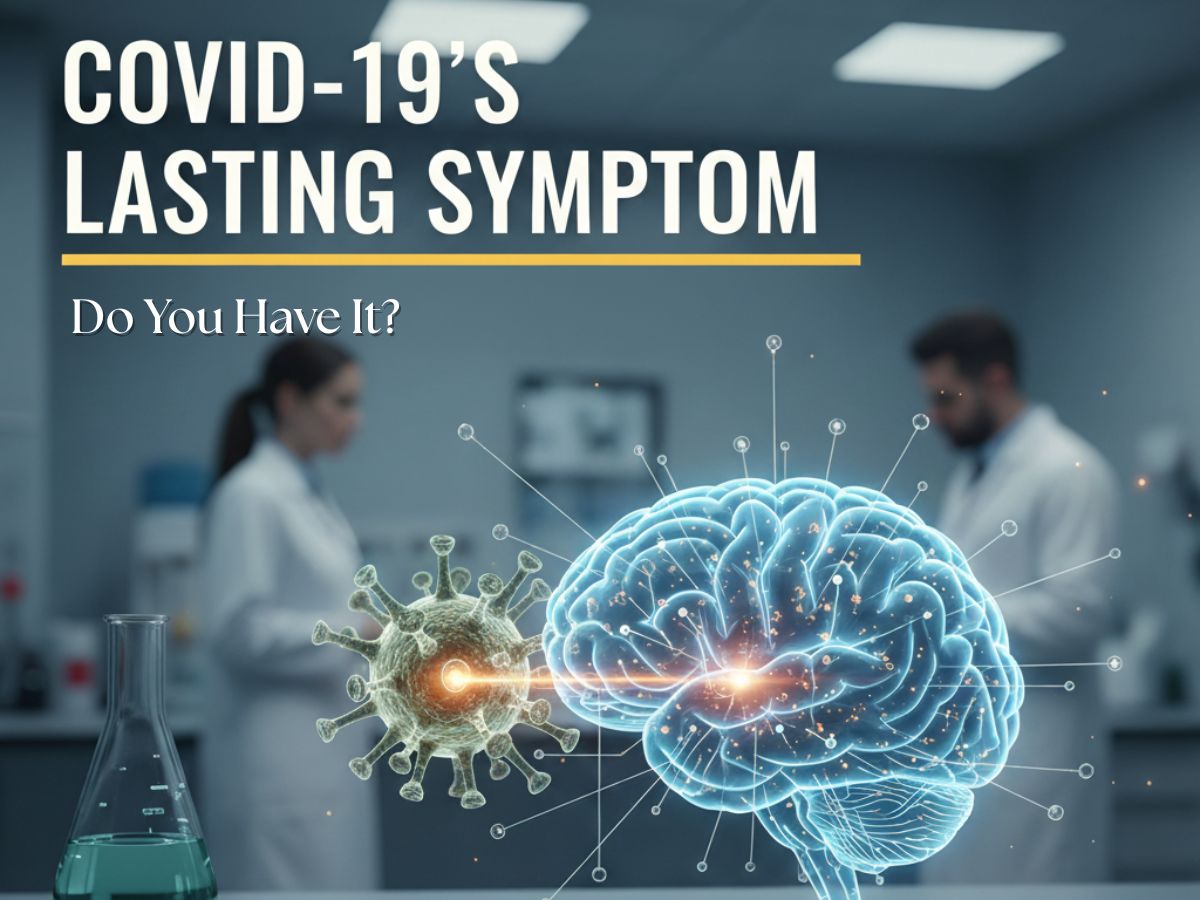
Even after the epidemic started more than five years ago, the legacy of COVID-19 is still being revealed in surprising ways. While the initial infection brought symptoms like high fever and breathing trouble, a new study highlights one particular effect that may be the most persistent of all: the loss of smell. According to new research, this alteration may not be transient but rather may endure a lifetime for many people who experienced this symptom during their illness, significantly changing their day-to-day lives.
What Does the Research Say About Lasting Smell Loss?
A comprehensive study undertaken by the National Institutes of Health (NIH) has delivered sobering news. The research found that two years after a COVID-19 infection, a significant majority of people who lost their sense of smell continued to struggle. Specifically, 80 per cent of these individuals performed poorly on a clinical scent-detection test. Even more striking, the study authors noted that approximately one in four people who witnessed a change in their smell during their sickness still had severely impaired smell or had lost the ability entirely after two years.
Why is This Loss of Smell So Significant?
This is not just a minor inconvenience. Dr. Leora Horwitz, a co-author of the study, explains that a “dulled nose can have a profound impact on their mental and physical well-being.” The loss of smell, a sense many take for granted, ripples out into basic safety and health. Dr. Horwitz pointed out critical dangers, stating, “You can’t smell smoke, you can’t smell a gas leak, you can’t smell spoiled food.” Beyond safety, it can have a detrimental impact on nutrition and appetite because food’s aroma is closely related to how much people enjoy it.
How Was This Long-Term Impact Discovered?
Researchers gathered data on thousands of Americans, comparing those who were infected with COVID-19 with those who were not. Each right response earned a point for the participants, who were asked to identify 40 distinct fragrances. The results clearly showed that those with a history of COVID-19 infection had a much higher rate of smell dysfunction. Interestingly, the study also found that 60 per cent of participants who weren’t infected tested poorly, which researchers attribute to age-related decline or the possibility of unknown prior infections.
What Causes This Permanent Change?
The virus causes the problem by affecting the body’s olfactory system. This delicate system that provides us with our sense of smell becomes inflamed when exposed to the COVID-19 virus. It is possible for inflammation to permanently damage sensory neurons, making it more difficult for them to detect and send smell signals to the In contrast to the temporary congestion brought on by a typical cold, this biological mechanism is what causes so many people to experience chronic odor loss.
Disclaimer: This article reports on the findings of a scientific study and is intended for informational purposes only. Individual experiences with COVID-19 symptoms may vary.