
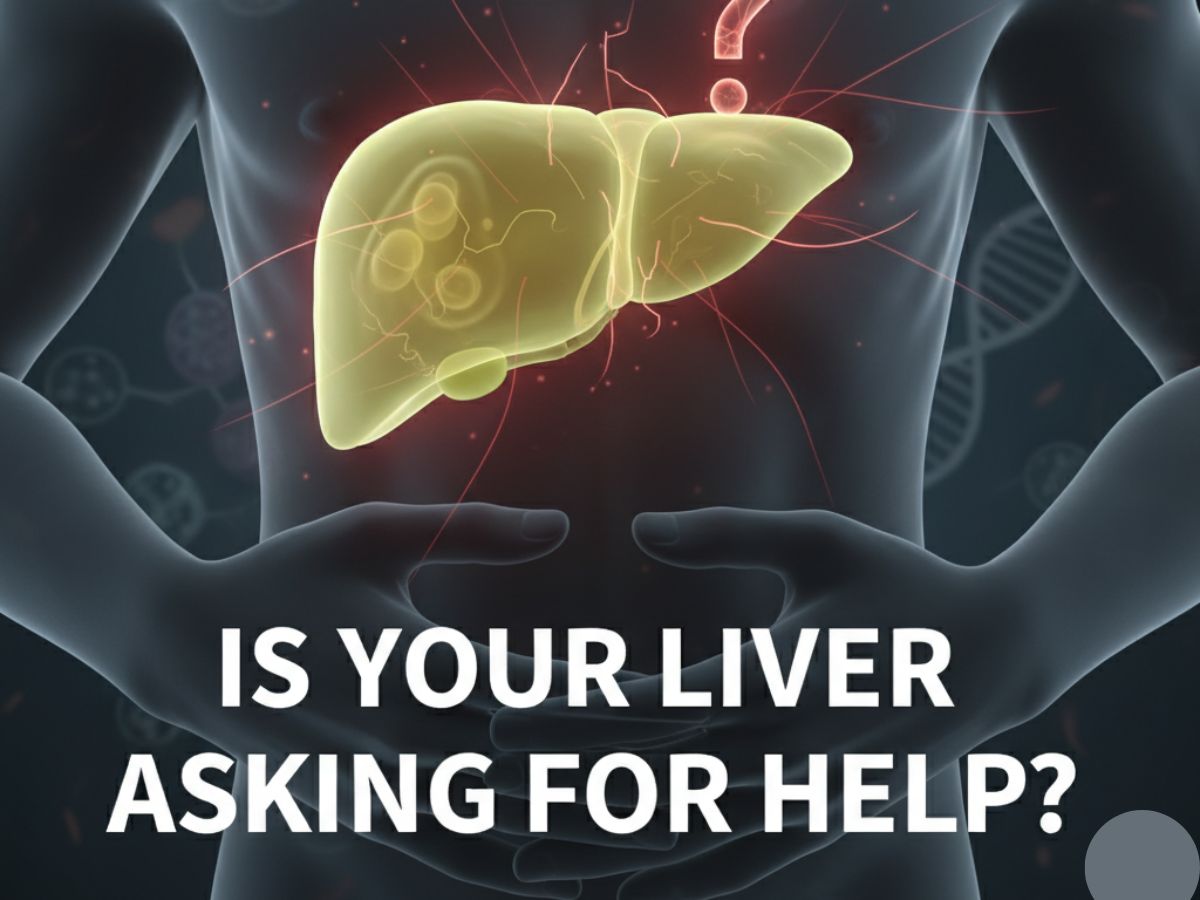
Fatty liver disease, a condition driven by the dangerous accumulation of fat in the liver, is a growing silent epidemic. While formal medical tests are crucial for a definitive diagnosis, a Harvard and Stanford-trained gastroenterologist, Dr. Saurabh Sethi, explains that your body often sends early warning signals you can identify from home. “Early detection is key to prevention and better liver health,” he emphasizes.
What is the Number One Visual Clue?
The most prominent visible sign is an increase in abdominal fat.
In particular, visceral fat, or the type found deep within your gut, is a significant factor. Dr. Sethi explains that this type of fat is strongly linked to insulin resistance, a condition that encourages your body to store fat directly in the liver.
It’s important to note that not everyone with a large waistline will have a fatty liver, and conversely, some individuals with the condition are not obese. A expanding belly, on the other hand, is a serious warning sign that should not be disregarded because it immediately indicates the metabolic abnormalities that underlie liver disease.
Can You Actually Feel a Fatty Liver?
Yes, you might be able to. Just behind your right rib cage, you may get a dull feeling of pressure and fullness, or a persistent soreness or stiffness that may indicate that your liver is bloated and inflamed due to fat buildup.
This discomfort is often subtle but persistent. Many people report that the sensation feels worse after eating a meal or engaging in physical activity. This physical discomfort is a direct result of the organ losing its operational efficiency and becoming enlarged, stretching its outer covering.
What Are the Common Early Symptoms?
Two of the earliest and most common systemic symptoms are nausea and a loss of appetite. These signs can appear just as the liver begins to struggle with its functions. When fat impairs the liver, it can disrupt the digestive process and lead to a general feeling of unwellness, making food seem unappealing.
Alongside this, overwhelming and persistent fatigue is a major clue. Since the liver is the body’s central hub for energy metabolism, a fatty liver becomes less efficient at delivering fuel to your cells. This leads to a deep-seated tiredness that doesn’t resolve with rest, often indicating that the liver is stressed and struggling to remove toxins.
Also Read: ‘Forever Begins Now’: Inside Selena Gomez’s Fairytale Wedding |Taylor Swift’s Toast and a Star-Studded Night
How Does Fatty Liver Show on Your Skin and Hair?
Unexpected insights into the health of your liver can be found in your skin and hair. Important alterations to look out for include:
Dark Patches: Known as acanthosis nigricans, these dark, velvety patches in the neck and armpit folds are a classic sign of insulin resistance, the core driver of fatty liver.
Itching and Thinning Hair: Thinning hair can also be an early sign of the body’s nutrient processing being thrown off balance. Another early indicator of an imbalance in the body’s nutrition metabolism is thinning hair.
Redness and Acne: Unexplained skin redness or persistent adult acne can be a reflection of underlying liver stress and metabolic disturbances.
Recognizing these signs is not about self-diagnosis, but about self-awareness. Such signs are a key signal to pursue medical guidance, get tested, and initiate lifestyle measures that could potentially reverse the illness.