
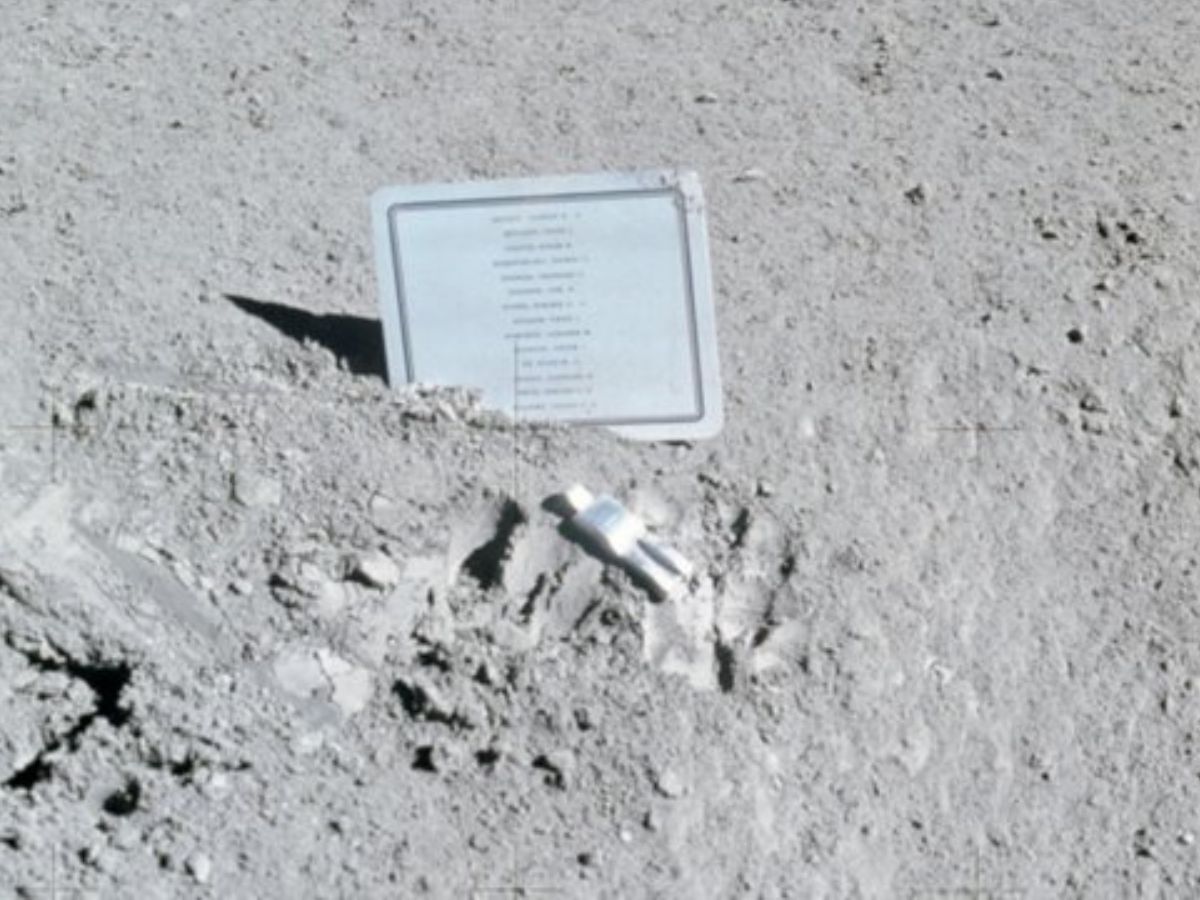
On the dusty surface of the Moon, near a crater, lies a small, silvery figure. This 8.5-centimeter-long aluminum statue, known as the Fallen Astronaut, is the first and only piece of art ever placed on the lunar surface. Its story is one of respect, secrecy, and the high cost of space exploration.
A Tribute by Apollo 15
The sculpture was left on the Moon by the crew of the Apollo 15 mission on August 2, 1971. The astronauts, David Scott and James Irwin, had an emotional reason for taking it: they wanted to honor the men who had lost their lives advancing space exploration.
Next to the small figure, they placed a metal plaque listing the names of 14 American astronauts and Soviet cosmonauts who had died in service. It was a secret, personal memorial to those who made the ultimate sacrifice for mankind’s dream of reaching the stars.
Also Read: December Cold Moon 2025: When & Where to Watch the Year’s Final Supermoon
The Clandestine Placement
Bringing the sculpture to the Moon was an unofficial act. Astronaut David Scott had met the Belgian artist, Paul Van Hoeydonck, and asked him to create a small, simple figure that was neither male nor female. The plan was kept secret from most of NASA.
During the final moments of their time on the Moon, David Scott placed the sculpture and the plaque near their Lunar Roving Vehicle.
When Mission Control asked what he was doing, Scott simply replied he was “just cleaning up the back of the Rover.” He successfully hid the private ceremony until after the mission returned to Earth.
Controversy Follows the Art
Once the existence of the “Fallen Astronaut” was revealed, a controversy began. The artist, Paul Van Hoeydonck, felt the statue was meant to represent all of humanity’s push into space and was unhappy it was named a “fallen astronaut” memorial.
The biggest issue arose when Van Hoeydonck tried to sell hundreds of copies of the figurine. NASA has a very strict policy against using the space program for commercial gain. Under pressure, the artist stopped the sales, but the disagreement highlighted the clash between personal tribute, art, and official space policy.
A Symbol of Human Cost
Despite the drama, the Fallen Astronaut remains a powerful symbol. Lying silently on the edge of Hadley Rille crater, it represents the bravery, sacrifice, and universal human cost of the Space Race between the US and the Soviet Union. It is a quiet, permanent marker to remember those who died pushing the boundaries of human achievement.
Also Read: Bihar MLA Vibha Devi Fumbles in Oath Despite ₹31 Crore Assets | Watch