
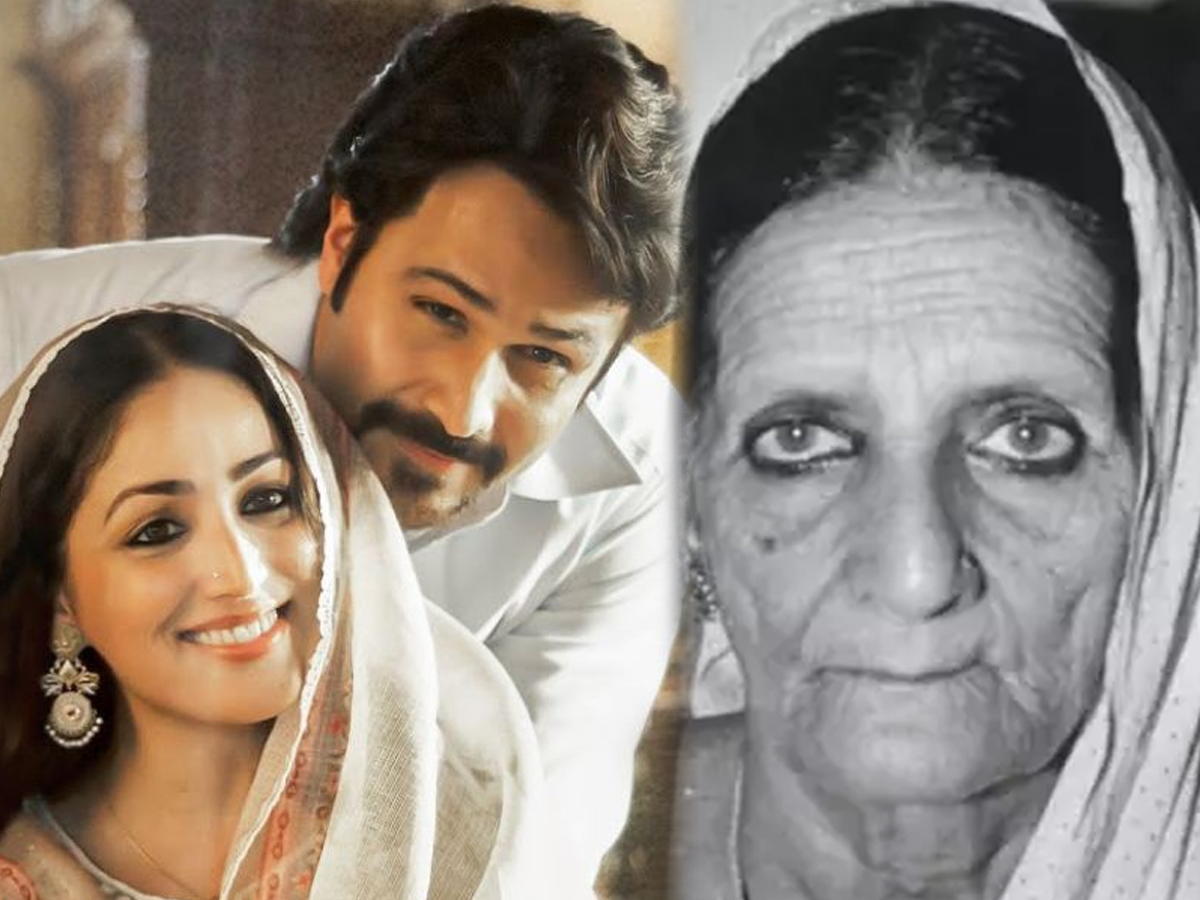
Yami Gautam and Emraan Hashmi’s upcoming film Haq is set to release on November 7. The courtroom drama is already making headlines for its bold subject, the Shah Bano Begum case. This case is one of India’s most significant legal battles that reshaped the country’s stand on women’s rights and religion-based laws.
Directed by Suparn Verma and written by Reshu Nath, Haq is inspired by two things, the 1985 Supreme Court’s landmark verdict and the book Bano, Bharat Ki Beti. The film’s producer’s lawyer, Ajay Bagadiya, revealed this during a hearing in the Madhya Pradesh High Court.
The film has sparked conversations for revisiting a case that questioned the balance between religion, law, and justice for women in India.
Yami Gautam as Shazia Bano: A Woman Who Fights for Justice
In Haq, Yami Gautam plays Shazia Bano, a woman who dares to fight for her rights at a time when standing against one’s husband was seen as a taboo.
The story starts in 1967. A young Bano Begum falls in love with Ahmad Khan, a lawyer. Their marriage begins happily, but cracks soon appear when Khan marries another woman. When Bano is forced out of her home and later divorced through triple talaq, she faces a financial crisis.
At first, her husband gives her some money, but he soon stops supporting her. Left with no income, Bano decides to go to court. She demands financial maintenance from her husband, a move that sets off a long legal battle.
The Real Story Behind Haq: The Shah Bano Case
The film draws inspiration from the real-life story of Shah Bano Begum, a 62-year-old woman from Indore. She was married to advocate Mohammed Ahmed Khan for over 40 years. When Khan divorced her, he gave her only a small allowance for herself and their five children. Soon, he stopped paying even that.
With no support, Shah Bano filed a petition in 1978 under Section 125 of the Criminal Procedure Code (CrPC). This section allows wives, children, or parents to seek financial maintenance from the person responsible for them.
But the case soon took a religious turn. Under Muslim personal law, a husband is required to support his divorced wife only during the iddat period, which was roughly three months after divorce. Shah Bano argued that this was unjust and demanded maintenance beyond that period.
The trial court supported Shah Bano and ordered her husband to pay monthly maintenance. Later, the Madhya Pradesh High Court increased the amount. However, her husband appealed to the Supreme Court, claiming Muslim personal law freed him from this obligation. The All India Muslim Personal Law Board backed him, arguing that the courts should not interfere with religious law.
The Landmark Supreme Court Judgment
On April 23, 1985, the Supreme Court delivered its historic judgment in Mohd. Ahmed Khan v. Shah Bano Begum & Ors. Chief Justice Y.C. Chandrachud led the bench that ruled in favor of Shah Bano. The court upheld her right to maintenance under Section 125 of the CrPC, stating that it applied to all women, regardless of religion.
The court directed Khan to pay her Rs 179.20 per month. The verdict emphasized that the right to maintenance is part of social justice and cannot be restricted by personal or religious laws.
This judgment redefined women’s rights in India. It also triggered nationwide debates on the Uniform Civil Code and religious autonomy.
Why Haq Matters Today
By retelling this powerful story, Haq revisits a critical moment in India’s legal and social history. Yami Gautam’s portrayal of a woman’s courage and Emraan Hashmi’s role in the intense courtroom drama make the film one of the most anticipated releases of the year.
The Shah Bano case is not just a legal story — it is about a woman’s fight for dignity, equality, and justice. Through Haq, this chapter of Indian history finds new life on the big screen.