
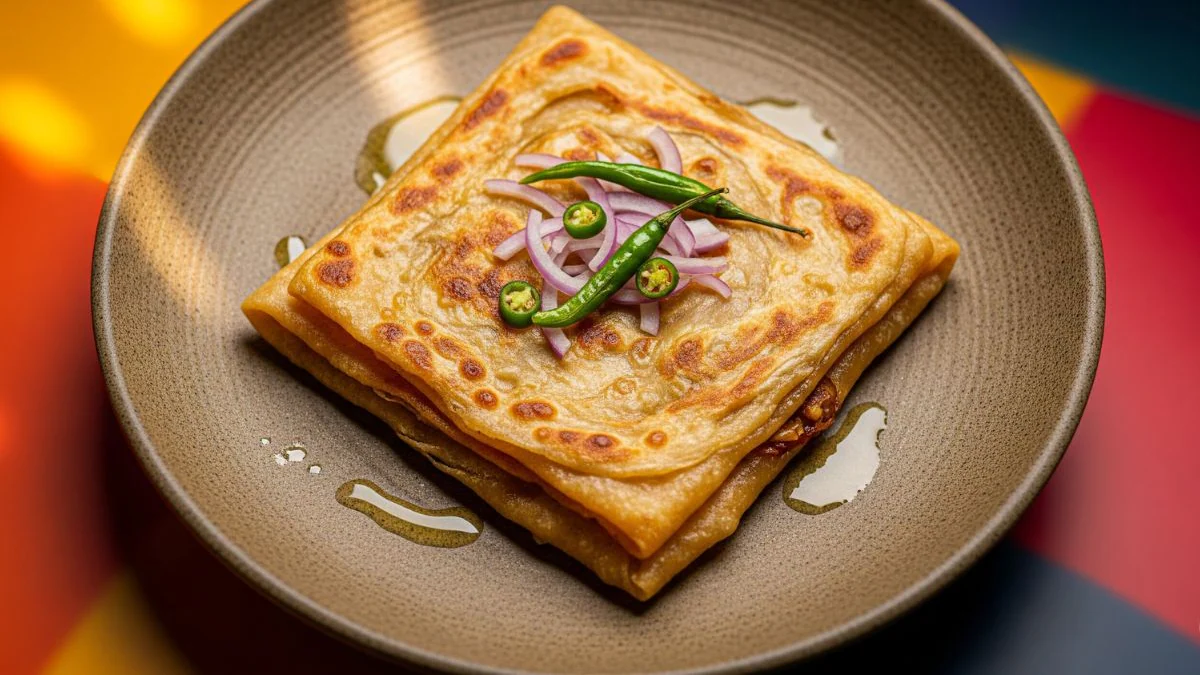
NEW DELHI: Few dishes in the vast landscape of Indian street food carry the layered history and indulgent richness of Mughlai Paratha. Crisp on the outside, soft and savoury within, this stuffed, pan-fried bread tells a story that stretches back nearly four centuries, from the royal kitchens of the Mughal court to the bustling food lanes of Kolkata. What began as a dish fit for emperors has today become one of eastern India’s most beloved comfort foods.
Food historians often trace the origins of Mughlai Paratha to the reign of Jahangir, when royal chefs experimented with elaborate breads and meat preparations designed to satisfy the refined palate of the Mughal court. Among these culinary innovators was chef Adil Hafiz Usman, who is believed to have crafted an enriched stuffed flatbread combining Persian-style cooking influences with Indian techniques. The result was a luxurious paratha layered with spiced fillings and cooked slowly to achieve both crispness and richness, hallmarks of Mughlai cuisine.
Unlike the everyday paratha eaten across many Indian households, Mughlai Paratha was conceived as a complete meal. Its dough was carefully prepared using refined flour, baking soda, salt, sugar and water. This combination created a supple yet structured base capable of forming thin layers that would fry into a golden, flaky shell. The addition of a pinch of sugar balanced the savoury filling, while oil ensured the characteristic crisp exterior.
The filling traditionally consisted of minced meat mixed with eggs, onions and warming spices such as cumin, pepper and garam masala. When wrapped inside the dough and folded into a square parcel, the paratha was cooked on a flat griddle with generous oil, allowing the outside to turn beautifully browned while the interior remained moist and flavourful. The technique required patience and precision, reflecting the careful craftsmanship associated with Mughal-era cooking.
Over time, as Mughal culinary traditions spread across the subcontinent, many royal recipes travelled with migrating cooks, traders and regional courts. In Bengal, these influences blended with local tastes and urban food culture, eventually transforming Mughlai Paratha into a signature dish of Kolkata. During the late colonial period, the city’s famed “cabin restaurants,” small, wood-panelled eateries known for their intricate seating and hearty meals, popularised the dish among students, office workers and families. Inside these cabins, Mughlai Paratha evolved slightly to suit local preferences. The filling became more generously spiced, eggs were sometimes added directly into the wrapping process and accompaniments such as tangy tomato chutney, sliced onion or potato curry appeared on the side. What had once been royal cuisine gradually became accessible, affordable and deeply embedded in the everyday food culture of the city. Today, a walk through Kolkata’s evening streets reveals just how firmly Mughlai Paratha has taken root. Vendors roll out dough with practised speed, crack eggs into sizzling pans and fold parcels with effortless skill. The aroma of frying flour and spices drifts through crowded lanes, drawing customers who eagerly wait for their freshly cooked portion. Served hot and cut into squares, the paratha delivers a satisfying contrast of textures, crisp layers outside and rich, savoury filling within.
Modern variations have expanded the original recipe. Chicken, paneer and vegetable fillings now cater to diverse dietary preferences, while some stalls experiment with cheese or fusion spices. Despite these innovations, the essential structure remains unchanged. The distinctive dough preparation, layered folding and slow frying continue to define what makes Mughlai Paratha instantly recognisable. Beyond its taste, the dish represents the journey of Indian cuisine itself, a movement from royal courts to public kitchens, from exclusivity to shared enjoyment. It illustrates how culinary traditions survive not by remaining frozen in history but by adapting to new regions and communities. From the imagined grandeur of Emperor Jahangir’s court to the lively streets and historic cabin restaurants of Kolkata, Mughlai Paratha stands as both a relic of Mughal luxury and a living symbol of India’s dynamic street food heritage. Every crisp bite carries echoes of that long journey, reminding diners that sometimes the most beloved everyday foods are those born in the most extraordinary kitchens.