
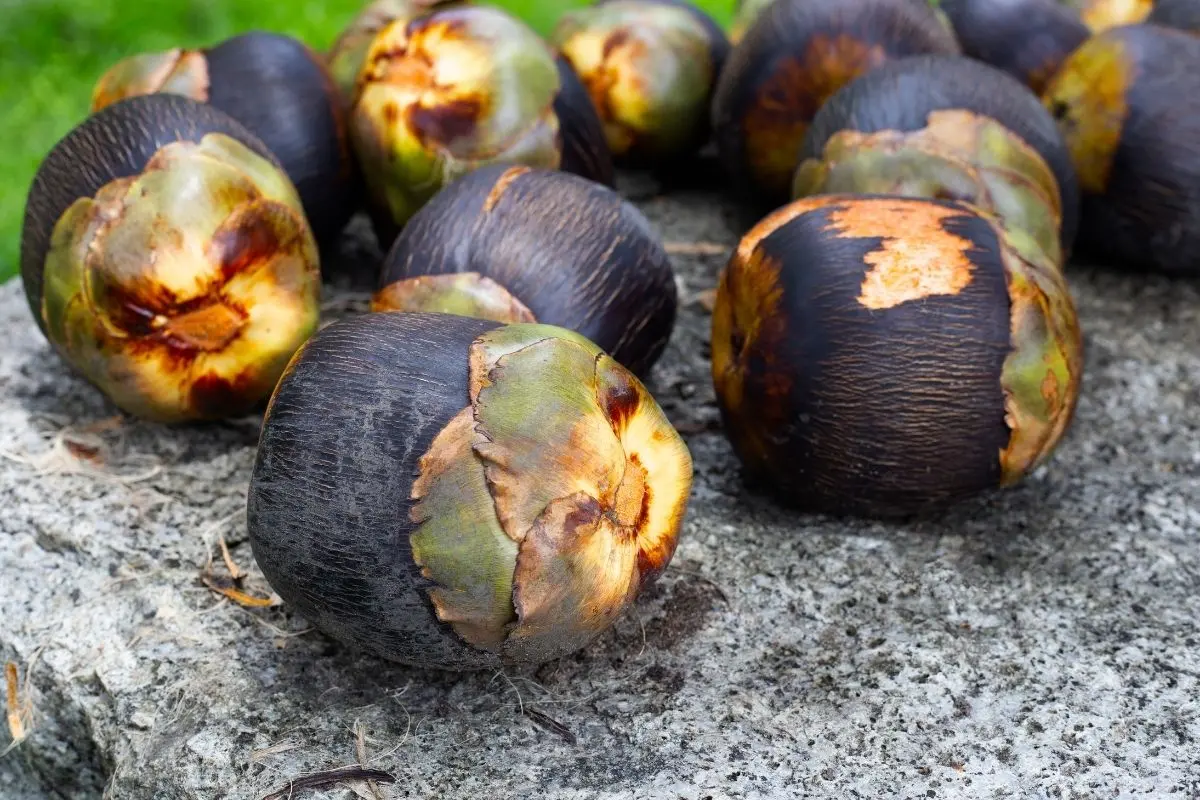
NEW DELHI: When summer arrives in India, mangoes often dominate the spotlight. Yet another seasonal fruit quietly appears on roadside carts and local markets across coastal regions—ice apple, also known as tadgola, munjal or nungu. Though it may not receive as much attention as other summer fruits, this humble produce has long been valued for its refreshing taste and natural cooling properties.
WHAT IS ICE APPLE?
Ice apple comes from the palmyra palm tree (Borassus flabellifer), which grows widely in parts of southern and eastern India, including Tamil Nadu, Andhra Pradesh, Telangana, Odisha and West Bengal. The fruit resembles a dark, hard coconut on the outside but contains two or three soft, translucent jelly-like segments inside.
These delicate, watery pods have a mildly sweet taste and a texture similar to lychee or tender coconut flesh. Because of their high moisture content, ice apples are highly perishable and are usually sold fresh by street vendors during peak summer months.
A SHORT SEASONAL TREAT
One reason ice apples remain underrated is their limited availability. The fruit typically appears only between April and June, just when temperatures begin to rise sharply. Since it contains large amounts of water, it spoils quickly and cannot be stored or transported over long distances. As a result, it is rarely found in supermarkets and is mostly consumed locally soon after harvesting.
WHY IT IS PERFECT FOR SUMMER
Ice apple is often called a natural summer cooler. The fruit is largely composed of water and provides quick hydration during extreme heat. It also contains small amounts of natural sugars that offer a gentle energy boost without the sharp spikes associated with sugary drinks or processed beverages. In addition to hydration, ice apples provide several important nutrients. They contain vitamins A, C, E and K along with minerals such as iron, potassium, zinc and phosphorus. These nutrients support overall health while keeping the fruit light and low in calories. Traditional Indian health systems also regard the fruit as cooling for the body. It is believed to help regulate internal heat and may ease common summer issues such as dehydration, acidity and heat-related fatigue.
HOW TO ENJOY ICE APPLE
The simplest way to eat ice apple is straight from the shell. Vendors usually slice open the outer husk and extract the jelly-like pods, which can be eaten immediately. Many people enjoy it chilled or sprinkled with a pinch of black salt for added flavour. Beyond eating it plain, the fruit can also be used in several refreshing preparations. It is often blended into summer drinks, added to milk-based desserts like kheer or payasam, or combined with other fruits to create light salads. Its mild sweetness pairs well with coconut water, milk, jaggery and mint.
TIPS FOR CHOOSING THE BEST ICE APPLES
When buying ice apples, softer and slightly wobbly pods are usually the best choice. These tender ones contain more liquid and have a sweeter taste. Harder pods are often overripe and may feel dry or less pleasant to eat.