
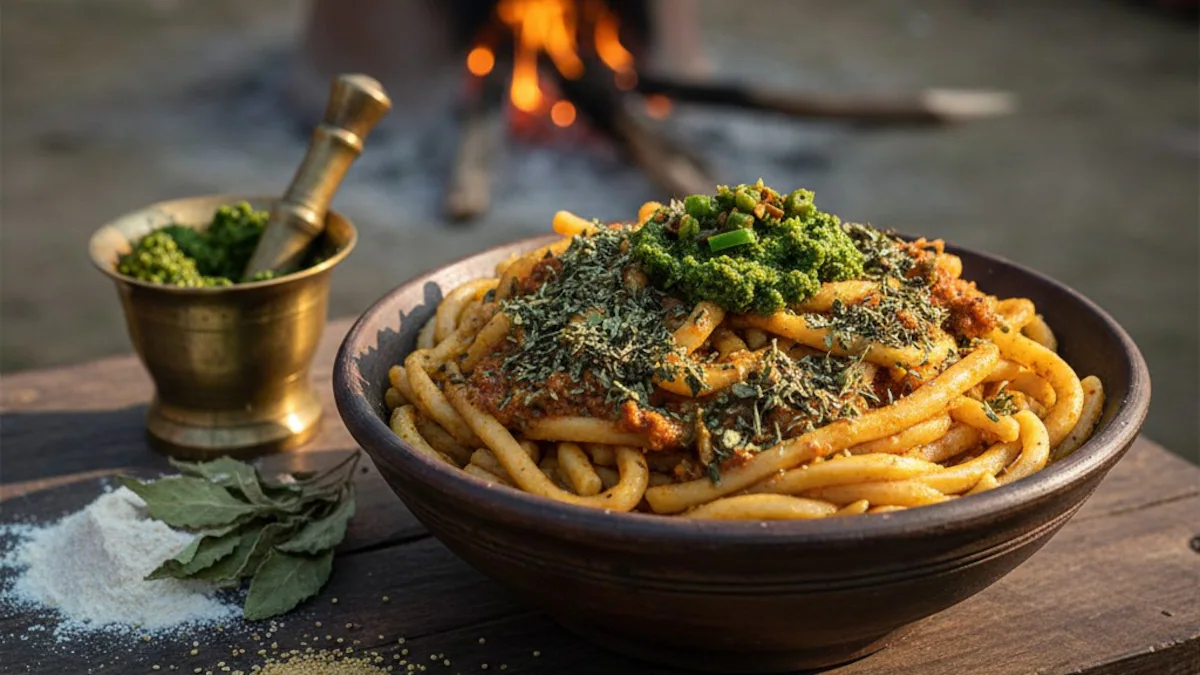
NEW DELHI: When Rashtrapati Bhavan recently hosted a banquet in honour of European Union leaders, the menu quietly broke away from predictable fine-dining tropes. Curated by Chef Arshi Singh, the spread turned the spotlight on Himalayan regional cuisines—foods shaped by altitude, climate and everyday survival rather than spectacle. Among the dishes served was sundarkala, a humble, handmade noodle from Uttarakhand’s Garhwal region.
Its presence at a state banquet was striking not because sundarkala is rare or extravagant, but because it is deeply ordinary. Traditionally prepared in hill homes during winter, sundarkala represents a kind of nourishment rooted in labour, seasonality and shared domestic life—qualities seldom associated with ceremonial dining.
WHAT IS SUNDARKALA?
Sundarkala—often described as “Pahadi noodles” or “Garhwali pasta”—is a hand-rolled noodle made from whole wheat flour, sometimes blended with mandua (finger millet). Unlike machine-cut noodles, sundarkala is shaped entirely by hand using a palm-and-thumb technique, resulting in thick, uneven strands with a pronounced chew.
The dish is specific to parts of Chamoli and neighbouring Garhwal villages, where it evolved as a warming, homemade winter preparation. The absence of machinery and refinement is central to its identity; sundarkala is as much about process as it is about taste.
INGREDIENTS THAT REFLECT THE HILLS
Sundarkala’s ingredient list is spare and local. Whole wheat or wheat-mandua flour forms the base, combined with salt, water and occasionally a pinch of turmeric—used both for colour and mild preservation. The use of mandua adds fibre, density and an earthy depth, reflecting the grain’s importance in Uttarakhand’s mountain diet.
Seasoning is similarly restrained. Boiled noodles are typically finished with mustard oil, green chillies, and fresh or sautéed garlic leaves. Some households incorporate wild aromatics or regional tempering spices, while others keep it pared down to oil and salt. The result is food that lets grain and texture take the lead.
TASTE, TEXTURE AND VARIATIONS
Texturally, sundarkala is toothsome and satisfying—far removed from refined pastas or instant noodles. When made with mandua, it develops a nutty flavour and denser bite. The seasoning remains minimal, punctuated by the pungency of mustard oil and the grassy sharpness of garlic leaves.
At its simplest, sundarkala is eaten plain, dressed lightly and served hot. In some homes, it appears alongside dal, a light vegetable curry, pickle or even just a cup of tea. Variations differ from household to household, shaped by availability rather than prescription.
MORE THAN A MEAL
Beyond sustenance, sundarkala holds social meaning. In many Garhwali homes, noodle-rolling is a shared activity—hands working together during long winter days. Its presence on the table signals seasonality, kinship and collective labour. Like many handmade dough preparations found across mountain cultures, sundarkala occupies a functional niche: filling, flexible and deeply tied to place.
In an era dominated by instant noodles and speed, sundarkala offers a reminder of slower rhythms—of food shaped by hands, seasons and memory. Its journey from hill kitchens to Rashtrapati Bhavan is less about elevation and more about recognition; that everyday regional foods carry stories worth honouring.