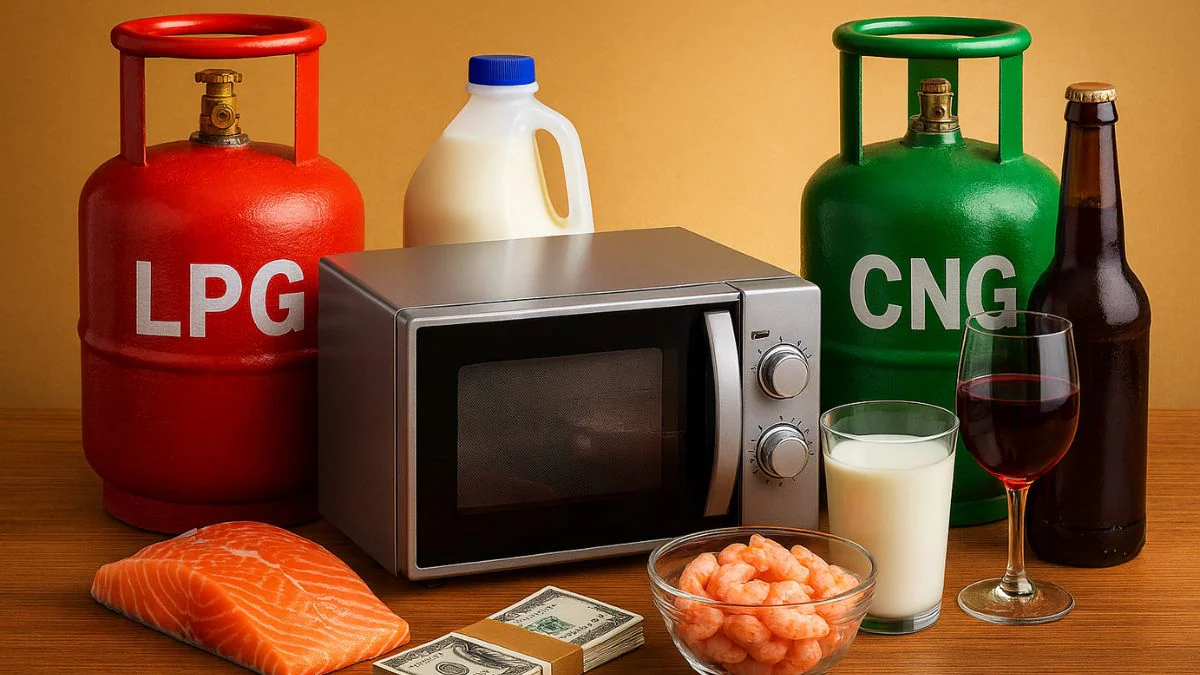
NEW DELHI: The Union Budget 2026–27 has announced a set of measures that will directly impact households, restaurants, cafés, food manufacturers and agri-linked businesses. While some proposals aim to reduce production costs, encourage clean energy and support domestic manufacturing, others are expected to raise operating expenses for food businesses. From cheaper biogas-mixed CNG and microwave ovens to higher commercial LPG prices, the budget presents a mixed outcome for the food and beverage (F&B) ecosystem.
Here’s a clear breakdown of what becomes cheaper, what costs more, and what stays unchanged.
WHAT GETS CHEAPER
1. BIOGAS-MIXED CNG To promote clean energy and strengthen rural incomes, the government has proposed excluding the entire value of biogas while calculating central excise duty. This will lower the cost of biogas-based CNG, making it more competitive compared to fossil fuels. The move also benefits farmers by creating additional income opportunities through the supply of agricultural residue, cattle dung and organic waste.
2. MICROWAVE OVENS Microwave ovens are expected to become more affordable after the government exempted basic customs duty on specified parts used in their manufacture. The measure aims to boost domestic value addition in consumer electronics and reduce reliance on imported components, leading to lower manufacturing costs.
3. SEAFOOD PROCESSING INPUTS To support seafood exporters, the duty-free import limit for specified inputs used in seafood processing has been increased from 1% to 3% of the FOB export value. This change gives processors greater flexibility in sourcing raw materials and equipment, helping reduce costs and improve global competitiveness.
WHAT GETS SIMPLIFIED
Alcohol: Uniform 2% TCS Rate The Tax Collected at Source (TCS) on the sale of alcoholic liquor has been rationalised to a flat 2%. While this does not directly reduce retail prices, it simplifies compliance for sellers and makes the tax structure more business-friendly.
WHAT GETS COSTLIER
1. Commercial LPG Cylinders From February 1, 2026, the price of a 19-kg commercial LPG cylinder has increased by Rs 49, taking the Delhi price to Rs 1,740.50. This hike will impact restaurants, hotels, cafés and street-food vendors that rely heavily on LPG for daily operations. Domestic LPG cylinder prices remain unchanged.
2. COFFEE ROASTING AND VENDING MACHINES The government has withdrawn duty exemptions on coffee roasting, brewing and vending machines. As many of these machines are imported, the revised duty structure is expected to increase equipment costs for cafés, restaurants, offices and commercial beverage outlets, raising capital and replacement expenses.
WHAT REMAINS UNCHANGED
Milk Prices There has been no revision in milk prices under Budget 2026–27. Major adjustments were last announced in 2025, and prices remain stable since then.