
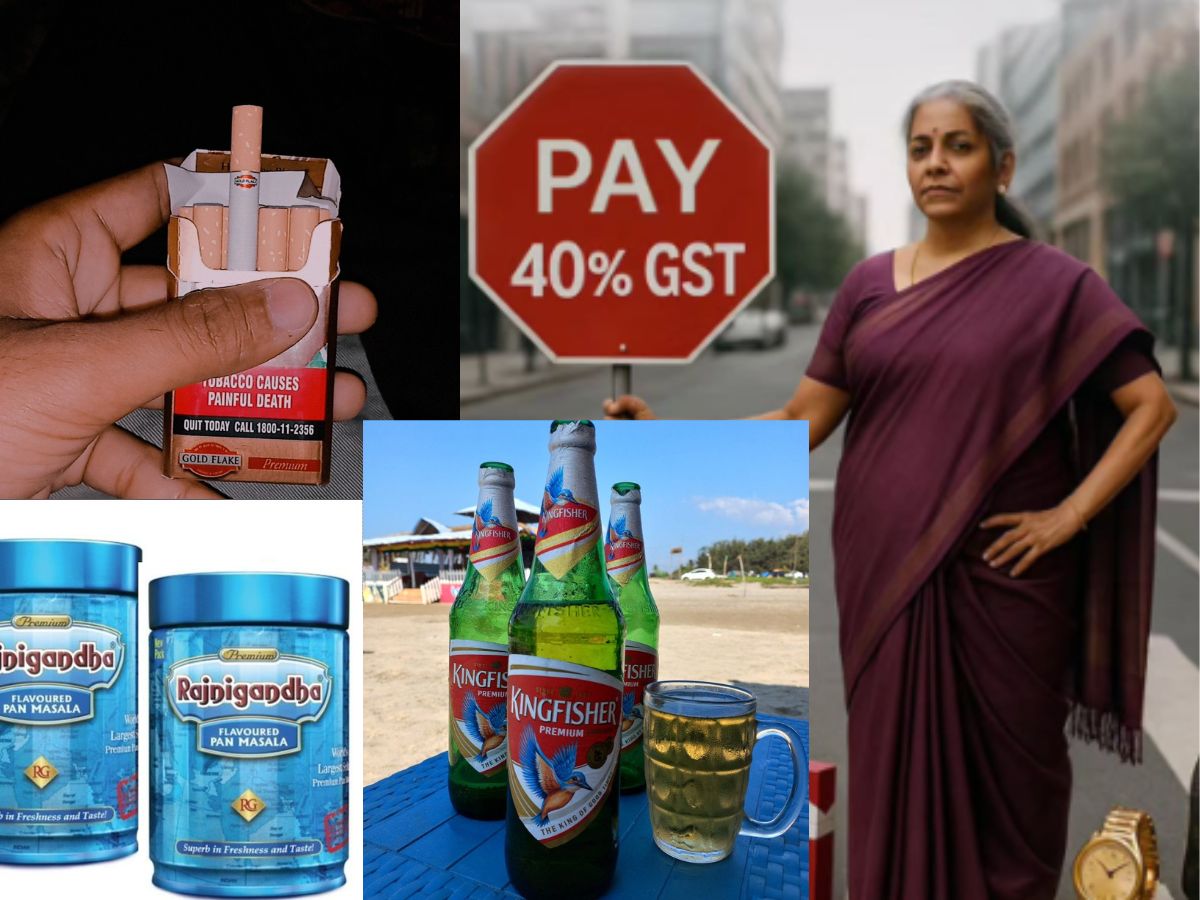
In a major overhaul of India’s indirect tax system, the GST Council has announced a sweeping reform dubbed “GST 2.0.” The headline change is a new, top-tier 40% tax rate on goods deemed harmful or ultra-luxurious. The changes, cleared in the Council’s September 3 meeting, are set to take effect by September 22, 2025.
What Exactly Changed in the GST Structure?
The Council has fundamentally simplified the main tax structure while creating a new punitive bracket for specific goods.
- The New Standard Slabs: For the majority of goods and services in the economy, the numerous tax rates are being reduced to a more straightforward two-slab structure of 5% and 18%.
- The New “Sin Tax” Slab: Products classified as “sin” or “luxury” will be moved into a new highest tax bracket of 40%, a significant jump from the earlier ceiling of 28%.
- This move was hinted at by Prime Minister Narendra Modi during his Independence Day speech, where he referred to it as a “Diwali gift” for citizens.
Which Products Are Getting More Expensive?
The 40% tax rate will apply to a specific list of goods that the government aims to discourage consumption of. Here’s what is on the hit list:
- Tobacco Products: This includes gutkha, cigarettes, bidi, pan masala, zarda, and scented tobacco.
- Sugary & Fizzy Drinks: All colas, flavoured sodas, caffeinated beverages, and energy drinks.
- Luxury Vehicles: High-end cars and SUVs (specific criteria to be notified later).
- Junk Foods: Processed items that are high in sugar, salt, or trans fats.
- Miscellaneous Imports: Certain personal-use imported goods that attract customs duty (details to be provided in official notifications).
It is significant to remember that human consumption alcohol is still exempt from the GST and will continue to be subject to different state taxes.
What is a “Sin Tax” and Why Implement It?
This is a core concept behind the new 40% slab.
What is it? A “sin tax” is a targeted tax on goods and services that are considered harmful to society, such as tobacco, alcohol, and sugary drinks. By increasing the cost of these goods, the main objective is to deter usage as well as increase revenue.
Why do it? The government incurs massive public health costs dealing with the effects of these products. India, for example, is thought to spend more than 1% of its GDP on medical expenses associated with cigarette smoking alone. This tax is a way to offset some of those costs and nudge people towards healthier choices.
Also Read: GST 2.0: Current Rates vs Proposed Rates
Will Cigarettes Actually Get 40% More Expensive?
This is a crucial distinction. For items like tobacco, the tax reality is more complex.
Cigarettes already attract a 28% GST plus a heavy compensation cess. This cess is a mix of:
- A specific duty (e.g., Rs. 2.1 to Rs. 4.2 per stick).
- An ad valorem duty (based on value, ranging from 5% to 36%).
While the headline GST slab is being raised to 40%, the effective total tax burden on tobacco products is expected to remain around 88%. By combining the regular rate and a portion of the cess into the new slab, the adjustment streamlines the structure; yet, consumers may not notice a significant change in the final price from the present levels.