
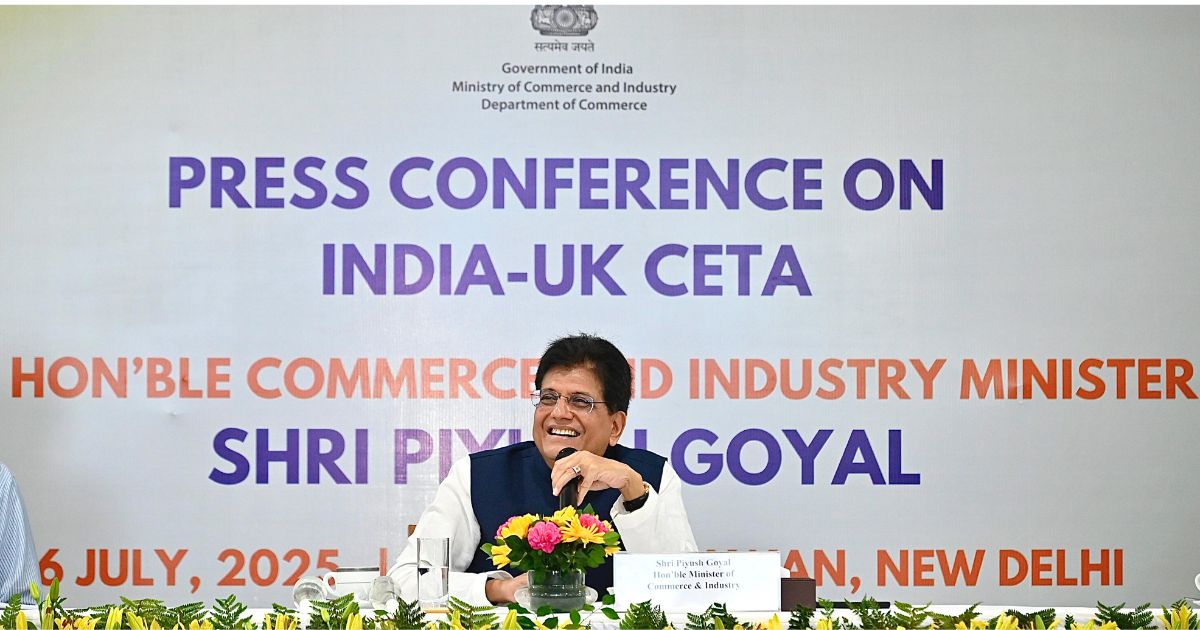
India and the United Kingdom look to boost their economic cooperation with the signing of the India-UK Free Trade Agreement (FTA) on July 24, 2025, described as a “game changer” by India’s Commerce and Industry Minister Piyush Goyal. The agreement is expected to deeply benefit all sectors of the Indian economy while strengthening strategic connections between two global democracies.
High tariffs reduced to zero
The FTA provides India with its first-ever market access to the UK, removing tariffs on 99% of Indian exports to the British market. The deal also guarantees impressive development of India’s marine exports, with tariff-free access on shrimp, tuna, and other seafood, which can create a $5.4 billion opportunity that will directly benefit the coastal economies.
Textiles, Agro and several sectors to profit
Textiles, apparel, marine products, processed foods, spices, and leather products are some of the sectors that will benefit immensely from duty-free access. Tariffs on processed foods, for example, which were as high as 70%, will be reduced to zero, giving a boost to exports of Indian staples such as tea, coffee, and spices. Textiles and clothing, vital labor-intensive industries, also have a bright future with 1,143 product categories going duty-free. This benefit is expected to raise India’s market share in the UK by 5%, enhancing competitiveness against competitors such as Bangladesh and Vietnam.
Agriculture shall also receive a significant boost, with a grant of duty-free access to more than 95% of agriculture tariff lines of fruits, vegetables, millets, and organic herbs that can potentially grow Indian agri-exports by 20% in three years and support the government’s $100 billion agri-export target by 2030.
Double bilateral trade and more jobs
This historic agreement, which Goyal termed as transformational, has been forecasted to double bilateral trade to $120 billion by 2030, create more jobs, and intensify strategic engagement, creating a new benchmark for India’s trade relationships with advanced nations.
The agreement also makes it easier for professional movement and social security for Indian professionals employed in the UK, and further enhances people-to-people connections. Conversely, India will gain from lower tariffs on British products, which will fall from an average of 15% to 3%. Worth mentioning are alcoholic drinks such as Scotch whisky and gin, whose tariffs will fall over a period of ten years from 150% to 40%, and automobile imports, which will witness substantial cuts in tariffs.
India-UK Vision 2035 Launched
Accompanying the FTA, both countries launched the India-UK Vision 2035, a vision document to intensify cooperation in the areas of clean energy, technology, defense, and climate change partnership.
Overall, the India-UK FTA not only holds promises of considerable economic development but also supports diplomatic and strategic collaboration, and hence marks a turning point in the international trade of India.