
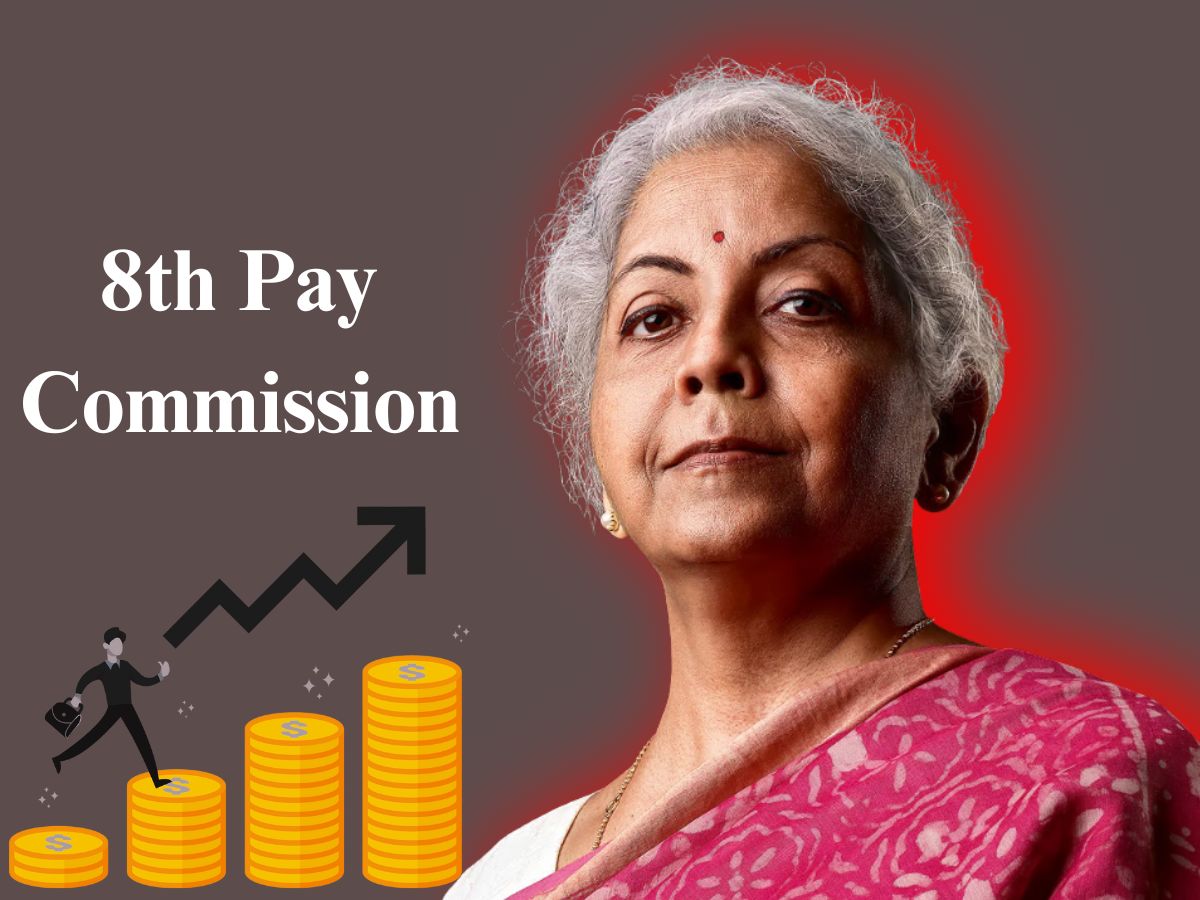
The Union Cabinet cleared the setting up of the 8th Central Pay Commission on January 16, 2025, to review salaries for close to 50 lakh central government staff and allowances for about 65 lakh pensioners. But almost 10 months later, the commission is yet to be notified, with no official gazette notification made, no Terms of Reference (ToR) finalised, and no chairperson or members appointed.
This delay has been extended to the longest one in recent times. Whereas the 5th Pay Commission had taken around seven months to release its ToR after it was announced, the 8th Pay Commission has already surpassed that figure, with more than 203 days having passed since its first approval. In contrast to this, the 7th Pay Commission, announced in September 2013, had its chairman and ToR gazetted by February 2014 which is a span of mere five months.
Government’s Consultation Process Ongoing
The Ministry of Finance has attributed the delay to continuation of consultations with major stakeholders. In July 2025, Minister of State for Finance Pankaj Chaudhary told Parliament that inputs have been invited from major stakeholders, including Ministry of Defence, Ministry of Home Affairs, Department of Personnel and Training, and state governments. The government announced it would release the formal notification “in due course” and make the appointments of chairperson and members after formally notifying the commission.
Timeline of the Implementation Pushed to 2027-28
According to past trends, the 8th Pay Commission’s roll-out is now estimated not to be before 2027 or even 2028. According to Kotak Institutional Equities, the panel might not be functional before late 2026 or early 2027. The average Pay Commission cycle has 1.5 to 2 years of report preparation after the formation followed by 6-9 months for the government to review and implement.
This would imply even if the commission is constituted by 2026, the new pay scale could be implemented only around mid-2027 or early 2028, quite a departure from the initial expectation of January 1, 2026, implementation.
Expected Salary Increase and Fitment Factor
When it is introduced, the 8th Pay Commission is likely to bring significant advantages. Pay growth is estimated by financial experts at between 30-34%, with a fitment factor that is likely to be between 1.8 to 1.96. Based on this computation, the minimum basic pay is likely to increase from the present ₹18,000 to around ₹30,000 a month. Central government staff, however, should look forward to an actual salary rise of about 13% on average, according to Kotak Institutional Equities.
Notably, the benefits will be made operational as of January 1, 2026, irrespective of when the effective implementation would be. This implies that employees will be paid arrears for the period in between, so that there is no economic loss on account of the delay.
Why the Delay Matters Less Than It Seems
In spite of growing frustration, officials confirm that the delay will not mean a financial loss to employees. The government historically retires pay revisions from January 1 of the concerned year and makes full arrears for the period between. This trend was recently illustrated when the government raised a 3% Dearness Allowance (DA) by October 2025, with effect from July 1, 2025, and arrears for July, August, and September.
The DA mechanism still gives relief interim with the rate now standing at 58% after the recent increase from 55%. The bi-annual adjustments serve to counteract inflation until the new pay scale is introduced.
What Next?
Though the delay keeps testing the mettle of government employees, the eventual pay revision under the 8th Pay Commission is still on schedule. The Government’s lengthy consultation process, although long-drawn, would ensure holistic recommendations that take into account today’s economic realities and employees’ welfare. That being said, with no official notification yet on the horizon and Terms of Reference still outstanding, India’s central government workforce waits on beyond into an undefined timeline.