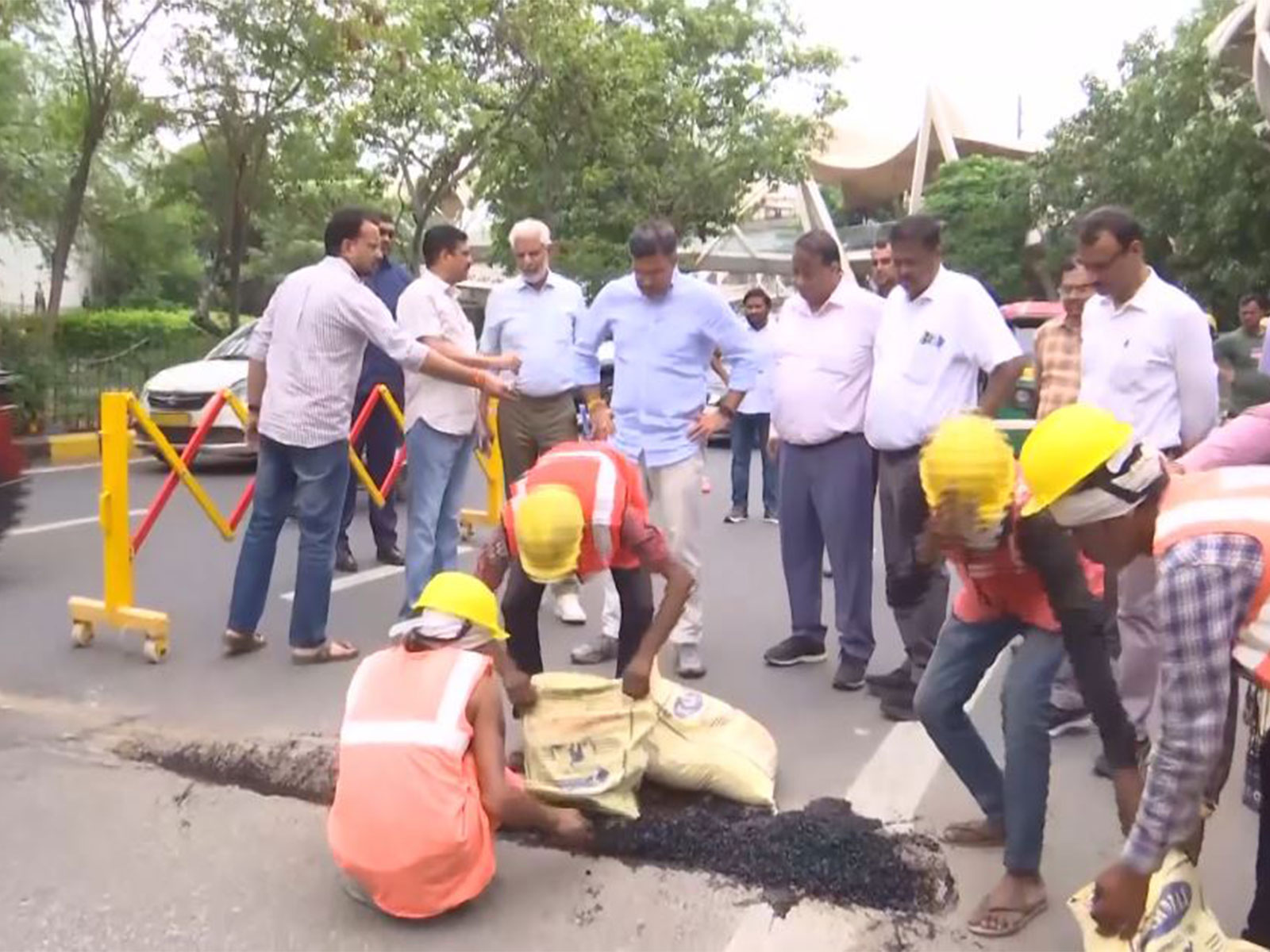
PWD Minister Parvesh Verma on Sunday conducted a high-level inspection of the ongoing work at Mathura Road to oversee the progress of the special pothole repair drive in the national capital ahead of the monsoon.
Notably, the Delhi government has launched a special pothole repair drive across the national capital’s road network to ensure the safety of commuters amid the rainy season.
According to the PWD Minister, the government has set an ambitious target for this operation, aiming to identify and fill 2,000 potholes across the city within a single 24-hour window.
“The PWD works continuously throughout the year. With the monsoon season approaching, we are conducting a special drive today to ensure there are no potholes left. They have identified 2,000 potholes and aim to fill them all in a single day,” he said.
Verma noted that around 12,700 potholes were filled last year, and the new roads being built come with a 5-year warranty. He underlined that the relevant departments have been directed to cover and rectify the waterlogging hotspots identified last year.
“Over the past year, approximately 12,700 potholes have been filled. The new roads we are building today come with a 5-year warranty. We have repeatedly convened meetings with all relevant departments, and the CM and I have issued clear directives to rectify every waterlogging hotspot identified last year. We have installed pumps to prevent waterlogging,” he said.
Meanwhile, Union Health Minister JP Nadda on Thursday chaired a high-level review meeting with senior officials of the Ministry of Health and Family Welfare to assess preparedness against dengue and malaria ahead of the forthcoming monsoon and post-monsoon season.
The Union Health Minister said that the health ministry has already urged all States/UTs to strengthen surveillance systems for early detection of cases and outbreaks. He underscored the importance of prompt reporting, active monitoring and rapid response mechanisms to contain the spread of infections.
He emphasised that patient care services should remain uninterrupted and healthcare institutions must be equipped to effectively manage any increase in case load.