
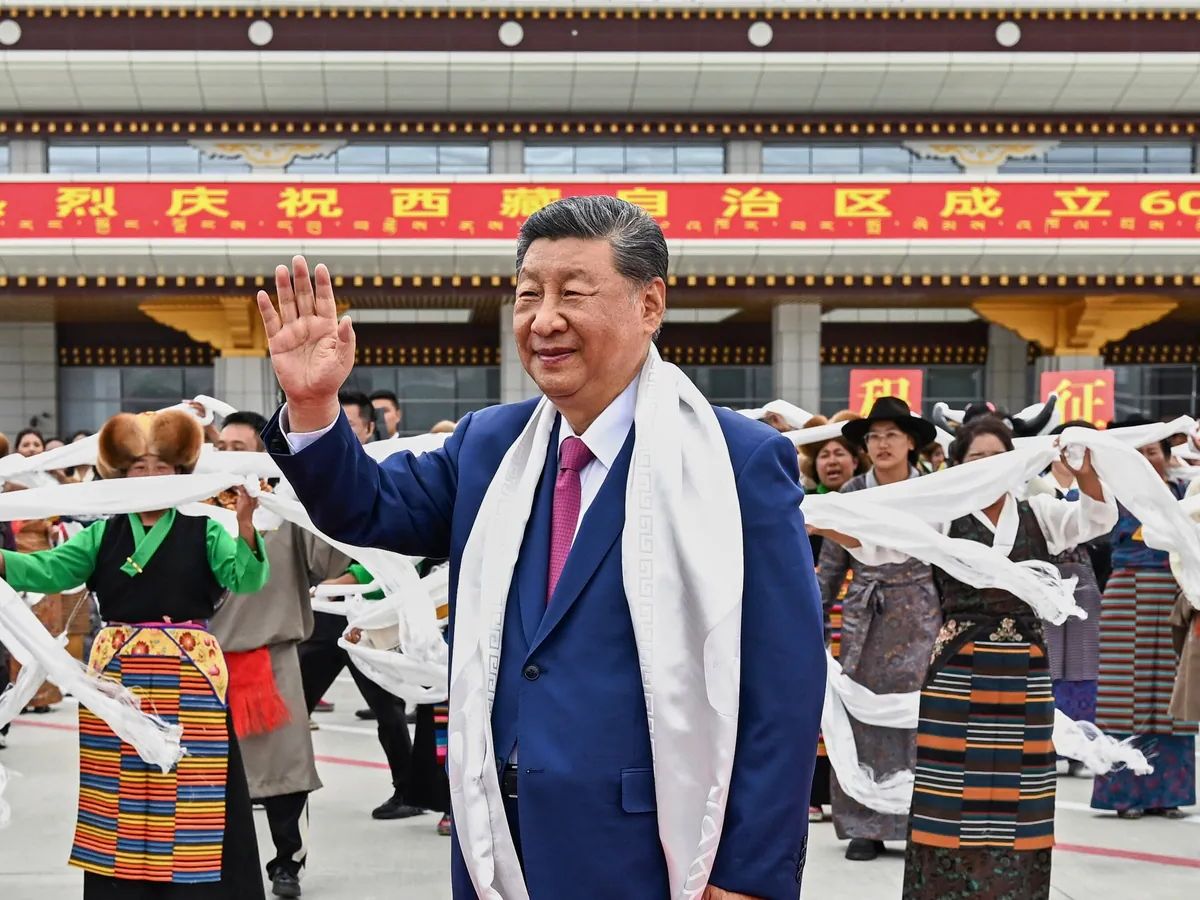
Chinese President Xi Jinping visited Tibet on Wednesday, where he called for ‘ethnic unity’ and ‘religious harmony’ in the politically sensitive region where Beijing faces accusations of rights violations.
Jinping visited at a time when there were ongoing debates over the succession of the 90-year-old Dalai Lama, who lives in exile in India.
The state broadcaster CCTV showcased tens of thousands of people gathered to cheer Jinping. His visit was marked by red flags, dances, parades, troop formations etc.
The conflict between China and Tibet is not a new story. Many Tibetans and international groups suggest that Tibet was historically independent, while Beijing claims that it has always been a part of Chinese territory.
ALSO READ: Xi Jinping’s Surprise Visit To Tibet Marks 60 Years Of Beijing’s Control
Tibet announced de facto independence in 1913 after Quin Dynasty collapsed; however, the People’s Republic of China regained control in 1949, until Tibet was declared an ‘autonomous region’ in 1965, six years after the 14th Dalai Lama came to India.
Xi’s Message in Tibet
Xi urged that it is important to safeguard political stability, ethnic unity, religious harmony, and social stability to govern and develop Tibet.
ALSO READ: Xi Jinping Planning His Exit After 12 Years: Preparing His Own Succession?
He said, “To govern, stabilize and develop Tibet, we must first safeguard political stability, social stability, ethnic unity and religious harmony.”