
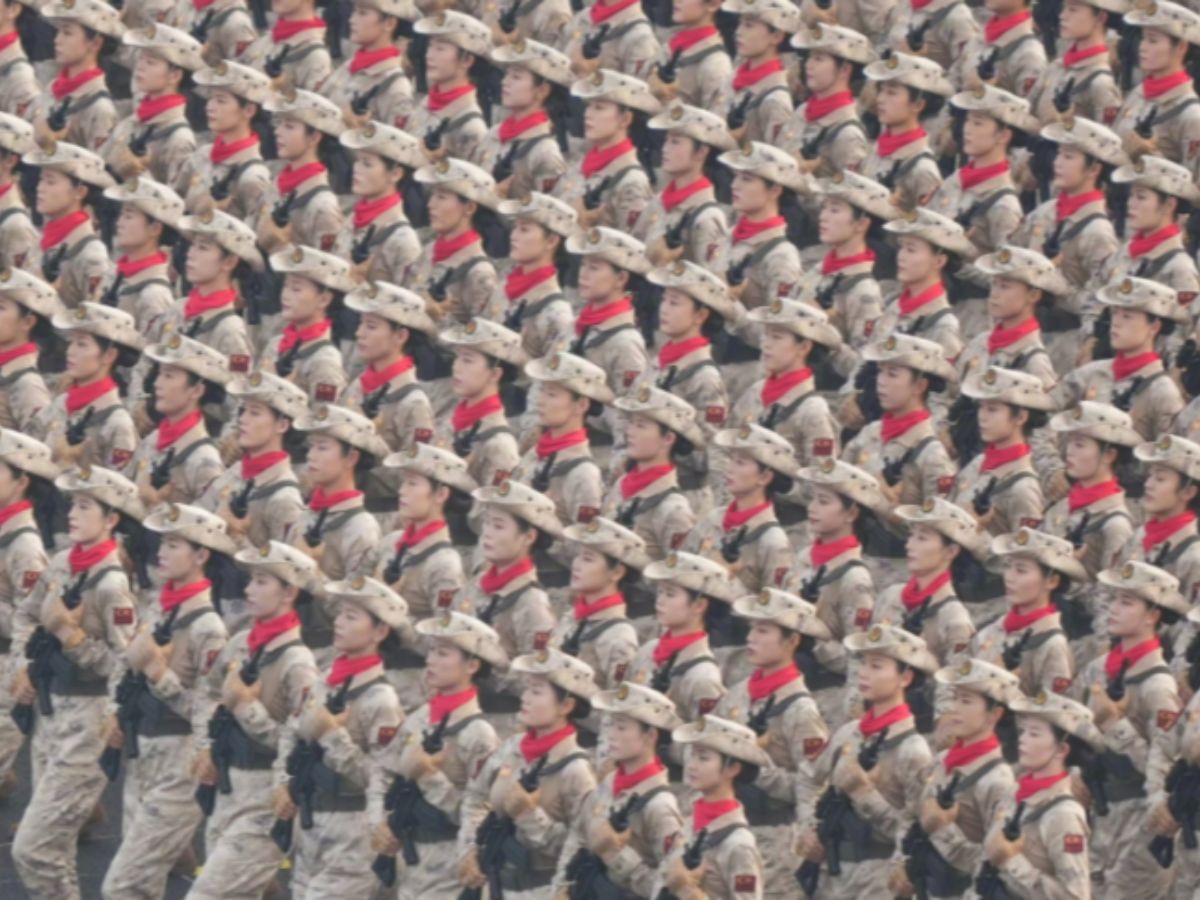
China marked its 80th anniversary of the end of World War II on September 3, 2025, Wednesday. The nation held the Victory Day military parade, which was attended by global leaders, including Russian President Vladimir Putin and North Korean leader Kim Jong-un, among others. This is the second Victory Day Parade; the first one was held a decade ago, in 2015.
Who Attended the Parade?
Dozens of leaders attended the parade; however, it was the presence of Putin and Kim that captured global attention. This is the first time that the three global leaders were seen together at an event.
Interestingly, Kim Jong-un became the first leader in 66 years to have attended the Chinese military parade. It was his grandfather, Kim Il Sung, who attended the parade last time in the 1950s.
ALSO READ: Key Highlights from China’s Victory Day Parade
Myanmar’s military chief Min Aung Hlaing, Iranian President Masoud Pezeshkian, Mongolian President Khurelsukh Ukhnaa, Pakistan’s Prime Minister Shehbaz Sharif, Uzbek President Shavkat Mirziyoyev, and Belarusian President Alexander Lukashenko were also in attendance.
The Significance of Victory Day
The day commemorates China’s victory over Japan in 1945 on September 3. This victory was a part of Japan’s wider defeat in World War II after the US dropped atomic bombs on Hiroshima and Nagasaki and the Soviet Union’s declaration of war against Japan.
The Marco Polo Bridge Incident
The conflict traces back to the Marco Polo Bridge incident in July 1937. A clash between Chinese and Japanese troops escalated to a full-scale Sino-Japanese War. China lost 20 million people. Despite internal divisions, the Nationalist Party, led by Chiang Kai-shek and the Communists under Mao Zedong formed a united front against Japan. Their resistance tied down large Japanese forces, aiding the Allied war effort.
On September 3, 1945, after Japan’s surrender, China celebrated its hard-fought victory, a day it continues to honour with military parades and remembrance.